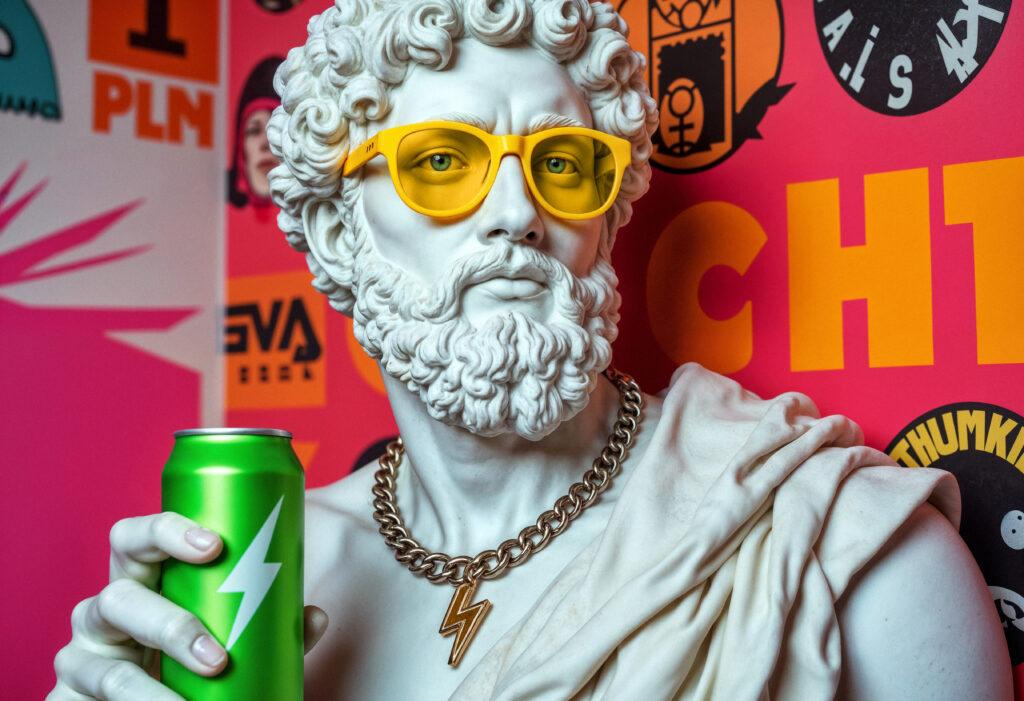
Why History and Mythology Have Such a Major Influence on Contemporary Pop Culture
Humans have always been drawn to stories bigger than themselves. Ancient myths gave our ancestors a framework for understanding the world: why storms happen, why people die, what heroism looks like.
Thousands of years later, those same stories are driving billion-dollar entertainment franchises, shaping blockbuster films, and filling stadium-sized gaming arenas. The reason is simple: mythology and history tap into something genuinely universal. They deal with power, loss, identity, and the search for meaning, themes that never go out of fashion.
The Ancient Roots of Modern Storytelling
Greek mythology alone has shaped more modern narratives than any single writer or director ever could. The concept of the tragic hero (brilliant, flawed, and ultimately undone by their own nature) runs directly from figures like Achilles and Oedipus through to characters like Walter White and Tony Stark. Norse mythology introduced ideas of fate, sacrifice, and cyclical destruction that now power everything from Marvel’s cinematic universe to major literary franchises. These aren’t coincidences. Writers and creators actively return to these sources because they work.
Historical events carry similar weight. The drama of real history (wars, empires rising and collapsing, figures making choices that change the course of civilisations) provides ready-made narrative tension that fiction struggles to manufacture from scratch. There’s a reason so many prestige television dramas are set during real historical periods. The stakes feel higher when audiences know, even loosely, that these events actually happened.
What mythology and history share is a sense of scale. They deal with consequences that extend far beyond individual lives. Modern pop culture constantly searches for that same sense of grandeur, and the most reliable place to find it is in the past.
Mythology and History in Games
The gaming industry has leaned into these themes harder than almost any other medium, and the results speak for themselves. Games offer something that films and books cannot: the ability to inhabit a mythological or historical world rather than simply observe it. That interactivity transforms ancient material into something players feel personally connected to.
We see this impact clearly in major AAA titles. The God of War series built an entire franchise identity around Greek mythology, then successfully expanded into Norse mythology with one of the most critically acclaimed games of the last decade. Assassin’s Creed has taken players through ancient Egypt, Greece, the Viking Age, feudal Japan, and the French Revolution, using real historical settings as living playgrounds. Total War, Age of Empires, etc., the list of landmark games rooted in myth and history is enormous. These titles succeed because the source material already comes pre-loaded with rich world-building, complex characters, and dramatic conflict. Developers aren’t starting from zero; they’re working with thousands of years of compelling material.
Beyond these titles, other corners of gaming also feature mythology-inspired games. In casino gaming, for example, big brands like the online casino Unibet offer mythology-inspired slot games for players who enjoy these themes. Titles drawing from Norse legends, Greek pantheons, and ancient empires are consistently among the most popular offerings. The visual language of mythology (thunderbolts, golden temples, symbols) translates exceptionally well to the slot format, creating an atmosphere that feels both exciting and familiar.
Mobile strategy games represent another corner of gaming where history has an iron grip. Titles like Rise of Kingdoms, Clash of Empires, and countless others are built entirely around historical civilizations, real military leaders, and genuine periods of conflict.
Players choose factions based on real ancient empires, upgrade armies using historically inspired technology trees, and compete using strategies rooted in actual military history. The genre has built a massive global audience precisely because history provides a sense of legitimacy and depth that purely invented settings struggle to match. Players feel they’re learning something, even while competing and being entertained.
Film, Television, and the Pull of the Ancient World
Cinema has returned to mythology and history repeatedly across every era of filmmaking. Early Hollywood built entire genres around historical epics. Contemporary streaming has produced some of its most-watched content (Vikings, Spartacus, Troy: Fall of a City, Shogun) from the same well. These productions succeed not because audiences want a history lesson, but because real history provides characters and conflicts with an authentic weight that pure invention rarely achieves.
Superhero cinema, which has dominated global box offices for two decades, is itself deeply mythological in structure. Even characters with no direct mythological origin (Batman, Spider-Man) follow classical heroic structures that trace back to ancient epic poetry. The hero’s journey, as a storytelling framework, is itself a concept drawn from comparative mythology.
Fantasy as a genre owes its entire existence to the mythological tradition. Tolkien consciously built Middle-earth, drawing on Norse, Finnish, and Anglo-Saxon mythology. George R.R. Martin’s work draws as much from medieval European history as from fantasy conventions. These worlds feel real, feel earned, because they’re built on foundations with genuine depth.
Music, Fashion, and the Mythology of Identity
Mythology’s influence extends well beyond storytelling mediums. Music artists have built entire personas around mythological archetypes (the warrior, the trickster), from David Bowie’s Ziggy Stardust to Beyoncé’s visual albums that explicitly reference ancient African and Greek iconography. These choices aren’t random. Mythological imagery carries cultural authority and visual power that contemporary references rarely match.
Fashion regularly pulls from historical periods, with designers citing Roman togas, Viking metalwork, ancient Japanese aesthetics, and Egyptian ornamentation as direct influences. Streetwear brands have used Greek lettering and ancient imagery as design language for years. The visual grammar of ancient civilizations has become a permanent part of how contemporary culture expresses prestige, power, and identity.
What makes all of this durable is that mythology and history aren’t trends. They’re the permanent bedrock underneath human storytelling. Every generation rediscovers them, finds new angles, and builds something new on top. The stories that have survived thousands of years have done so for a reason; they’re genuinely good, and they speak to something real about human experience. Pop culture will keep returning to them for exactly that reason.