The Best New Year’s Eve Events: Your Complete Guide
What Makes New Year’s Eve Worth Celebrating
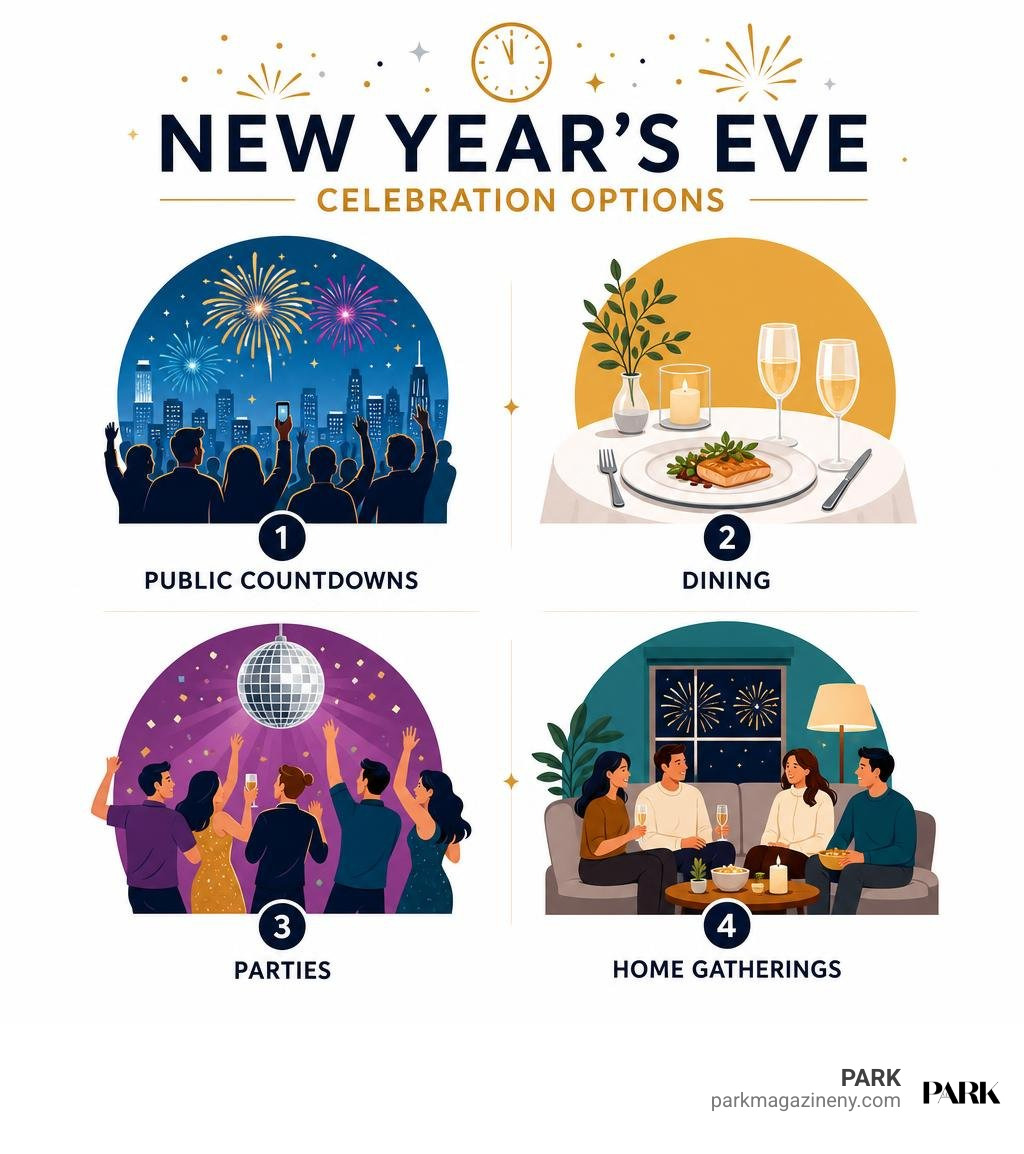
New Year’s Eve is the final night of the Gregorian calendar year, celebrated on December 31 with countdowns, shared meals, music, fireworks, and midnight toasts. The best way to mark it is simple: choose an experience that fits your mood – a landmark public display, an elegant dinner, a private gathering, or a relaxed night at home – then plan transportation and reservations early.
As midnight moves across global time zones, cities and communities welcome the new year in their own ways. Some gather beneath fireworks in major public squares. Others attend religious watchnight services, share symbolic foods for luck, or make resolutions for the year ahead. From the Times Square Ball Drop to waterfront celebrations and intimate black-tie galas, the night offers far more than one kind of tradition.
This guide explores the history, customs, and standout events that can make December 31 feel truly memorable. I am W.A. Muller, and I will help you find a celebration with the right mix of meaning, style, and fun.
The History and Cultural Significance of New Year’s Eve
To truly appreciate the festivities of December 31, it helps to understand how this global occasion developed over thousands of years. While modern celebrations often center on rooftop toasts and musical performances, the underlying customs reflect an enduring human desire to mark the passage of time, invite good fortune, and ward off hardship.
Throughout antiquity, communities tied annual transitions to agricultural cycles and astronomical events. Over centuries of imperial decrees, theological shifts, and calendar reforms, the celebration settled onto December 31, carrying with it a blend of ancient folklore, religious observance, and civic joy.
Ancient Origins and the Gregorian Calendar Transition
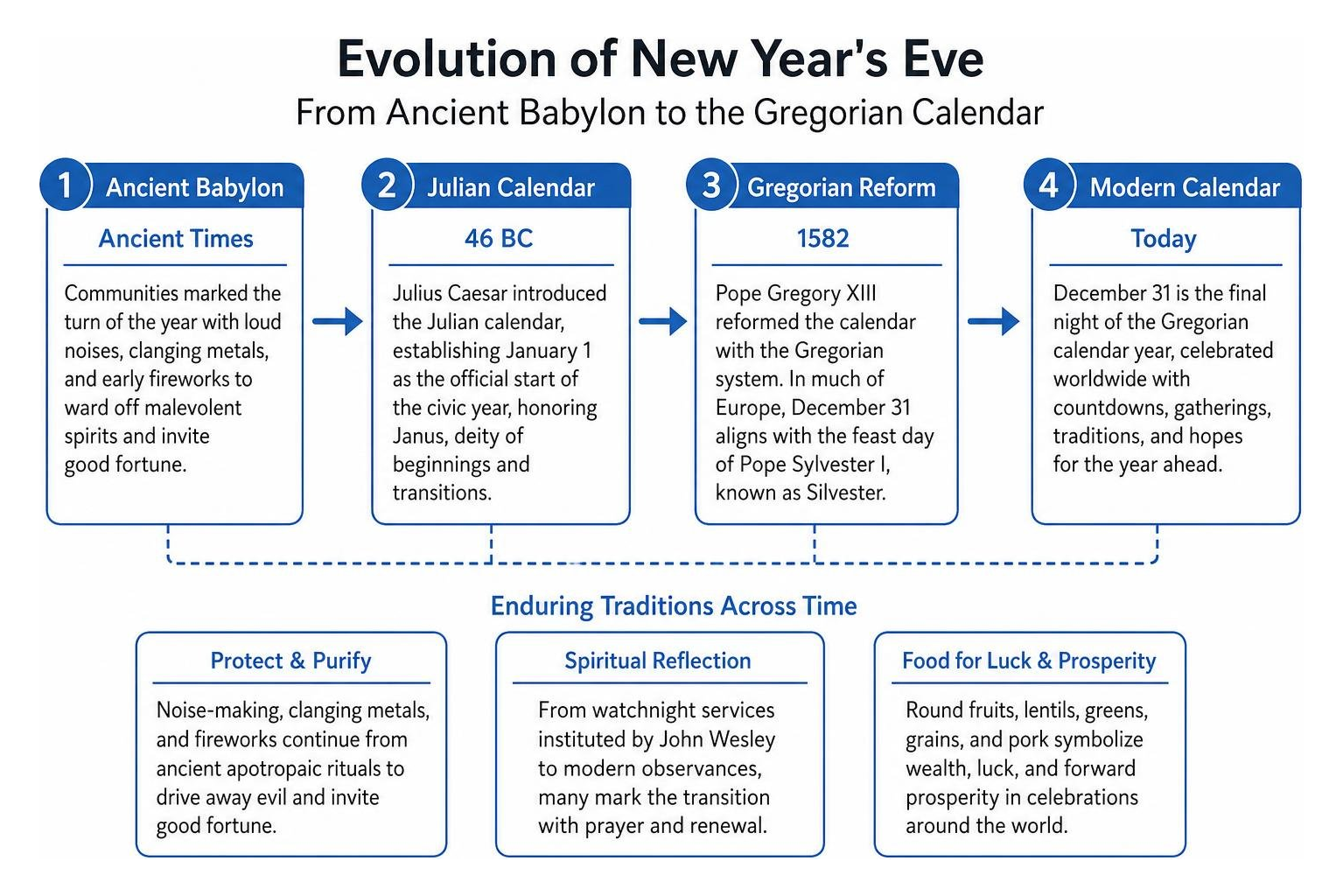
The instinct to make noise when the calendar turns dates back to ancient Babylonian and early European folk rituals. Communities believed the boundary between the old year and the new was a vulnerable interval when spirits and demons roamed freely. Raucous shouting, clanging metals, and early fireworks were employed as apotropaic rituals designed to drive away malevolent forces.
In 46 BC, Julius Caesar introduced the Julian calendar, fixing January 1 as the official opening of the civic year. The month honored Janus, the Roman deity of beginnings, gates, transitions, and time, typically depicted with two faces—one looking back to the past and the other looking forward to the future.
Centuries later, Pope Gregory XIII refined the system in 1582, introducing the Gregorian calendar. Across much of continental Europe, December 31 aligns with the feast day of Pope Sylvester I (who died on December 31, 335 AD), leading many European cultures to refer to New Year’s Eve simply as Silvester.
Culinary customs across continents reinforce themes of wealth and continuity:
- Round fruits and coins: Symbolizing financial prosperity, many families display circular fruits to welcome wealth.
- Lentils and legumes: Resembling miniature coins, lentils are consumed in Italy, Brazil, and parts of the Mediterranean as culinary tokens of luck.
- Grains and greens: Leafy greens represent paper currency, while pork dishes signify forward progress because pigs root forward as they forage.
Religious Observances, Watchnight Services, and Auld Lang Syne
Alongside high-energy revelry, December 31 holds profound spiritual meaning. In 1742, John Wesley, the founder of the Methodist movement, instituted “watch-night” services across England. Conceived as a reflective, reverent alternative to drunken secular carousing, these vigils provided congregations with quiet hours to examine their moral lives, pray, and renew their spiritual vows. The custom crossed the Atlantic to North America around 1770 at St. George’s Methodist Episcopal Church in Philadelphia, eventually expanding across denominations.
Musical traditions also define the midnight transition. The iconic ballad “Auld Lang Syne”—poetically adapted by Scottish poet Robert Burns in 1788—remains universally recognized. Reflecting on nostalgic memories and enduring friendships (“for old time’s sake”), the song became an international New Year’s anthem during the 20th century, largely popularized by bandleader Guy Lombardo and his Royal Canadians during their annual broadcasts from the Roosevelt Hotel and Waldorf Astoria in New York City.
Iconic Global Celebrations and Fireworks Spectacles
Across every continent, major metropolitan skylines transform into stages for monumental light shows, pyrotechnics, and live artistic performances.
| City | Key Landmark | Notable Highlights | Estimated Scale |
|---|---|---|---|
| New York City | One Times Square | Crystal Ball Drop, 3,000 lbs Confetti Wishes, Global Broadcasts | 1M+ live attendees, 29M+ telecast viewers |
| Rio de Janeiro | Copacabana Beach | Seaside samba, spectacular drone and fireworks showcase in Rio, white attire | 5.1M+ across 13 municipal stages |
| London | London Eye & Thames | Choreographed Big Ben chimes, multi-tiered pyrotechnics | 250,000+ ticketed spectators |
| Tokyo & Kyoto | Buddhist Temples | Joya no Kane ritual, ringing bells 108 times, soba noodles | Tens of thousands visiting historic shrines |
| Sydney | Sydney Harbour Bridge | Dual family and midnight displays, synchronized harbor barges | 1M+ waterfront spectators |
Copacabana Beach, Sydney Harbour, and Worldwide Gatherings
In South America, Rio de Janeiro hosts the world’s largest New Year’s gathering, drawing over 5 million people across beachfront venues. Millions gather dressed in white to symbolize peace, offering white flowers to Yemanjá, the Afro-Brazilian orisha of the sea, while enjoying synchronized drone aerial choreography and world-class live samba stages.
Across Oceania and Europe, cities like Sydney and London craft multi-million-dollar pyrotechnic spectacles. London synchronizes pyrotechnics around the London Eye with the iconic chimes of Big Ben, while Sydney’s harbor displays set the visual benchmark for maritime fireworks across two separate evening countdowns.
Unique and Lesser-Known New Year’s Eve Traditions Across Continents
Beyond massive pyrotechnics, regional cultural heritage shapes distinct midnight customs:
- Japan (Joya no Kane): Buddhist temples across the nation strike their massive bronze bells exactly 108 times. This purifying ritual cleanses the 108 bonō (earthly passions and mental desires) to welcome the new year with clarity.
- Spain and Latin America (Las doce uvas de la suerte): Revelers consume twelve grapes—one on each chime of the midnight clock (campanadas)—to secure twelve months of prosperity.
- The Philippines (Medianoche): Families celebrate with midnight feasts featuring dishes like pancit for longevity, wearing polka dots, scattering coins, and encouraging young children to jump at midnight under the playful folk belief that it stimulates physical growth.
- Scotland (Hogmanay): Festivities feature fire festivals, torchlight processions, and “first-footing,” where the first dark-haired guest across a threshold brings symbolic gifts of coal, shortbread, and whisky to guarantee winter comfort. Historically, communities also burned effigies like the “Auld Wife” to symbolize the departure of the past year.
Premier Celebrations Across the United States
From coastal skylines to desert luxury hubs, the United States offers exceptional diversity for holiday entertainment. While many travelers seek out the most unusual places in the United States to celebrate the new year, New York City remains the international focal point for cultural prestige and midnight spectacle.
The Times Square Ball Drop and New York City Festivities

Since 1904, One Times Square has served as the symbolic crossroad for ringing in the new year. The Times Square Ball history began in 1907 when the first illuminated wood-and-iron sphere descended from the building’s flagpole. Today, the geodesic sphere measures 12.5 feet in diameter, weighs 12,350 pounds, and is paneled with 5,280 Waterford Crystal triangles illuminated by dynamic Philips Luxeon LEDs.
Following the official Times Square schedule, hourly countdowns culminate at 11:59 PM as the ball begins its 60-second, 90-foot descent. At midnight, over 3,000 pounds of colorful confetti—bearing thousands of handwritten wishes collected from visitors worldwide—rain down over the streets of Broadway and Seventh Avenue.
High-Energy Nightlife, Galas, and Regional Traditions
For those preferring celebratory formats beyond the street-level crowds of Times Square, New York City and adjacent cultural hubs provide an unmatched array of sophisticated options:
- Iconic Skyline Dining: High-altitude dining experiences, such as the Rainbow Room atop 30 Rockefeller Plaza, host black-tie galas pairing multi-course menus with vintage champagne and live orchestras.
- Cultural Concerts: The New York Philharmonic’s annual gala at Lincoln Center offers classical majesty, while legendary multi-night rock residencies at Madison Square Garden create an electrifying atmosphere.
- Waterfront & Park Displays: For open-air elegance outside Midtown, thousands gather for the historic community fireworks at Prospect Park’s Grand Army Plaza or view harbor fireworks from chartered luxury yachts on the Hudson and East Rivers.
Curating an Unforgettable Holiday Experience
A truly memorable holiday requires thoughtful foresight. Whether securing reservations months in advance or navigating urban transit, early preparation ensures an effortless and joyful night.
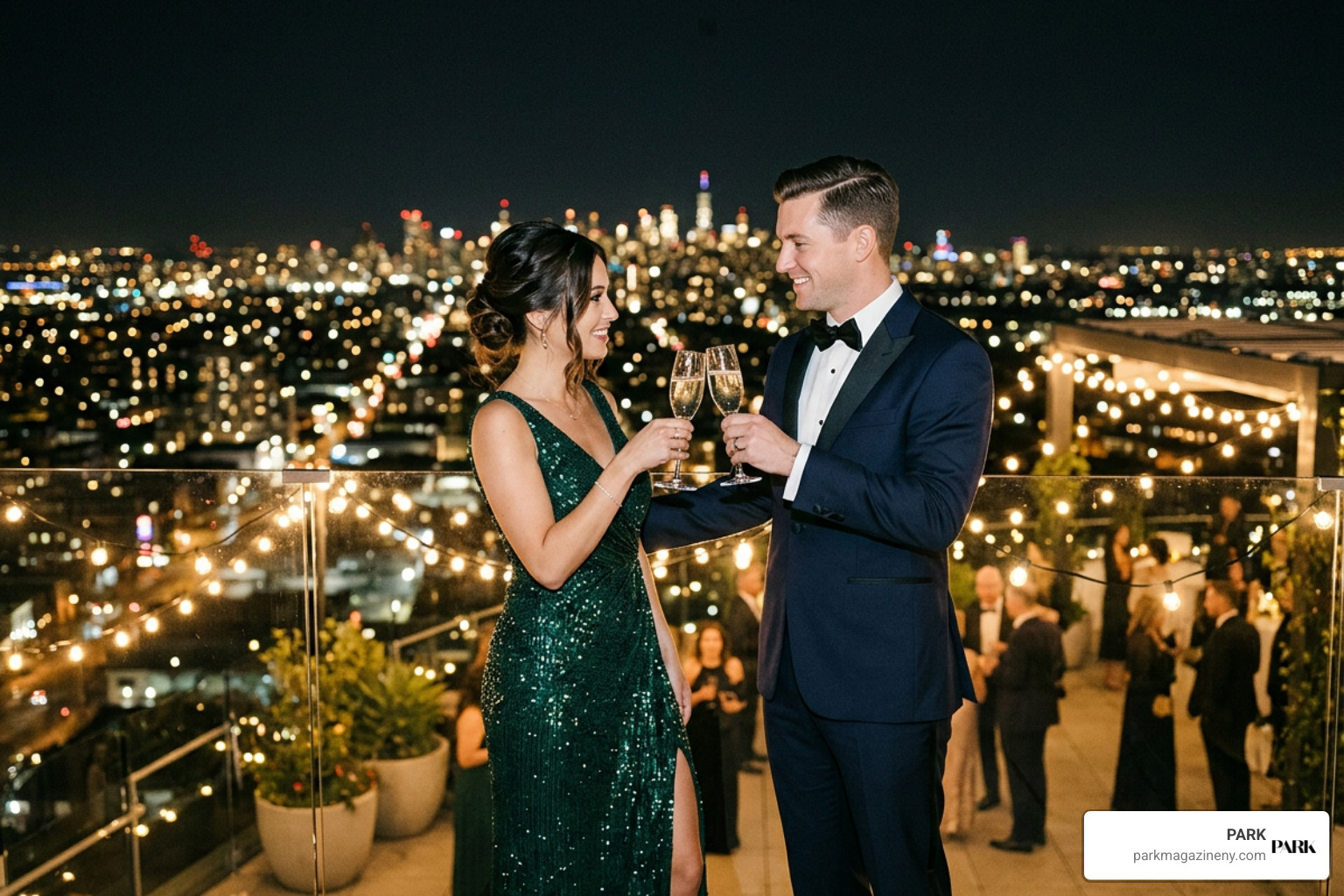
Planning Tips for Attending Major New Year’s Eve Events
To maximize comfort and security during large-scale urban countdowns, keep these practical guidelines in mind:
- Arrive Well in Advance: Major public viewing zones in metropolitan districts close off early due to strict capacity management and security sweeps.
- Dress Strategically: Layer warm clothing and choose comfortable footwear for hours spent on your feet.
- Navigate with Public Transit: Avoid holiday traffic and dynamic rideshare pricing by relying on urban subways and rail networks, which often provide extended holiday operating schedules.
- Confirm Ticket Policies: Review entry parameters, dress codes, and age limitations (often 21+ for luxury lounge events) prior to arrival.
Elevated Dining, Masquerade Balls, and Private VIP Parties
For those seeking an elevated holiday celebration, private social clubs and boutique hotels organize immersive experiences:
- Curated Multi-Course Tasting Menus: Premier restaurants craft bespoke prix-fixe menus featuring truffles, caviar, and vintage champagne pairings.
- Themed Masquerades: Opulent hotel ballrooms host masked galas with live big bands, aerialists, and theatrical midnight balloon drops.
- Private Rooftop Suites: Intimate sky-lounge rentals offer panoramic skyline views of municipal fireworks without the crowded street environment.
Frequently Asked Questions
Why do we celebrate New Year’s Eve on December 31?
The placement of New Year’s Eve on December 31 stems from the establishment of the Julian calendar in 46 BC and its refinement under the Gregorian calendar in 1582. Setting the new year on January 1 aligned civic record-keeping with the Roman god Janus and balanced the astronomical solar year.
How did Prohibition impact American New Year’s Eve celebrations?
During the Prohibition era (1920–1933), public nightlife and open toasts were outlawed, shifting revelry behind closed doors into speakeasies and private residences. When Prohibition was repealed in December 1933, it sparked an immediate renaissance in public restaurant dining, ballroom galas, and landmark metropolitan countdowns.
What is the origin of making New Year’s resolutions?
The tradition of setting annual resolutions began approximately 4,000 years ago with the ancient Babylonians, who made solemn promises to their deities during their 12-day Akitu festival. The practice continued through Roman times, evolving into today’s secular habit of setting personal, financial, and wellness goals.
Conclusion
New Year’s Eve remains one of our most shared cultural milestones—a joyful evening where reflection meets genuine optimism for what lies ahead. Whether you prefer the energy of Times Square, a fine dining tasting menu, or an intimate midnight toast with close friends, December 31 offers an ideal moment to celebrate life’s finest experiences.
As we look ahead toward personal growth, meaningful experiences, and the ultimate luxury investments worth considering, our team at PARK Ave Magazine wishes you a brilliant, inspiring, and prosperous New Year.