Kenya Safari 2026: Luxury Costs, Rules & Gate Hacks
The quoted price is almost never the price. That’s the honest starting point for anyone pricing a luxury Kenya safari from New York this year.
Not because operators are dishonest. Most aren’t. It’s that Kenya charges for a safari through several separate systems, and a single glossy per-night figure can only ever describe one of them. Park Magazine NY has written about how the best travel planners actually work, and the good ones itemise. The rest quote a round number and let the rest arrive later.
Here’s what sits outside that number.
What the parks charge, before anyone adds a bed
Nairobi National Park is where most itineraries start now, because a handful of properties sit on its southern boundary thirty minutes from the airport.
Non-resident adults pay $80 a day. There’s a lower band for African passport holders and a lower one again for East Africans, which matters if your party isn’t all travelling on US documents. The full schedule is published by Kenya Wildlife Service, and it’s worth checking the current rates by visitor category against whatever your operator has assumed.
Cash at the gate no longer exists. Everything clears in advance through kwspay.ecitizen.go.ke, and an older portal address still sitting in a lot of operator paperwork simply fails.
Two charges ride inside that transaction and appear on nobody’s brochure. A gateway fee of about 5 percent, and a dollar exchange rate set monthly rather than pulled live at checkout. Quoted in March, paying in August, the shilling figure shifts.
The line that doubles in July
Masai Mara National Reserve isn’t KWS at all. Narok County runs it, sets its own prices, and splits the year in half.
Non-resident adults pay $100 per person per day from January through June and $200 from July through December. Children aged 9 to 17 pay $50 year-round. Under-eights go free.
You’ll see it listed as Masai Mara National Park on booking platforms. It’s a reserve, which is not pedantry, because that’s exactly why the fee structure differs from every other park on your itinerary.
Four nights in the Mara for two adults in September is $1,600 in gate fees alone. Before a bed, before a vehicle, before anyone pours anything.
For a fuller picture of how the components combine, the gate charge is a smaller share of a high-end trip than a budget one, which is precisely why it gets glossed over in luxury quotes. On road routing between properties, masaimarasafari.travel carries more detail than most trade sources.
One timing rule that costs real money: Mara tickets run 12 hours, not a calendar day. Leaving by road on your final morning means clearing the gate by around ten, or the system bills another full day per person and nobody at the counter can reverse it.
The bill I should have seen coming
A couple I’d placed at a conservancy camp for four nights called me from the airport, politely furious.
Their checkout bill carried a conservancy fee of $130 per person per night. Four nights, two people. Just over a thousand dollars they hadn’t budgeted, on top of a rate they’d understood to be all-inclusive.
Nobody had lied to them. Conservancy fees are lease payments to the Maasai landowners whose land the camp sits on, they’re entirely legitimate, and plenty of camps bundle them into the nightly rate. That one didn’t, and I hadn’t asked.
I remember exactly where I was when the call came, because it was checkout morning at a camp myself. Coffee going cold, canvas warming in the sun with that particular smell it gets, the generator cutting out mid-sentence, someone’s tent zip rasping two platforms over. A very good morning until it wasn’t.
Kimutai, a licensed guide with ten years in the conservancies, puts it simply: ask whether the conservancy fee is in or out, and get the answer in writing. It’s the single most common gap between a quote and an invoice at this end of the market.
What else lands later
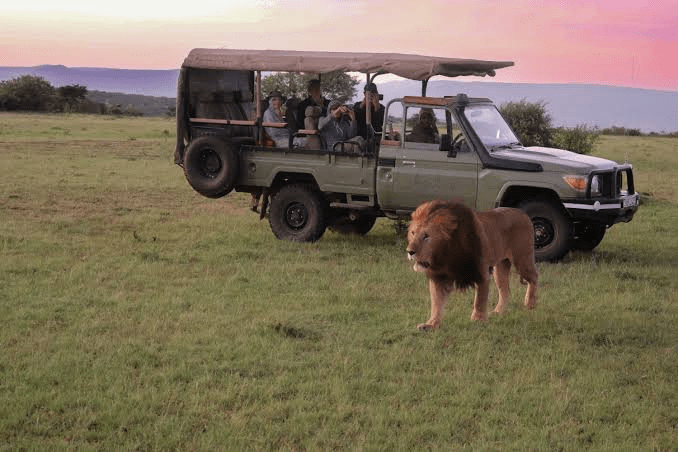
Conservancy fees generally run $80 to $150 per person per night depending on which conservancy.
Balloon safaris are roughly $450 to $550 a head, and there’s usually a landing fee on top.
Tipping is expected and rarely explained. Something in the region of $20 to $30 per day for your guide, plus a communal staff box, is the working norm. Bring recent-series dollar bills in small denominations, because older notes get refused outright by Kenyan banks and camps, and nobody at a bush camp can break a hundred.
Medical evacuation cover is the one nobody thinks about and the cheapest thing on this list. Short-term tourist membership with the flying doctor service costs very little and covers air evacuation to Nairobi. Your US policy may or may not. Check rather than assume.
Getting there, and what it does to your luggage
Nonstop service between New York and Nairobi has come and gone over the years, so most itineraries now route through Europe or the Gulf. Build in a buffer night rather than connecting straight onto a bush flight.
Those bush flights cap luggage at around 15 kilos in a soft bag. Hard cases get turned away at the hangar, which is an unpleasant conversation when the case cost more than the seat. Camps launder daily, so this constrains you far less than it sounds.
You’ll also need an eTA before boarding, roughly $30, applied for online. African passport holders are exempt. Everyone else isn’t, and there’s no visa on arrival to save you.
Where I’d stop short of certainty
The 2025 fee schedule was contested in court before it settled, and figures have moved more than once since. Verify anything here against official sources before it goes on a card, including my numbers.
The migration isn’t scheduled either. Herds move on rainfall, rainfall has been erratic, and any operator promising a river crossing on fixed dates is promising something they cannot control.
One line to add to every quote request
Ask for park fees, conservancy fees and gratuity guidance broken out separately, in writing, before you place a deposit.
An operator who does that without hesitation is telling you something. So is one who won’t.