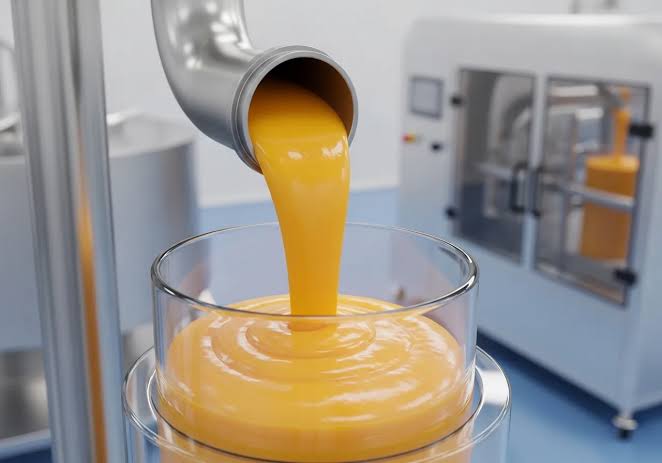
How Aseptic Processing Technologies Are Revolutionizing Fruit Ingredient Logistics
Modern food production depends on more than high-quality ingredients. Efficient storage, safe transportation, predictable shelf life, and reliable inventory management are equally important, particularly for businesses handling fruit-based ingredients at commercial scale. As supply chains become more complex, manufacturers are increasingly looking for processing and packaging solutions that can simplify distribution without compromising product quality.
For commercial kitchens, breweries, bakeries, and food processors, ingredient procurement is closely connected to logistics. Storage requirements, transportation conditions, packaging formats, and expected shelf life can all influence purchasing decisions. Businesses exploring where to buy aseptic fruit puree may therefore consider not only the ingredient itself but also how its processing and packaging can fit into existing storage and production workflows.
This shift toward more flexible ingredient logistics is changing the way food businesses approach inventory. When suitable fruit ingredients can be stored under controlled ambient conditions rather than depending entirely on continuous refrigeration, companies may gain additional flexibility in transportation, warehousing, and production planning. These advantages are helping reshape expectations around modern food ingredient supply chains.
Why Food Ingredient Logistics Matters
Moving food ingredients from a processing facility to a commercial kitchen or manufacturing site involves several interconnected factors. Temperature control, packaging, transportation, storage capacity, handling procedures, and delivery schedules can all affect efficiency and cost.
Traditional cold-chain logistics requires refrigeration to be maintained throughout relevant stages of transportation and storage. Refrigerated vehicles, temperature monitoring, cold rooms, and energy consumption can add operational complexity. For businesses managing significant ingredient volumes, these requirements can become a substantial part of supply-chain planning.
The situation can become even more challenging when products travel long distances or pass through multiple distribution points. Every additional stage creates another opportunity for delays, temperature fluctuations, or handling issues.
Aseptic processing technologies provide a different approach for appropriate food ingredients by combining controlled processing with protective packaging designed for extended storage. This can create greater flexibility in how products are transported, stored, and incorporated into production.
The Importance of Controlled Processing
Food safety is fundamental to modern ingredient manufacturing. Fruit contains moisture and naturally occurring nutrients, which means appropriate processing and handling are essential for controlling unwanted microbial activity.
Aseptic production relies on carefully controlled processing and hygienic conditions. Heat treatment can significantly reduce microorganisms, while controlled packaging environments help protect the processed ingredient from contamination afterward.
The challenge is achieving the right balance. Processing needs to support food safety and stability without unnecessarily compromising desirable qualities such as flavor, color, aroma, and overall product characteristics. Processing conditions are therefore selected according to the specific ingredient and its intended application.
This level of control can help manufacturers deliver ingredients with more predictable characteristics throughout their expected storage period.
Shelf-Stable Packaging and Supply Chain Efficiency
Packaging is a critical part of the process because processing alone cannot protect an ingredient indefinitely. Once a product has been treated, its packaging must help maintain the desired conditions during storage and transportation.
Protective packaging can help limit exposure to external factors such as oxygen, light, and microorganisms. When combined with appropriate processing, this can support longer storage under ambient conditions for products specifically designed for that purpose.
The logistical benefits can be significant. Businesses may require less refrigerated warehouse capacity for suitable products, while transportation can become less dependent on continuous temperature control. This can simplify coordination between suppliers, carriers, warehouses, and end users.
For companies operating with limited storage space, removing some refrigeration requirements can also make better use of existing facilities.
Reducing Dependence on Cold-Chain Logistics
Cold-chain management is often one of the more demanding aspects of handling temperature-sensitive ingredients. Businesses need to coordinate refrigerated transportation, storage capacity, monitoring, and timely delivery to maintain appropriate conditions.
Ambient-temperature storage can reduce some of these logistical pressures when an ingredient has been specifically processed and packaged for such storage. A brewery, for example, may be able to receive fruit ingredients ahead of a planned production run without immediately allocating valuable refrigerated space.
The same principle can benefit commercial kitchens and food processors. More flexible storage can make it easier to plan deliveries around production schedules rather than relying on immediate use after receiving an ingredient.
Reducing cold-chain dependence may also help lower the operational risks associated with transportation delays. While proper handling remains essential, a supply chain that is less dependent on constant refrigeration can provide additional logistical resilience.
Benefits for Commercial Kitchens and Food Processors
Commercial kitchens frequently operate with limited storage capacity. Refrigerated space may already be occupied by fresh produce, dairy products, sauces, prepared foods, and other perishable ingredients.
Suitable shelf-stable fruit ingredients can provide greater flexibility by allowing unopened inventory to remain in appropriate ambient storage until it is needed. This can make stock organization and purchasing schedules easier to manage.
Food processors can benefit from similar advantages on a larger scale. More flexible storage windows may support production forecasting, consolidated shipments, and more efficient inventory planning.
For breweries, this can be particularly useful when fruit ingredients are needed for seasonal products, experimental batches, or limited production runs. Having ingredients available without requiring immediate refrigerated storage can simplify production scheduling and purchasing.
Improving Inventory Planning
Good logistics ultimately depend on predictability. Businesses need to understand how much inventory is available, how quickly it will be consumed, and when additional supplies should be ordered.
Longer storage capability can provide greater freedom when making purchasing decisions. Instead of ordering ingredients only when production is about to begin, businesses may have more flexibility to coordinate purchases with supplier schedules, shipping arrangements, and projected demand.
This can potentially reduce emergency orders and improve warehouse organization. It may also help businesses minimize waste caused by ingredients that cannot be used within a narrow storage window.
However, shelf stability does not eliminate the need for responsible inventory management. Businesses should continue monitoring packaging integrity, storage conditions, expiration dates, and recommended handling procedures.
The Future of Fruit Ingredient Logistics
Aseptic processing technologies are becoming an increasingly important part of modern food supply chains. By combining controlled processing with protective packaging and suitable storage conditions, they can help businesses rethink how fruit ingredients are transported, stored, and incorporated into production.
For commercial kitchens, bakeries, breweries, and food processors, the advantages can extend beyond transportation. Greater storage flexibility can support better inventory planning, reduce pressure on refrigerated infrastructure, and make production schedules easier to coordinate.
As food manufacturers continue seeking safer and more efficient supply chains, advances in processing and packaging will remain central to ingredient logistics. The goal is no longer simply to move food from one location to another, but to build supply systems that offer greater flexibility, reliability, and efficiency while maintaining the quality and safety expected by modern food businesses.