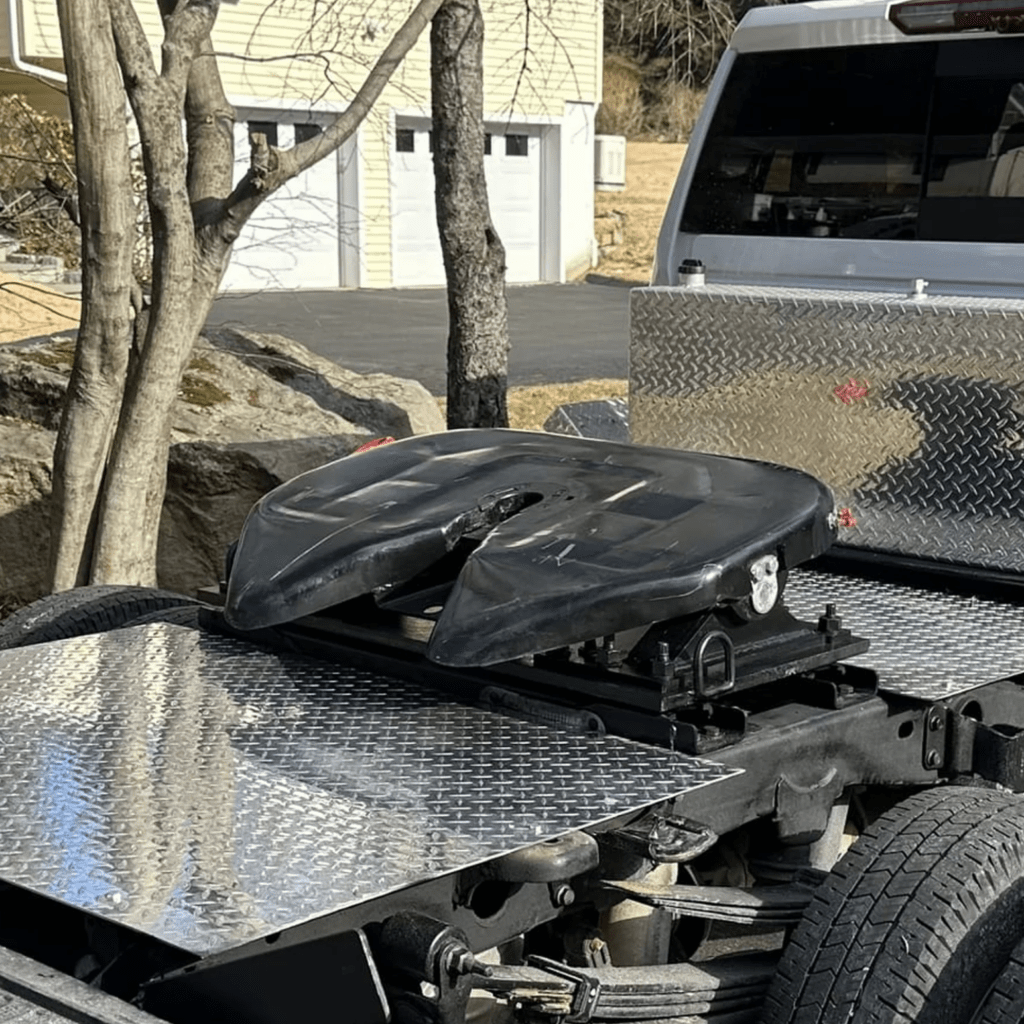
Ford F-350/F-450 Fifth Wheel Hitch Installation
Heavy-duty trucks, as their name suggests, are built for transporting heavy loads, and both the Ford F-350 and F-450 are designed for this purpose. Whether for caravan travel or hauling commercial loads, the right setup isn’t just about mounting the hardware. It’s about integrating the steel, weight distribution, torque, and all the necessary components into the system for safe towing. The Ford F-350 and F-450, which can utilize a fifth wheel hitch, are designed for serious load carrying, but the hitch installation process must also meet these engineering sensibilities. From selecting the hitch to mounting it correctly, every part of the process brings stability and durability from the first mile. In this guide, we’ll discuss how the Ford F-350 and Ford F-450 vehicles work together with a 5th wheel hitch.
Understanding the Ford F-350 Super Duty and Ford F-450 Super Duty Towing Platform
Before jumping into the physical installation of a heavy-duty coupling system, developing a comprehensive understanding of your specific truck’s mechanical architecture and engineering limitations is absolutely crucial. The Ford F-350 Super Duty and Ford F-450 Super Duty models are not ordinary consumer vehicles; they are industrial-grade workhorses specifically engineered from the ground up to handle extreme vertical pinion weights, massive payloads, and ultra-high towing capacities. At the core of these heavy-duty trucks lies a fully boxed, high-strength military-grade steel chassis frame that possesses immense torsional rigidity. When a massive commercial or recreational trailer is coupled to the truck, this robust chassis layout is designed to distribute a significant portion of the massive downforce directly onto the rear axle assembly. This strategic load distribution helps maintain the overall structural integrity of the frame, prevents the rear suspension from bottoming out, and ensures that the front steering axle retains optimal traction and road contact during high-speed highway transit.
When configuring these trucks for heavy hauling, understanding the specific suspension and axle variations between the two models heavily influences your fifth wheel hitch selection. The Ford F-350 Super Duty model offers maximum configuration flexibility, as it is available in both Single Rear Wheel (SRW) and Dual Rear Wheel (DRW) options, allowing buyers to balance daily drivability with raw towing capacity. In contrast, the Ford F-450 Super Duty comes standard exclusively in a Dual Rear Wheel (DRW) wide-track front axle configuration, providing an enhanced level of lateral stability, a tighter turning radius, and superior resistance to trailer sway under extreme loads.
Furthermore, the physical body length and bed configuration (such as a 6.75-foot short bed versus an 8-foot long bed) directly affect how the trailer behaves during tight maneuvers. Short-bed models drastically restrict the available turning radius, often requiring specialized equipment to prevent the trailer cap from striking the truck cab. To streamline this entire process, many modern Ford Super Duty models come equipped directly from the assembly line with a factory-installed fifth wheel prep package, meaning a clean, pre-engineered, and ready-to-install setup awaits the operator underneath the truck bed.
The raw capabilities of these platforms are truly industry-leading when equipped with the appropriate commercial packages. When properly configured, the Ford F-350 Super Duty offers an impressive payload capacity of up to 8,000 lbs and a maximum fifth wheel towing capacity that reaches a staggering 38,000 lbs. Moving up the ladder, the Ford F-450 Super Duty adjusts these metrics to prioritize pure pulling power over raw bed payload, providing a payload capacity of up to 6,400 lbs while elevating its maximum towing capacity to an absolute peak of 40,000 lbs. These immense weight thresholds demand that any towing equipment attached to the frame must be rated to match or exceed these exact engineering limits.
Factory Mount System or Bed Rails?
When deciding how to secure a heavy-duty coupling system to a Ford F-350 or F-450 Super Duty, truck owners are generally faced with two primary structural pathways: utilizing Ford’s factory-installed under-bed puck system or installing traditional aftermarket bed-top rails. A vast majority of modern Super Duty models leave the factory with the optional under-bed prep package already integrated into the frame. This highly advanced setup involves welding and bolting heavy-duty reinforced mounting points directly onto the truck’s steel chassis beneath the bed surface, ensuring a perfect, direct fit that is entirely vetted by Ford’s internal engineering teams.
When an operator wants to tow, they simply drop the hitch into the pre-cut holes in the bed liner. When the hitch is not needed, it can be unlocked and completely removed within minutes, creating a clean, completely unobstructed flat solution that fully preserves valuable truck bed space for hauling traditional cargo.
On the other hand, the traditional aftermarket approach involves installing standard bed rails that sit permanently on top of the truck bed floor. This legacy mounting method requires physically drilling multiple large holes through the truck bed sheet metal and using heavy brackets to sandwich the bed floor against the truck’s subframe. While this installation process can be significantly more complex, time-consuming, and invasive for some truck owners, it generally features a much lower initial material cost compared to ordering a factory prep package. Ultimately, making the right choice between an under-bed puck system and traditional bed rails depends entirely on your financial budget, how often you intend to tow, and whether you require an unobstructed truck bed for daily non-towing activities.
Step-by-Step Installation Process
Executing a correct, meticulous installation process is vital for the long-term performance and safety of a 5th wheel hitchsystem. Because this component serves as the singular point of physical contact holding tens of thousands of pounds to your truck, cutting corners during assembly is never an option. The process represents one of the first and most critical steps in guaranteeing highway stability and preventing catastrophic mechanical detachment during transit.
To begin the installation, park the Ford Super Duty on a completely flat, level concrete surface, firmly engage the emergency handbrake, and take precise measurements across the truck bed to verify the absolute centerline alignment. If your truck features the factory-fitted under-bed puck package, the installation is incredibly straightforward. First, remove the protective plastic covers from the bed floor holes and clean out any accumulated debris or road grime. Next, attempt to align the proprietary hitch feet with the factory mounting points embedded in the floor. Carefully lower the heavy hitch into place, ensuring all four pins seat fully into their respective receivers, and engage the integrated locking levers. Once dropped into position, secure and adjust the locking levers according to the manufacturer’s exact specifications, making sure they close with firm resistance without being forced.
For trucks that do not have the factory package and must rely on installing aftermarket bed-top rails, the mounting process is slightly different and considerably more labor-intensive. Due to the high risk of drilling into fuel lines, electrical wiring harnesses, or brake systems located beneath the truck bed, seeking professional help from a certified technician is highly recommended. However, if you have the mechanical expertise to do it yourself, you must carefully position the rails inside the bed according to the template, mark the exact drilling locations, and bolt the heavy-duty frame brackets to the underside of the chassis before securing the top rails.
Throughout this entire assembly, always use a calibrated torque wrench to tighten all fasteners strictly to the recommended values provided in the manual. Overtightening or undertightening these critical structural bolts can cause severe thread stretching, bolt shearing, or loose shifting later down the road. After successfully mounting the foundational base rails, attach the main hitch head assembly and adjust its overall height to guarantee proper trailer-to-bed clearance. Finally, verify the trailer kingpin alignment and double-check that the distance between the bed rails and the truck cab meets the safe turning requirements of your specific trailer profile. Perform initial pull-stop tests and low-speed tug tests in a closed parking lot before setting off onto public roads.
Safety Check Before the First Towing Operation
Before setting off onto open highways for the very first time and subjecting the vehicle to any significant trailer weight, it is highly advisable to perform a comprehensive, multi-point safety inspection. Do not rely on visual guesswork alone; instead, use a calibrated torque wrench to physically ensure that every single mounting bolt, frame bracket nut, and rail pin is tightened precisely to the manufacturer’s recommended torque setting. Thoroughly inspect the mounting base, check the condition of the subframe mounting brackets for any signs of shipping damage, and verify that the primary locking mechanism moves smoothly through its full range of motion.
Next, slowly back the Ford Super Duty up to the trailer to attach the unit, ensuring the kingpin slides cleanly into the center of the hitch head. Once engaged, perform a strict visual inspection to ensure the kingpin is correctly connected and locked in place. The heavy steel jaws of the hitch must fully wrap around the narrow neck of the kingpin, and the primary locking lever must be moved into its final, detented secure position with all safety cotter pins firmly inserted. After completing this visual verification, raise the trailer landing gear slightly off the ground and perform a light towing tug test by activating the truck’s manual brake controller to ensure the truck cannot pull away from the trailer.
Following a successful tug test, conducting a slow-drive turning test in a vacant lot will help you verify cab clearance during tight maneuvers. Finally, before starting the first full towing operation, ensure the electrical 7-pin umbilical connector is plugged in completely and verify that the integrated trailer brake control device on the dashboard is functioning properly and communicating with the trailer brakes. If you encounter anything you are unsure about during these safety checks, halt the operation immediately and seek professional assistance.
Avoiding Common Assembly Errors
Even when dealing with incredibly rugged, heavy-duty commercial platforms like the Ford F-350 and F-450 Super Duty, minor assembly errors committed during the installation phase can easily escalate into severe mechanical problems over time. One of the most common errors made by inexperienced installers is setting the hitch head at an incorrect height, leaving the trailer riding either too low or too high at the front end. This unlevel towing imbalance shifts the trailer’s center of gravity, leading to poor braking performance, excessive rear truck axle squat, and highly uneven trailer tire wear.
Other incredibly common and dangerous errors include either overtightening or leaving structural bolts too loose. Applying excessive torque can stretch the metal beyond its yield point, causing the fasteners to snap unexpectedly under a heavy load, while undertorquing allows the hitch to slide back and forth, ovaling out the mounting holes over time. Incorrect alignment during the initial layout and drilling phase is another prominent problem, creating long-term structural stresses that can warp the bed sheet metal or cause the hitch jaws to bind during coupling. Finally, failing to account for the necessary turning clearance on short-body trucks is a frequent oversight that can cause the nose of the trailer to make violent contact with the truck cab during sharp U-turns or backing maneuvers, resulting in thousands of dollars in body damage. Taking your time and strictly adhering to engineering dimensions will keep your Super Duty safe and reliable.