Why Is Your AC Running but Not Cooling the House?
When temperatures rise, few household problems are more frustrating than hearing your air conditioner operate without feeling cooler air indoors. You may notice the system running continuously, warm air coming from the vents, or certain rooms remaining uncomfortable no matter how low you set the thermostat. At that point, you may start asking, “Why is my AC running but not cooling?” The answer can range from a simple thermostat setting to a more serious refrigeration or mechanical problem. Understanding the most common causes can help you determine whether you can resolve the issue yourself or need to contact an HVAC professional.
Start by Checking the Thermostat Settings
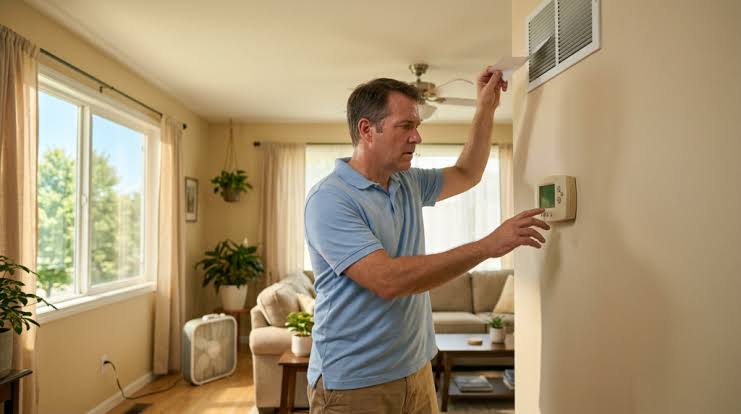
Before assuming your air conditioner has suffered a major failure, inspect the thermostat. It should be set to “cool,” and the selected temperature should be several degrees below the current indoor temperature. If the fan setting is switched to “on,” the blower may continue circulating air even when the outdoor cooling equipment is not operating. This can make it seem like the AC is running while the air coming from the vents feels warm or room temperature. Switching the fan setting to “auto” allows the blower to operate only during an active cooling cycle.
The thermostat may also have weak batteries, inaccurate temperature readings, or programming that conflicts with your preferred settings. Smart and programmable thermostats sometimes follow energy-saving schedules that homeowners forget they created. Check for error messages, unusual screen behavior, or connectivity issues. If the thermostat is located near direct sunlight, a kitchen, or another heat source, it may also receive misleading temperature readings. Correcting the settings or replacing the batteries may restore normal cooling without requiring a service visit.
A Dirty Air Filter May Be Restricting Airflow
A clogged air filter is one of the most common reasons an air conditioner runs without cooling the house effectively. As dust, pet hair, pollen, and other debris collect on the filter, the system has to work harder to pull air through the return ducts. Restricted airflow reduces the amount of conditioned air that reaches your rooms and may cause the indoor evaporator coil to become too cold. In severe cases, moisture on the coil freezes and creates a layer of ice. Once that happens, the system may run continuously while producing little or no cooling.
Check the filter and replace it if it appears gray, dusty, or blocked. Most standard filters should be inspected monthly and replaced every one to three months, depending on household conditions. Homes with pets, smokers, remodeling activity, or allergy concerns may require more frequent changes. Make sure the replacement filter is the correct size and is installed with the airflow arrow pointing toward the HVAC equipment. Using a filter with an excessively high efficiency rating can also restrict airflow if the system was not designed for it.
Dirty or Blocked Outdoor Condenser Coils
The outdoor condenser unit releases heat that the refrigerant absorbs from inside your home. If the condenser coils are covered with dirt, grass clippings, cottonwood, leaves, or other debris, the equipment cannot release heat efficiently. The AC may continue running, but its cooling capacity can decline significantly. You may also notice unusually high energy bills, longer cooling cycles, or excessive heat around the outdoor unit. Over time, poor heat transfer can place additional strain on the compressor.
Inspect the area around the condenser and remove loose vegetation or debris that blocks airflow. Maintain at least two feet of open space around the unit whenever possible. You can gently rinse surface dirt from the exterior coils with a garden hose after turning off power to the system. Avoid pressure washers, harsh chemicals, or aggressive scrubbing because condenser fins bend easily. Deep coil cleaning and internal maintenance should generally be completed by a trained HVAC technician.
Frozen Evaporator Coil
A frozen evaporator coil prevents your air conditioner from absorbing heat from the indoor air. You may see ice on the refrigerant lines, water near the indoor equipment, weak airflow, or warm air coming from the vents. Common causes include a dirty filter, blocked return vents, a failing blower motor, dirty indoor coils, or low refrigerant. Continuing to operate the system while the coil is frozen can worsen the problem and potentially damage expensive components. Turn off the cooling function and allow the ice to melt completely before restarting the unit.
Do not attempt to chip or scrape ice from the coil because you could puncture the delicate tubing. You can set the thermostat fan to “on” to help circulate room-temperature air and speed up the thawing process. Depending on the amount of ice, thawing may take several hours. After the coil has thawed, replace the filter and confirm that all supply and return vents are open. If the system freezes again, schedule professional service because the underlying airflow or refrigerant issue still needs attention.
Low Refrigerant or a Refrigerant Leak
Refrigerant is the substance that moves heat from inside your home to the outdoor condenser. Contrary to a common misconception, refrigerant is not normally consumed during operation. If the system has a low refrigerant level, there is probably a leak somewhere in the refrigerant circuit. Low refrigerant can reduce cooling performance, cause evaporator coil icing, and make the system run for extended periods. You may also hear hissing or bubbling noises near the equipment or refrigerant lines.
Refrigerant problems require professional diagnosis and repair. Simply adding more refrigerant without finding the leak is usually a temporary solution. A technician can inspect the system, locate the leak, determine whether the damaged component can be repaired, and recharge the unit according to manufacturer specifications. Refrigerant handling also requires specialized tools, training, and compliance with environmental regulations. Prompt repairs can reduce the risk of compressor damage and prevent further refrigerant loss.
Problems With the Outdoor Unit
Your indoor blower may operate even when the outdoor condenser is not running. When this happens, air still moves through the ductwork, but the system is not actively removing heat from your home. Look outside and listen for the condenser fan and compressor. If the unit is silent, the problem may involve a tripped breaker, disconnected power switch, failed capacitor, damaged contactor, or faulty compressor. Electrical problems should be handled cautiously because HVAC equipment uses high voltage.
Check your electrical panel for a tripped air conditioner breaker. Reset it only once by moving it fully to the off position and then back to the on position. If the breaker trips again, leave it off and call an HVAC technician or qualified electrician. Repeatedly resetting a breaker can create a safety risk and may damage the system. Never open the condenser cabinet or touch electrical components unless you are properly trained.
Leaky, Disconnected, or Poorly Insulated Ductwork
Your air conditioner may be cooling properly at the equipment, while conditioned air escapes before reaching your living areas. Duct leaks commonly occur around joints, connections, plenums, and flexible duct sections. Ductwork running through hot attics, garages, crawl spaces, or wall cavities may lose a substantial amount of cooling when it is damaged or poorly insulated. Some rooms may feel comfortable while others remain noticeably warm. You may also notice weak airflow, excessive dust, or unusually high utility costs.
Signs of possible duct problems include:
- Visible gaps or disconnected duct sections
- Whistling or rattling sounds near vents
- Rooms with consistently weak airflow
- Dust collecting around supply registers
- Sudden increases in cooling costs
- Hot and cold areas throughout the home
Accessible duct gaps can sometimes be sealed with approved foil tape or duct mastic. Standard cloth-backed duct tape is not a reliable long-term solution because it can dry out and separate. Extensive duct leakage usually requires professional testing and sealing. An HVAC contractor can also identify crushed ducts, poor system design, inadequate return airflow, and insulation deficiencies.
Closed or Blocked Supply and Return Vents
Furniture, rugs, curtains, storage boxes, and other household items can unintentionally block supply or return vents. When airflow is restricted, the system cannot distribute cool air effectively or pull enough warm air back into the HVAC equipment. Closing multiple supply vents in unused rooms can also increase duct pressure and reduce overall system performance. Central air conditioning systems are generally designed to operate with most or all vents open. Walk through your home and confirm that registers and returns are unobstructed.
Dust buildup on vent covers can further reduce airflow, especially in homes with pets or ongoing construction. Vacuum the grilles and wipe them clean as part of routine maintenance. Avoid placing large furniture directly in front of return vents. If airflow remains weak after clearing the vents and replacing the filter, there may be a blower, duct, or coil problem. A professional airflow evaluation can determine whether the system is moving the correct amount of air.
Your Air Conditioner May Be the Wrong Size
An air conditioner that is too small may run constantly without reaching the thermostat setting during hot weather. Undersized equipment lacks the capacity to remove heat as quickly as it enters the home. This may happen after a home addition, major remodeling project, window replacement, or change in insulation conditions. An oversized air conditioner can also create comfort problems because it may cool the air quickly and shut off before removing enough humidity. The result can be a cool but damp environment with uneven temperatures.
System size should be determined through a detailed load calculation rather than square footage alone. The calculation considers insulation, windows, orientation, ceiling height, air leakage, occupancy, climate, and other factors. If the equipment has never cooled the home adequately, sizing or installation may be the underlying issue. Ductwork that is too small can create similar symptoms even when the AC unit has sufficient capacity. An experienced HVAC contractor can evaluate the complete system and recommend practical improvements.
Extreme Outdoor Temperatures and Heat Gain
Even a properly functioning air conditioner may struggle during unusually hot weather, particularly when outdoor temperatures remain elevated for several days. Heat enters the home through windows, doors, walls, ceilings, air leaks, and poorly insulated attic spaces. Cooking, appliances, electronics, and household activities also add heat indoors. Your AC may operate for longer periods while attempting to keep up with the increased load. However, the system should still provide air that feels noticeably cooler than the room temperature.
You can reduce heat gain by closing blinds, using insulated curtains, limiting oven use during the hottest part of the day, and sealing obvious air leaks. Ceiling fans can improve comfort by circulating air, although they do not lower the actual room temperature. Attic insulation, duct sealing, window improvements, and air sealing may provide longer-term benefits. If the system suddenly struggles in conditions it previously handled well, the cause is probably more than outdoor heat alone. A maintenance inspection can help identify declining performance.
Aging or Failing HVAC Components
Air conditioning systems lose efficiency as internal components wear. A weak capacitor may prevent a motor or compressor from starting correctly, while a failing blower motor can reduce airflow. Dirty coils, worn contactors, damaged fan motors, faulty sensors, and compressor problems can all interfere with cooling. Older equipment may continue to run but provide less cooling than it did in previous years. Frequent repairs, rising energy costs, and inconsistent temperatures may indicate that the system is approaching the end of its service life.
Replacing one failed component may restore operation when the rest of the equipment is in good condition. However, major repairs on an older system should be evaluated carefully. Consider the equipment’s age, repair history, efficiency, refrigerant type, and overall condition. A professional technician can explain whether repair or replacement offers better long-term value. Regular maintenance can also identify worn parts before they cause a complete breakdown.
Frequently Asked Questions
Why is my AC running but not cooling even after I changed the filter?
The system may have a frozen evaporator coil, dirty condenser, low refrigerant, electrical failure, duct leak, or mechanical problem. If cooling does not improve after replacing the filter and allowing any ice to thaw, schedule professional service.
How cold should the air from my AC vents feel?
Supply air is commonly about 15 to 20 degrees Fahrenheit cooler than the air entering the return vent. The exact difference depends on indoor humidity, equipment condition, airflow, and outdoor temperature.
Should I turn off my AC if it is not cooling?
Yes, especially if you see ice, hear unusual noises, smell burning, or notice the outdoor unit is not operating. Continuing to run a malfunctioning system may cause additional damage.
Can a dirty outdoor unit stop the AC from cooling?
Yes. A heavily clogged condenser coil cannot release heat efficiently, which reduces cooling performance and increases system strain. Light exterior debris can be removed carefully, but deeper cleaning should be performed professionally.
Does low refrigerant always mean there is a leak?
In a sealed air conditioning system, low refrigerant usually indicates a leak or an incorrect charge from a previous service or installation. A technician should locate the cause before adding refrigerant.
Why is one room hot while the rest of the house is cool?
The room may have a closed vent, duct leak, inadequate insulation, excessive sun exposure, or insufficient airflow. Furniture blocking a register or return can also contribute to uneven temperatures.
How long should I wait for the AC to cool the house?
A properly functioning system should begin producing cooler air within several minutes. Cooling the entire home may take longer depending on the starting temperature, humidity, system size, and outdoor conditions.
Know When to Call an HVAC Professional
Some cooling problems can be corrected by adjusting the thermostat, replacing the filter, opening vents, or clearing debris from around the outdoor unit. More complex issues involving refrigerant, electrical components, frozen coils, compressors, blower motors, or ductwork require professional attention. Contact a technician if the system repeatedly freezes, trips a breaker, makes unusual sounds, leaks water, produces burning odors, or fails to lower the indoor temperature. Prompt diagnosis can prevent minor problems from turning into expensive repairs. Professional maintenance can also restore efficiency, improve comfort, and help your air conditioner perform reliably during the hottest days of the year.