How Diversity and Inclusion Create Stronger Workplaces
The modern workplace is much more than a physical office or a digital communication channel where tasks are completed. It is a lively social community where people with widely different backgrounds meet to work towards the same objectives. In the past ten years, companies around the world have realized the importance of employee well-being in the workplace and its connection to a company’s bottom line. Employees are recognized for their individual contributions and ideas and share their best efforts every day.
Once upon a time, diversity was treated as some kind of HR checklist or HR measure. In today’s world, progressive companies understand that diversity is essential to business resiliency, innovativeness, and sustainability. Workplaces that embody the diversity of the world are better able to grasp the needs of people and to deal with markets that are constantly changing.
But the first step to creating a resilient organization is to assemble diverse people. Companies that want to truly excel need to create an environment where every employee feels safe, supported, and respected to contribute their ideas. Knowing how these factors interact can be the key to creating long-lasting high-performing teams for leaders.
Understanding the Four Pillars of Modern Work Environments
Before an organization can reap the benefits of a diverse workforce, leaders must first understand what DEIB means for your team on a daily operational level. The acronym stands for diversity, equity, inclusion, and belonging. Each of these four is a separate and important aspect of a healthy work culture and can be seen together in corporate strategies. If any single pillar is neglected, the entire structure becomes unstable, leading to employee dissatisfaction and turnover.

Diversity refers to the presence of different human characteristics and identities within an organization. This encompasses physical characteristics such as race, age, and gender identity, and less visible differences such as neurodiversity, socioeconomic status, educational experiences, and religious affiliation. Having a diverse group of people in a room doesn’t automatically mean that everyone’s voice will be heard and respected.
That’s where equity, inclusion, and belonging fit in. Inclusion is a conscious practice and norm that makes everyone feel welcome and included. Belonging is the emotional outcome of successful inclusion efforts, where employees feel safe enough to bring their authentic selves to work without fear of judgment.
- Diversity: Representation of individuals with diverse human identities, backgrounds and lived experiences within all departments and at leadership positions.
- Equity: Equal access, clear compensation systems and career development opportunities for all people.
- Inclusion: Inclusive working practices and policies that make all employees feel welcome, listened to and valued.
- Belonging: The deep sense of security employees feel as if their contributions are truly appreciated and honored by peers.
How Diverse Representation Fuels Innovation and Problem Solving

When teams are composed of individuals who share similar backgrounds and life experiences, they often fall into a cognitive trap known as groupthink. In homogeneous settings, individuals generally see issues in the same way, which results in consistent answers and blindness. In contrast, diverse work environments naturally disrupt conventional thinking by bringing together competing viewpoints and varied problem-solving approaches.
An employee who grew up in a different cultural context or navigated distinct socioeconomic challenges brings a unique lens to strategic discussions. In this space of positive tension, views clash, and new ideas emerge – the space of real innovation. Teams find themselves having to probe deeper into assumptions, look at risks more closely, and think of how things might go around differently if a single group would not.
Moreover, organizations that embrace diversity in their staff are better equipped to serve their customers and customers. Today, in a global economy, customers are from all demographics imaginable. A workforce that mirrors this internal diversity can anticipate market demands, avoid cultural missteps, and design products or services that appeal to a much broader audience.
- Challenging assumptions: Life history differences among team members are sure to raise questions about traditional business practices that are sure to lead to ongoing operational improvements.
- Broader perspective: Multidisciplinary and multicultural teams analyze complex business challenges from multiple angles simultaneously, reducing strategic blind spots.
- Enhanced creativity: The fusion of different educational and cultural backgrounds generates fresh ideas and unique product innovations.
- Market alignment: Organizations with diverse talent can better understand and connect with a global customer base, driving higher customer satisfaction.
Creating Equitable Access to Unlock Untapped Human Potential
While diversity focuses on representation, equity ensures that all employees have a fair and realistic opportunity to succeed within the organization. There is a difference between equality and equity, and the way to manage them is different. Equality is providing everyone, starting from the same place, the same resources and tools.

Equity, on the other hand, acknowledges that people begin their careers from different starting points and face distinct systemic hurdles. A fair workplace offers individual resources, mentorship, and accommodations to ensure everyone can exercise their talents to the greatest extent. This could include provisions for flexible work hours for working parents, technology for accessibility for employees with neurodivergence, or sponsorship initiatives for underrepresented minorities.
When companies prioritize equity, they remove the invisible barriers that often hold talented people back. The emphasis on fairness will foster a sense of trust within the organization, knowing that their efforts and commitment will be recognized and rewarded according to their performance and capabilities, rather than their social circle or background.
- Pay parity audits: Periodic examination of pay systems to identify and address pay inequities based on gender, race, ethnicity, department, and/or job placement.
- Accessible learning: Providing professional development stipends and training programs that are easily accessible to remote, hybrid, and on-site staff alike.
- Clear promotion criteria: The policy must be transparent, meaning that there are clear, objective rules for career progression to minimize favoritism or bias in management decisions.
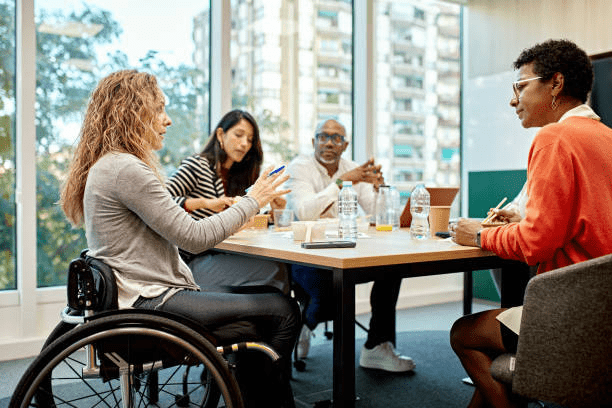
- Tailored accommodations: Providing physical or technological adjustments that allow employees of all physical and mental abilities to perform their jobs comfortably.
The Role of Psychological Safety in Fostering True Inclusion

Inclusion is the active practice that breathes life into workplace diversity. The company might be able to hire the most diverse talent in the world, but if those people feel like strangers or unknown in the day-to-day of the business, it’s a wasted effort. Inclusion must be actively worked towards by managers and colleagues, so that all voices are valued with dignity and respect.
The cornerstone of an inclusive workplace is psychological safety. A team culture characterized by an “open environment” in which people feel free to voice their opinions, even if they are not complete, to admit their errors, or to express respectful disagreement without negative consequences. In a work environment where there is no psychological safety, workers soon learn to say nothing, cover up mistakes, and go along with the majority opinion just to keep their jobs.
When leaders actively cultivate psychological safety, they transform team dynamics. People no longer spend mental energy worrying about office politics or potential embarrassment. Rather, they use their cognitive talents in a more collaborative, participatory, and proactive mode, and know that their efforts will be welcomed with open arms.
- Active listening: Managers give their full attention during conversations and intentionally invite quieter team members to share their thoughts during meetings.
- Safe error reporting: Teams treat mistakes as collective learning opportunities rather than occasions for personal blame or public criticism.
- Inclusive language: Employees and leaders use communication styles that respect personal pronouns, cultural backgrounds, and diverse family structures.
- Respectful disagreement: Colleagues are encouraged to challenge ideas constructively without attacking the individual proposing the concept.
Why Belonging is the Ultimate Driver of Employee Retention
While inclusion is an action taken by the organization, belonging is the personal feeling experienced by the employee. A well-known workplace metaphor explains that diversity is being invited to a celebration, inclusion is being asked to dance, and belonging is having the freedom to dance in your own unique style. That feeling of belonging brings about an emotional attachment between employees and their employer.
One of the biggest problems that HR professionals face in competitive job markets is keeping their best workers. Often employees leave organisations not just because of salary, but because they feel undervalued, isolated or not part of the organisational culture. People’s emotional exhaustion and burnout are the result of having to conceal parts of themselves to meet a set corporate template.
Conversely, a workplace culture that champions belonging creates fierce loyalty among its team members. If individuals feel comfortable and accepted for who they are, they will have a huge boost in satisfaction with their job. They are brand advocates, whose word of mouth carries weight when it comes to their employer, refer top-tier individuals to jobs, and are committed to the company even during difficult times.
- Reduced employee turnover: Workers who feel a strong sense of personal belonging are significantly less likely to seek employment elsewhere.
- Reduced absenteeism: Emotional comfort and decreased anxiety on the job contribute to fewer absences and increased attendance each day.
- Greater organizational pride: Staff members promote their organization in professional networks and the community.
- Greater discretionary effort: When people feel emotionally attached to their team, they put more of their own effort into their work, on an extra level.
Leveraging Employee Recognition to Reinforce Inclusive Behaviors

A strong employee recognition program is one of the best ways to foster a workplace environment that values and promotes diversity. People like to be seen and appreciated for their efforts. Organizations can help break down traditional organizational silos and barriers to hierarchy by enabling all employees to recognize each other.
Peer recognition programs will allow people to express their appreciation for their colleagues’ individual abilities and contributions in a variety of roles and departments. The ongoing stream of thank-yous demonstrates the diverse ways people contribute to the success of the organization, and supports the notion that they are all working toward the same goal. It takes the focus of the company from an individualistic competition to collaboration and community.
Moreover, there is social health data in recognition data that gives leadership valuable insights. Leaders can see if there are any pockets of areas or groups that are not being appreciated and may require extra support. When praise and rewards are fairly applied to the whole workforce, this fosters a sense of equity and belonging among all.
- Daily peer-to-peer appreciation: fosters cross-departmental relationships and brings team togetherness.
- Public celebration: Celebrate success stories openly and acknowledge that there are different ways to work successfully and what it looks like in the various roles.
- Just reward distribution: Track recognition initiatives to make sure that support people get the same amount of appreciation as first-line salespeople.
- Supporting core values: When children are rewarded for their recognition, they are empowered to adopt inclusive practices in their workflow.
Practical Steps for Leaders to Champion Sustainable Change
Fostering a workplace that is productive through diversity and inclusion is a process and a workplace culture that must be ongoing and sustained, and it depends on the commitment of the executive leadership. A complete shift in strategy doesn’t fall to HR heads or line managers. Senior leaders need to lead by example in their daily interactions – demonstrating inclusive behaviours all the time and making decisions that are visible and have equity at their heart.
Employee resource groups are an example of a strong initiative that leaders can promote in the organization. These employee-led and volunteer groups are safe zones to connect, share experiences, and offer strategic input to executive leadership for the benefit of underrepresented workers and their allies. Helping these communities shows a practical way of doing just that: understanding different perspectives of employees and meeting their particular challenges at work.
Also, organisations need to regularly audit their recruitment and talent management practices to eliminate unconscious bias. This includes using objective criteria for resume screening, assembling diverse interview panels, and providing ongoing education for managers. Inclusive leadership, with the investment in comprehensive educational resources, makes the organization stronger as a whole.
- Employee groups are sponsored: Executive leaders are active sponsors of employee resource communities and make sure their concepts are communicated to decision-makers.
- No biased recruitment: Taking names, addresses, and graduation years off initial resumes to see skills/experience alone.
- Continuous education: Promoting managers’ regular education on leading diverse teams, reducing bias, and communication best practices.
- Data-driven accountability: Tracking inclusion metrics and employee sentiment surveys regularly to measure progress and adjust strategies over time.
Conclusion
There is no doubt that positive diversity management and a positive culture of diversity in the workplace create a stronger, more resilient organization. If companies truly want to build a culture of equity and belonging, they are able to tap into the creativity of their employees. Innovation is driven by a diversity of perspectives, trust fosters equitable practices, and a sense of belonging keeps talented people committed to collective objectives.
It takes work, reflection, and active involvement of everyone in the organization to create this kind of setting. It is the leader’s job to foster a psychologically safe environment, the manager’s to show active empathy, and everyone’s to regularly recognize and celebrate each other’s differences. When they are all aligned, the work environment becomes a living community with a healthy respect for human differences as the greatest asset it has to offer.