Cooling Memory Foam vs. Gel Memory Foam Mattresses
If you wake up at 3 a.m. feeling warm along your back or hips, the label on the mattress can start to feel personal. You are not trying to pass a materials quiz. You want to know whether a gel layer is enough, whether a broader cooling design is worth paying attention to, and what you should actually test once the mattress is in your bedroom.
The short version is simple: gel can help with some heat buildup, but it is only one part of the bed. A full cooling design looks at the cover, foam response, airflow routes, bedding, and how deeply your body settles into the surface. That is the difference shoppers should use when comparing cooling designs with gel features.
When gel foam helps
Gel memory foam is best understood as a comfort-layer feature. It may help spread warmth away from a concentrated contact point, especially when you first lie down or when one area of the bed tends to feel warmer than the rest. If you like the pressure-relieving feel of memory foam but dislike a hot spot under the shoulders, hips, or lower back, gel is a reasonable feature to look for.
Gel is less convincing when the rest of the mattress traps heat. A dense cover, thick non-breathable protector, slow foam, and solid base can all limit where warmth goes after the gel absorbs it. In that case, the word “gel” may sound cooling while the actual sleep experience still feels stuffy after several hours.
When a full cooling design matters more
A broader cooling design matters when you are a consistent hot sleeper, share the bed, live in a humid room, or use bedding that tends to hold warmth. In those situations, the question is not whether one layer has a cooling ingredient. The question is whether heat has a path away from your body after the surface warms up.
Read the product page from the top down. What does the cover do? Does the comfort layer allow airflow or only add a cool first touch? Is there a transition layer that keeps you from sinking too far? Does the support core leave room for air movement? A mattress does not need every feature, but the parts should make sense together.
This is the stage where a collection view can be more useful than a single product page. When you compare a cooling memory foam mattress against similar options, look for repeated evidence of airflow, response, and support instead of one isolated cooling phrase.
Do not judge by the first five minutes
Many beds feel fresh when you first lie down because the room, sheets, and cover are cooler than your body. That first-contact feel can be pleasant, but it does not prove the bed will stay comfortable at 2 a.m. The better test is whether the surface keeps building heat after your body has settled into it.
On night one, notice the first impression and then check again after a few hours. Is the warm area under your torso, under your hip, or across the whole surface? By night seven, look for a pattern. One warm night could be the room or bedding. Repeated warmth in the same body zone usually says more about the mattress setup.
Think about sink before you think about cold
Heat and pressure often travel together. A deeper body cradle increases contact between you and the foam, which can reduce small air gaps around the body. That is why a soft, slow-moving bed may feel warmer than a slightly more responsive bed even if both mention cooling materials.
This does not mean firm is always cooler or better. Side sleepers may need real cushioning at the shoulder and hip. The useful question is whether the mattress lets you settle comfortably without holding you in one deep pocket. If turning takes effort, temperature complaints may follow because your body stays wrapped in the same impression.
Bedding can make a good mattress look bad
Before blaming the mattress, check the layers above it. A heavy waterproof protector, thick quilted pad, flannel sheet, or oversized comforter can trap warm and humid air next to your body. These pieces can change the result enough that the same mattress feels different from one household to another.
Use your normal bedding for the real decision, but run one comparison night with lighter sheets or no extra pad if the bed feels hotter than expected. If the mattress feels noticeably better with lighter bedding, you have learned something useful. You may not need a different mattress; you may need a different sleep setup.
Who should lean toward gel
Gel foam can be a sensible choice if you are a mild hot sleeper, want the contour of memory foam, and mostly need help with surface warmth. It may also suit someone who sleeps in a cool room but dislikes the warm spot that can form under the hips or shoulders.
If that sounds like your situation, a specific gel memory foam model belongs later in the comparison, after you have already checked room conditions, sink depth, and bedding. That timing makes the product research feel like a next step, not a keyword dropped into the opening.
Choose gel with realistic expectations. It is not an air conditioner inside the bed, and it cannot cancel a hot bedroom. It works best when the surrounding design gives warmth somewhere to move and when the mattress feel does not create excessive enclosure.
Who should look for a complete cooling system
Look beyond gel if you often wake up warm, sleep with a partner, use a queen or king with limited space between bodies, or find that several foam beds have felt stuffy. In those cases, compare cover breathability, airflow channels, responsive comfort layers, and support that limits deep sagging.
Also look for clearer product information. A page that explains where each cooling feature sits is more useful than one that repeats the word “cool” without showing the layer sequence. Clear construction details help you decide whether the bed is built for overnight heat movement or only for a cool showroom touch.
A one-week test that tells you more than a label
For the first week, keep the room setting, bedding, protector, and sleepwear as consistent as possible. Each morning, write down three observations: where warmth collected, how easy it was to turn, and whether the bed still felt supportive under your waist or lower back. These notes are more reliable than memory after a few uneven nights.
If a gel memory foam mattress is still on your shortlist, review it against the pattern you observed during this week. The product page should answer the warm-zone problem you actually had, not just repeat the word gel.
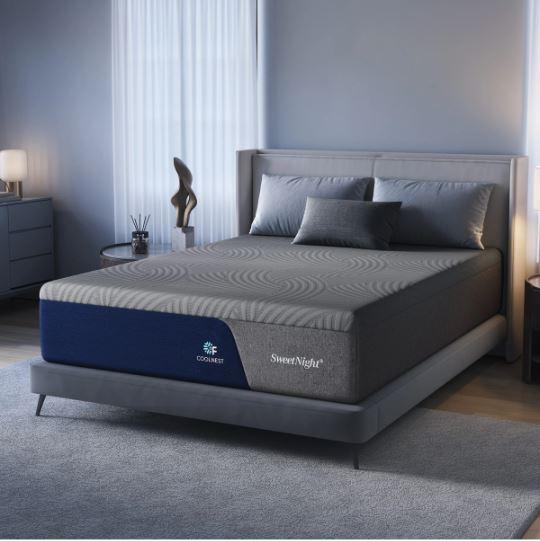
For a product-level example, SweetNight lists the CoolNest® Ultra Memory Foam Mattress as its advanced cooling memory foam option. Its page describes a five-stage cooling system that combines a Gradient Ice Silk Cover, PCMflux® foam, AirMesh™ breathable memory foam, ventilated gel memory foam, and a 3D open-channel structure. That makes it useful because gel is only one part of the stack. Review the SweetNight product page before deciding whether you need a full CoolNest® system or simply a gel feature.
If the bed feels cool at first but warm by morning, the issue may be heat escape. If it feels warm only when you use a heavy protector, bedding may be the main problem. If it feels warm and hard to move in, sink and response may matter as much as cooling materials.
If a gel memory foam model is still on your shortlist after those notes, review it against the pattern you observed. The product page should answer the warm-zone problem you actually had, not just repeat the word gel.
Mistakes that lead to the wrong cooling choice
The first mistake is buying the coldest-sounding phrase instead of the best sleep setup. A shopper may pick gel because it is familiar, then keep a thick protector and heavy duvet that trap warmth above the foam. Another shopper may pick a full cooling design but choose a feel that is too soft, creating the same deep body pocket they disliked before.
The second mistake is comparing models without writing down the exact version. Thickness, firmness, and layer proportions can change the feel. Before ordering, note the size, height, firmness option, foundation guidance, and return terms. That short record makes the first-week test fair because you know what you actually bought and what you are allowed to change.
Bottom line
Pick gel when you want memory-foam contour with some help against localized warmth. Pick a fuller cooling design when heat is a recurring reason you wake up, especially if you sink deeply or share the bed. The strongest choice is not the coldest-sounding label. It is the mattress that keeps comfort, movement, support, and heat control working together through a full night.