How to Buy Children’s Sneakers Online Without Guessing the Fit
Online shopping can save parents time, especially when school, work, and family routines leave little room for visiting several stores. However, buying children’s footwear online can feel uncertain because children cannot try the shoes on before the order is placed. The process becomes easier when parents know how to measure feet, read product information, compare sizing details, and check the fit when the shoes arrive.
When shopping for Kids Sneakers, parents should treat size labels as a starting point rather than the only decision. Two shoes marked with the same size may fit differently because of their shape, material, toe space, and fastening system. A careful approach can reduce unnecessary returns and help families choose a pair that feels secure and comfortable.
Measure Both Feet Before Ordering
Children’s feet grow quickly, and one foot may be slightly larger than the other. Measuring both feet gives parents a more accurate starting point.
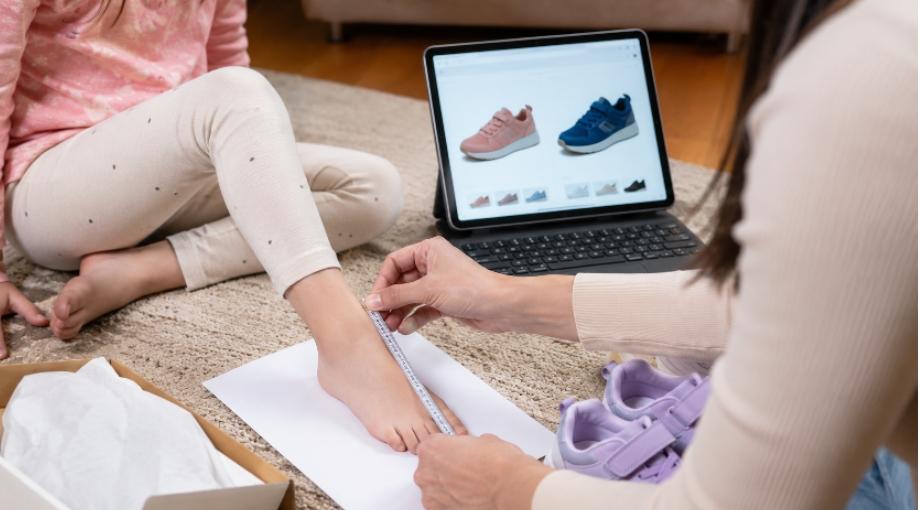
Place a sheet of paper on a hard floor, ask the child to stand naturally, and trace around each foot. The child should wear the type of socks normally used with sneakers. Measure from the heel to the longest toe and use the larger measurement when checking the size chart.
Measuring while the child stands is important because the foot spreads slightly under body weight.
Avoid Relying on Age-Based Sizes
Age can provide a rough guide, but it cannot accurately predict shoe size. Children of the same age may have very different foot lengths and widths.
A child may also grow faster during one period and more slowly during another. Ordering by age alone can therefore result in shoes that feel too tight or loose.
Fresh measurements and the seller’s sizing information are more dependable than an old size label.
Read the Size Chart Carefully
Size charts may use UK, US, European, or centimetre measurements. Parents should confirm which system is shown before selecting a size.
It is also important to check whether the chart refers to foot length or the internal length of the shoe. These figures are not always the same because a shoe normally needs some space beyond the exact foot measurement.
When guidance is available, follow it rather than automatically choosing the child’s usual size.
Consider Width as Well as Length
Correct length does not guarantee a comfortable fit. Some children have narrow feet, while others need more room across the front or middle.
Descriptions may mention a wide fit, slim shape, rounded toe box, or adjustable fastening. Product images can also provide useful clues.
A roomy toe area should allow natural movement, but the shoe still needs to hold the heel securely.
Check the Shape in Product Photos
The shape of the front of the shoe can affect comfort. Rounded toe areas often provide more room than sharply tapered designs.
Look at the sneaker from above and from the side. Multiple photographs make it easier to understand its width, depth, and opening.
A child with a higher instep may need a shoe that opens widely or offers adjustable straps or laces. A tight opening can be difficult to manage even when the length is correct.
Use Current Shoes as a Reference
A comfortable pair already owned by the child can provide useful information. Parents can compare its width, fastening style, toe shape, and sole with an online option.
The old pair should only be used as a reference if it still fits correctly. Check whether it leaves enough toe room, holds the heel, and stays comfortable after several hours.
These observations can guide the next purchase without assuming that every brand fits the same way.
Study the Materials and Construction
Online descriptions often explain what the upper, lining, and sole are made from. This helps parents estimate how the shoe may feel during daily use.
Breathable fabric or mesh can suit active children and warmer conditions. More structured materials may offer added protection and be easier to wipe clean.
The sole should appear flexible near the front while providing a stable base. Secure stitching and a dependable fastening system are also useful for frequent wear.
Match the Fastening to the Child
The fastening affects fit and independence. Hook-and-loop straps are often simple for younger children, while elastic laces can offer a secure feel without tying.
Traditional laces allow more adjustment and may suit older children. Slip-on designs can be convenient, but they should not move excessively around the heel.
When choosing Kids Sneakers, parents should consider how quickly the child needs to get ready, whether shoes are changed at school, and how confidently the child can manage them alone.
Think About the Main Activity
A shoe suitable for occasional outings may not be the best choice for daily school use. Parents should decide where the sneakers will be worn most often.
For school, durability, simple cleaning, and all-day comfort may be priorities. For weekends, a lighter or more colorful design may be suitable. For travel, easy removal and versatility can be helpful.
Choosing according to the main activity prevents families from paying for features the child is unlikely to use.
Read Reviews with Care
Customer reviews can reveal useful details about sizing, width, comfort, and durability. Repeated comments such as “runs small,” “wide at the front,” or “easy to clean” may support a better decision.
One review should not determine the purchase because every child’s foot is different. Look for patterns across several recent reviews instead.
Reviews are most helpful when combined with measurements, photographs, and official product details.
Check Return and Exchange Information
Even careful measurements cannot remove every uncertainty. A clear return or exchange process provides reassurance when buying shoes online.
Before ordering, check the return period, condition requirements, packaging rules, and any shipping costs. Shoes should be tried indoors on a clean surface until the fit is confirmed.
Keeping the original box and labels during the first fitting can make an exchange easier.
Test the Fit Immediately
The child should try the sneakers with the socks they will normally wear. Both shoes need to be tested because the feet may differ slightly.
Ask the child to stand, walk, turn, and take several natural steps indoors. Check that the heel does not lift too much and the toes are not pressed against the front.
The fastening should hold the foot without creating pressure. Shoes that feel painful or sharply restrictive should not be treated as something the child must “break in.”
Ask Specific Comfort Questions
Young children may say a shoe feels fine even when the fit is not ideal. Specific questions can produce clearer answers.
Ask whether the toes can move, whether the heel rubs, whether anything feels tight, and whether the shoe slips. Check for red marks after several minutes of indoor wear.
Repeatedly removing a shoe, changing the way they walk, or complaining about one area may indicate a fitting problem.
Do Not Choose Excessive Growing Room
Parents understandably want shoes to last, but buying a pair that is much too large can create new problems. Oversized sneakers may slide, bend in the wrong place, and increase the chance of tripping.
A little space at the front allows for movement and modest growth. The rest of the shoe should remain secure.
The child should walk normally without gripping with the toes or over-tightening the fastening.
Keep a Record for Future Orders
Parents who regularly shop online can keep a simple note of the child’s foot length, preferred shape, and successful fastening styles. Adding the measurement date is important because children’s feet change quickly.
The record may also note whether a design felt narrow or how long the last size remained comfortable.
This can make future shopping faster while still reminding parents to remeasure before ordering.
Final Thoughts
Buying children’s sneakers online does not need to depend on guesswork. Accurate measurements, careful reading, attention to width and shape, and an indoor fit test make the process more reliable.
Parents should consider how the shoe will be used, how easily the child can manage it, and whether it provides a secure fit without pressure. Size charts, product photos, descriptions, and reviews work best when considered together.
A thoughtful process can save time, reduce avoidable returns, and help children stay comfortable through school, play, travel, and everyday activities. Families exploring practical and stylish footwear can begin their search at bebenelle.com.