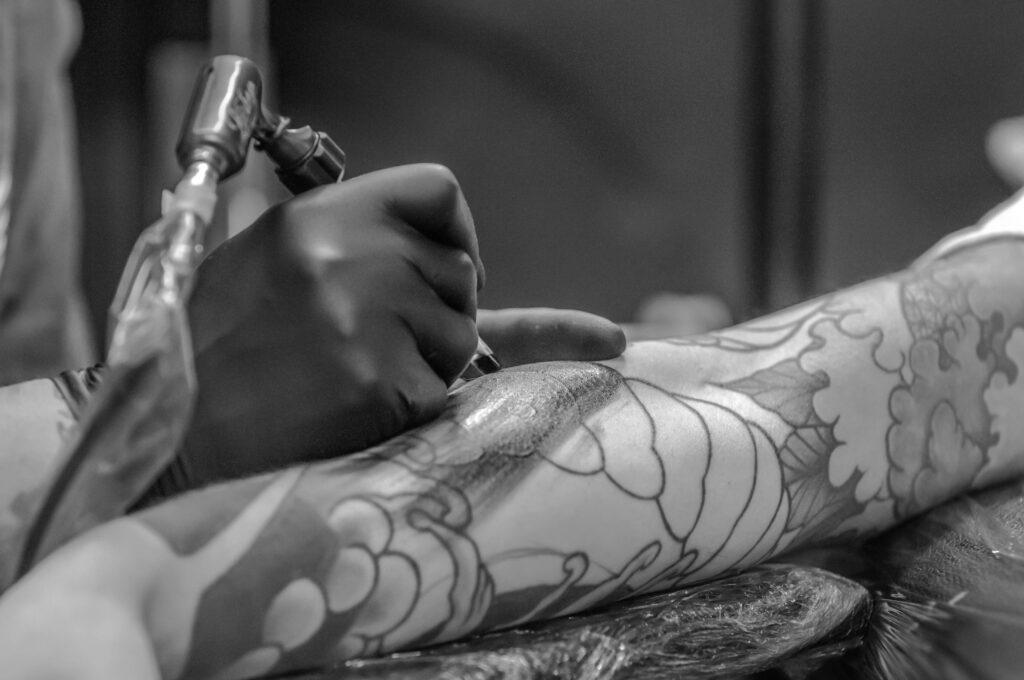
The Evolution of Tattoo Artistry as Fine Art
For millennia, the human body has served as a canvas for storytelling, spiritual devotion, and social distinction.
Yet, for much of modern history, Western society relegated tattooing to the fringes of culture, associating permanent body marking with countercultures, criminality, or maritime traditions.
Today, a profound cultural transformation is underway. Tattooing has transcended its former subcultural boundaries to secure recognition as a legitimate, sophisticated form of fine art.
This evolution reflects not only advances in technical precision and equipment, but also a shift in public perception, institutional recognition, and the artistic philosophy surrounding the skin as a permanent medium.
Historical Roots: From Sacred Ritual to Social Stigma
To understand the contemporary renaissance of tattoo artistry, one must first recognise its ancient origins. Long before skin art entered mainstream galleries, indigenous cultures across the globe practised sophisticated forms of body decoration.
From the intricate Polynesian tatau traditions to the sacred Irezumi of Japan and the ancestral markings of Indigenous communities, tattooing was deeply embedded in social structures, spiritual protection, and lineage.
However, the modern Western history of tattooing experienced a vastly different trajectory. During the 19th and early 20th centuries, tattooing became largely institutionalised within specific subcultures:
- Maritime Tradition: Sailors adopted tattoos as mementos of voyage achievements, nautical milestones, and protective talismans against drowning.
- Military Subcultures: Service personnel utilised body art to foster camaraderie, express patriotism, and mark unit affiliation.
- Circus and Side-Show Attractions: Heavily tattooed individuals were commercialised as exotic spectacles, reinforcing a perception of eccentricity.
- Criminal and Countercultural Associations: In mid-century Western cities, tattoos became strongly linked with gang memberships, penal institutions, and rebellious youth movements.
These historical associations established a persistent social stigma, leading traditional art institutions to dismiss body modification as mere craft or illicit symbolism rather than elevated aesthetic expression.
The Cultural Renaissance: Redefining the Medium
The transition from fringe practice to high art began during the late 1960s and 1970s, an era often referred to by art historians as the “Tattoo Renaissance”.
Visual artists trained in traditional fine art disciplines—such as classical painting, illustration, and printmaking—began turning their creative focus toward the human body.
Practitioners brought classical compositional rules, colour theory, and anatomical awareness into the tattoo studio, challenging the rigid limitations of traditional flash sheets.
As tattooists began customising designs tailored specifically to the unique contours of the human muscle structure, the perception of skin art began to change.
The body was no longer viewed merely as a flat surface to stamp with pre-drawn icons, but as a dynamic, moving sculpture where ink interacts with movement and lighting.
“The body is a dynamic three-dimensional canvas. Tattooing as a fine art form requires an intricate understanding of movement, skin longevity, classical composition, and light.”
Factors Driving the Fine Art Paradigm Shift
Several pivotal factors have contributed to the formal recognition of tattooing within the global fine art ecosystem:
1. Institutional Recognition and Gallery Exhibitions
Major international museums and art galleries have increasingly opened their doors to tattoo culture. Renowned institutions such as the Musée du Quai Branly in Paris, the Field Museum in Chicago, and the National Gallery of Victoria in Australia have hosted major retrospectives exploring tattoo history and aesthetics. These exhibitions curate skin art alongside classical paintings, sculptures, and historical artifacts, formalising its place in art history.
2. Technical Innovation and Equipment Refinement
The revolution in tattooing equipment has allowed artists to achieve delicate detail previously thought impossible on human skin. Advanced rotary machines, specialised needle configurations, and high-purity pigments give artists unprecedented control over tonal gradients, soft shading, and micron-level precision.
3. Professionalisation and Rigorous Education
Modern tattoo practitioners often hold degrees in fine art, graphic design, or illustration. The industry has increasingly embraced formalised education and structured mentorships.
Aspiring artists now seek comprehensive training through specialised programs, such as a formal fine line tattoo course, to master advanced needle control, hygiene standards, skin biology, and subtle aesthetic execution before touching human skin.
4. Digital Media and Global Artistic Exchange
The advent of visual social media platforms transformed how tattoo art is shared and consumed. Fine art tattooists can showcase hyper-detailed portfolios to a global audience, bypassing regional limitations.
This visibility has elevated public appreciation for diverse styles, including hyper-realism, micro-realism, surrealism, black-and-grey illustrative work, and minimal abstract art.
Contemporary Styles: Where Fine Art Meets Skin
Today’s fine art tattooists draw inspiration from centuries of art movements, seamlessly blending classical art history with modern tattooing techniques. Key aesthetic styles that epitomise this movement include:
- Micro-Realism & Hyper-Realism: Recreating intricate oil paintings, botanical illustrations, and photographic portraits with incredible fidelity on a miniature scale.
- Fine Line & Single-Needle Art: Employing delicate, single-needle techniques to create minimalist, ethereal designs with whisper-thin lines and subtle shading.
- Abstract & Brushstroke Aesthetics: Replicating the spontaneous energy of watercolour painting, calligraphy, and expressive oil brushstrokes directly onto the skin.
- Illustrative & Neoclassical: Synthesising elements from Renaissance etching, Art Nouveau, and classical mythology to form sweeping, full-body compositions.
The Intrinsic Value of the Living Canvas
What uniquely distinguishes tattoo artistry from conventional visual arts is its ephemeral, living nature. Unlike oil paintings preserved in climate-controlled museum vaults, a tattoo exists in tandem with its canvas.
It ages, changes, and ultimately vanishes with the life of the individual who carries it. This ephemeral quality imbues body art with a deeply personal, philosophical dimension that conventional art media cannot replicate.
To wear a fine art tattoo is to participate in an intimate collaboration between artist and subject. The collector becomes an active museum for the artwork, taking fine craftsmanship out of sterile gallery spaces and into everyday life.
Conclusion
The journey of tattoo artistry—from ancient spiritual ritual to modern fine art—stands as one of the most remarkable cultural transformations of our time.
By breaking free from historical stigmas and integrating classical artistic principles, modern tattooists have elevated their work into the upper echelons of visual culture.
As galleries continue to celebrate body art and educational standards remain elevated, tattooing will undoubtedly remain a powerful, enduring synthesis of human expression, craftsmanship, and personal identity.