Is a Wireless Power Bank Worth It for Travel?
Travel can drain a phone faster than expected. Between boarding passes, maps, rideshare apps, hotel bookings, photos, mobile payments, and messages, your phone becomes one of the most important items in your bag. That is why many travelers now carry a wireless power bank as a backup. It offers portable charging without needing to find an outlet or pull out a cable every time your battery drops.
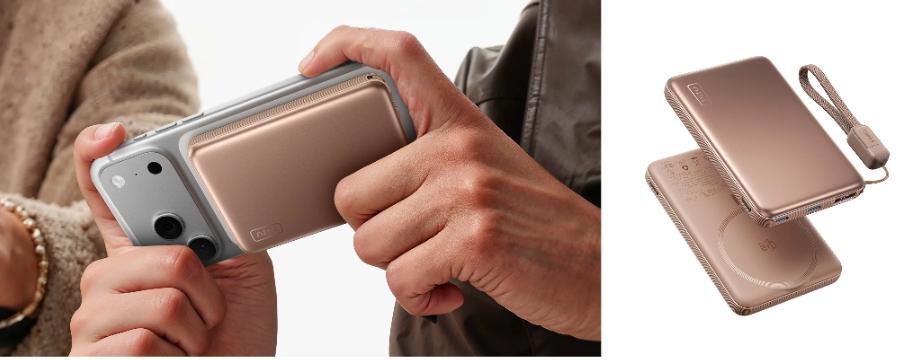
For travelers who want a cleaner setup, the P781 magnetic power bank is a good example of how magnetic wireless charging fits into daily travel. Instead of digging through a backpack for a cord, users can attach a magnetic power bank to a compatible phone and keep charging while waiting at a gate, sitting in a rideshare, or walking between stops.
Capacity also matters on long travel days. A 20000 mAh power bank can be useful for road trips, long flights, business travel, or full days of sightseeing when a small top-up is not enough. Still, the real value comes from finding a power bank that balances capacity, portability, charging speed, and convenience.
Why Travelers Need Portable Power

Phones are now essential for almost every part of travel. Many people use them for flight updates, digital tickets, hotel check-ins, navigation, translation, and contactless payments. When the battery gets low, the whole trip can feel more stressful.
Airport delays, long layovers, and full sightseeing days make backup power even more important. Public outlets are not always available, and hotel room outlets are not always near the bed or desk. A wireless power bank gives travelers more control, especially when they need a quick charge away from a wall outlet.
What Is a Wireless Power Bank
A wireless power bank is a portable battery that can charge compatible phones without a cable. Users place the phone on the charging area or attach it magnetically if the power bank supports magnetic wireless charging.
Most travel-friendly wireless power banks also include a USB-C port. This is important because wired charging is usually faster and more efficient. Wireless charging is best for convenience, while USB-C is better when speed matters. For travel, having both options is often the most practical choice.
Is a Wireless Power Bank Worth It for Travel
A wireless power bank is worth it for travel if you want fewer cables and easier charging during the day. It is especially helpful for people who use their phones often while moving through airports, cities, hotels, rideshares, and attractions.
However, it may not be the best choice for every traveler. If you only care about the fastest charging speed, a wired power bank may be better. If you rarely use your phone during a trip, a small basic charger may be enough. But for most travelers, a wireless power bank with USB-C output offers a good balance of convenience and performance.
Benefits of a Wireless Power Bank for Travel
The biggest benefit is fewer cables. Travel bags can already feel crowded with passports, adapters, earbuds, snacks, and documents. A wireless power bank helps reduce clutter and makes quick charging easier.
Another benefit is easy access. You can charge your phone while checking messages, looking at maps, or waiting for your next ride. Magnetic wireless models are especially useful because they help keep the phone aligned while charging.
Wireless power banks are also helpful in crowded places. Airport outlets are often full. Coffee shop plugs may be far from your seat. Hotel outlets may be in awkward locations. A portable charger keeps you from depending on public charging spots.
Limits Travelers Should Know
Wireless charging is convenient, but it has limits. The first is speed. In many cases, wireless charging is slower than USB-C charging. If your phone is almost dead and you only have a short time to charge, using a cable may be better.
Wireless charging can also be less efficient. Some energy is lost during charging, so the power bank may not deliver as much usable power as a wired connection. Heat is another factor. Long wireless charging sessions, especially while using the phone, can make the device warmer and slow down charging.
Phone cases can also affect the experience. Thick cases, wallet cases, metal plates, or poorly aligned magnetic rings may reduce charging stability. For best results, use a compatible case and make sure the phone sits correctly on the charger.
Can You Bring a Wireless Power Bank on a Plane
Yes, travelers can usually bring a wireless power bank on a plane, but it should be packed in carry-on luggage or a personal item, not checked baggage. Since power banks contain lithium batteries, airlines want them accessible in the cabin.
Travelers should also check capacity before flying. Most phone power banks are within common airline limits, but larger models should be checked carefully. The battery capacity is usually printed on the product label in watt-hours or milliamp-hours.
It is also important to avoid traveling with damaged batteries. Do not pack a swollen, cracked, recalled, or overheating power bank. Keep it away from loose metal objects and avoid charging devices with the power bank buried deep inside a bag.
What to Look for in a Travel Wireless Power Bank
Capacity should match your travel style. For short trips or daily commuting, a smaller power bank may be enough. For long flights, road trips, or heavy phone use, a larger capacity can be more practical.
Charging options also matter. A good travel wireless power bank should support wireless charging and USB-C output. Wireless charging is useful for quick top-ups, while USB-C gives faster power when needed.
Size and weight are just as important. A bulky power bank may stay in the hotel room, which defeats the purpose. Travelers should choose a model that fits easily in a backpack, purse, or personal item.
Safety features are also worth checking. Look for temperature control, overcharge protection, and short-circuit protection. These features help protect both the phone and the power bank during daily use.
Wireless Power Bank vs Wired Power Bank for Travel
A wired power bank is usually better for fast charging and energy efficiency. It is also the better option for larger devices like tablets or laptops.
A wireless power bank is better for convenience. It works well for quick phone top-ups, travel days, airport waits, and casual use. The best choice for many travelers is a hybrid model that offers both wireless charging and USB-C charging.
Who Should Travel With a Wireless Power Bank
A wireless power bank is useful for frequent flyers, business travelers, road trip travelers, students, digital nomads, and families. Anyone who relies on a phone for tickets, maps, payments, calls, or photos can benefit from having backup power nearby.
It is especially useful for travelers who dislike cable clutter or often charge in short moments throughout the day.
Conclusion
A wireless power bank can be worth it for travel if you want a cleaner and easier way to keep your phone charged. It may not always be as fast as wired charging, but it offers convenience in places where outlets are limited or cables are inconvenient.
For most travelers, the best option is a wireless power bank that also includes USB-C charging, enough battery capacity, and reliable safety features. With the right model, staying powered during flights, hotel stays, rideshares, and long travel days becomes much easier.