What to Measure on Your Front Door Before Buying a Smart Lock
What to Measure on Your Front Door Before Buying a Smart Lock
The weekend you set aside to swap a plain deadbolt for a smart lock can go sideways before the first screw is out. The lock is usually fine. The door is what nobody checked. A plate that crowds the handle, a bolt that stops short of the strike plate, a bore that looked standard but was not. Those are the reasons why a lock gets repacked Monday morning.
Measure the door before you compare the best smart locks online. App reviews and feature lists can wait. Neither tells you whether the lock physically fits your door. What follows covers the five measurements to take, your deadbolt type, and the choice between full replacement and interior retrofit.
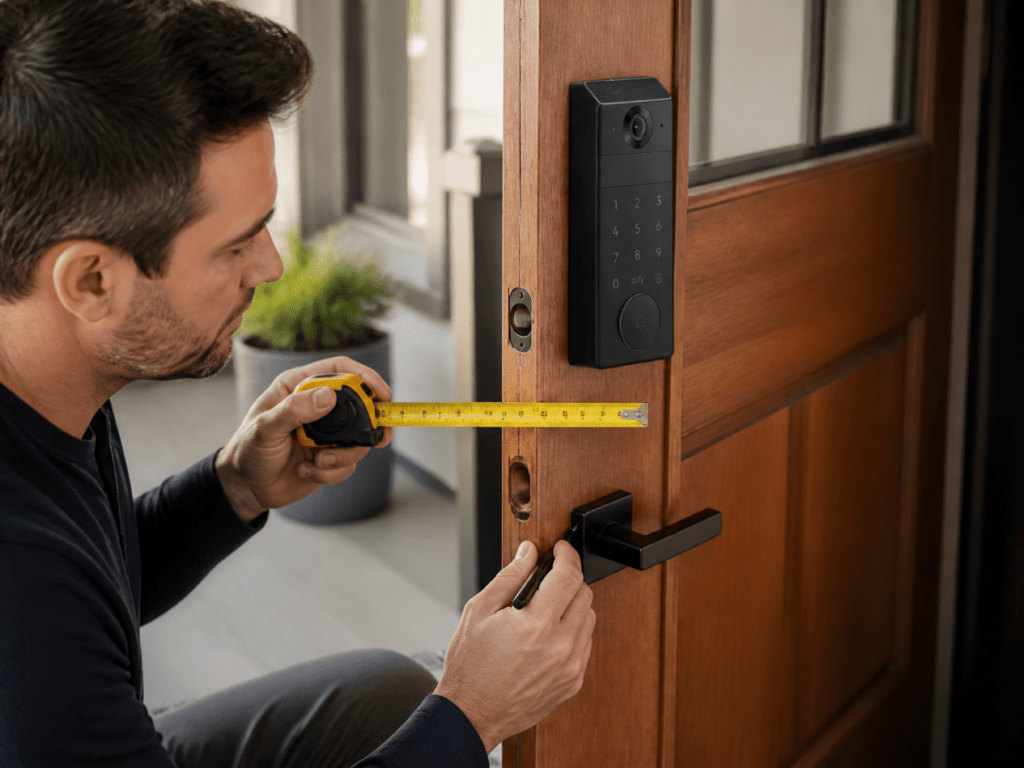
A man measures a front door’s lock area with a tape measure before installing a smart lock.
Table of Contents
- Why feature lists mislead without door measurements
- Smart deadbolt compatibility and the five measurements that matter
- Single vs double cylinder and the tailpiece length question
- Full replacement vs smart lock retrofit
- Choosing the best smart lock for your front door
- Conclusion
Why feature lists mislead without door measurements
Browsing smart locks by fingerprint speed or app ratings is not unreasonable. The problem is that those features assume the door behind them is already ready. Door prep varies more than most listings acknowledge.
A door installed recently to current standards is more likely to match common dimensions. A door that has been rekeyed or redrilled more than once, or drilled slightly off the first time, can hold small shifts in bore position, backset, or strike plate placement. None of that shows up on a spec sheet, but it decides which smart locks can go in without modification.
Most returns trace back to one of four physical mismatches: wrong backset, a bore too small for the new hardware, too little clearance between the deadbolt and the handle below, or a deadbolt type the lock was never built to operate. You see the problem only after the new hardware is out of the box and the old deadbolt is on the counter.
Knowing which issue applies to your door before ordering changes the timeline considerably. The measurements in the next section take about five minutes. A return takes several days.
Smart deadbolt compatibility and the five measurements that matter
Start with the door open and the existing deadbolt still in place. If the old lock has already come out, mark hole centers with a strip of tape before measuring. Hole positions are harder to read accurately than they look, and a center that is off by a quarter inch will shift the backset number. A tape measure handles most of it. A small ruler is easier around the door edge where the latch bore sits.
These five measurements control whether a lock goes in:
- Backset: The distance from the door edge to the center of the deadbolt hole. In the US, that is almost always 2 3/8 inches or 2 3/4 inches. Many smart locks include an adjustable latch that covers both, but the product page should say so explicitly. A wrong backset means the bolt either scrapes the strike plate or stops short of the frame.
- Cross bore: The diameter of the large round hole through the door face. Newer doors commonly use 2 1/8 inches. Some older doors still carry a 1 1/2 inches bore. A lock built for 2 1/8 inches will not seat cleanly in the smaller hole, and enlarging the bore requires a hole-saw jig that renters generally cannot use without written permission.
- Latch bore: The smaller hole in the door edge where the bolt slides out. Mismatches here are less common but can still throw off bolt alignment in the frame.
- Door thickness: Measure the slab itself, not the trim or weatherstripping around it. Most US exterior doors run around 1 3/4 inches thick. Custom solid-wood or fiberglass doors can be thicker, which affects which tailpiece lengths will work.
- Handle clearance: the distance from the center of the deadbolt to the center of the handle or knob below it. Smart locks often have a taller exterior plate than a plain deadbolt. Decorative handlesets and lever rosettes can block the plate even when the bore is a perfect match.
| Measurement | What goes wrong if it is off |
| Backset | Bolt scrapes or stops short of the strike plate |
| Cross bore | Exterior plate will not seat; may need re-drilling |
| Door thickness | Tailpiece binds the motor or leaves loose play |
| Handle clearance | Escutcheon plate physically collides with handleset |
Write those numbers down before you open a product page. Every listing uses a slightly different diagram, and you will not remember five numbers once you start clicking between them.
Single vs double cylinder and the tailpiece length question
Look at the inside of the door first. A thumbturn on the inside means single-cylinder, with a key outside and a thumbturn inside. That is what most full-replacement smart locks are built for. If you have that setup, bore, backset, and thickness are the main filters from here.
A key on both sides is a different situation. Double-cylinder locks show up near glass sidelites because they stop someone from breaking the glass and reaching a thumbturn, but the exit risk is real too. If the key is not nearby during a fire, getting out takes longer. Local fire codes in many jurisdictions restrict where these can be used. Converting a double-cylinder door to a smart lock is not a direct swap for any mainstream product, so confirm the conversion path with the manufacturer or a licensed locksmith before ordering anything.
Once the deadbolt type is clear, do one quick mechanical test. Close the door and throw the bolt by hand. It should enter the strike plate smoothly, without lifting the door, pulling the knob toward you, or leaning into the knob to force it home. A smart lock motor will not correct a door that already fights the bolt. If it binds, fix the strike plate or hinge alignment first.
Door thickness ties into this through a part most listings mention but rarely explain. The tailpiece is the flat metal bar connecting the outside cylinder to the interior mechanism. Most tailpieces are sized for a standard 1 3/4-inch door. On a thicker slab, a too-short tailpiece binds the motor instead of turning it. The supported thickness range in the product listing tells you more about real compatibility than a generic “fits standard doors” note.
Full replacement vs smart lock retrofit
Measurements and deadbolt type together narrow the install path. The choice is not purely about features. It is about what the door will accept and what the lease permits.
A full replacement takes out the outside cylinder, the inside thumbturn, the latch, and the original keys. Fingerprint entry, keypads, app control, camera integration, and remote access all live in this category. The constraint is that every measurement has to pass. A bore that is too small, a backset that is off, or a handleset sitting too close to the deadbolt will stop the install before it starts.
An interior retrofit replaces only the interior thumbturn or motor. The outside of the door looks identical. The landlord’s original key still works. For renters, that is often the only practical path. Fingerprint readers, visible keypads, cameras, and remote access do not fit this install type because they all require exterior hardware. If those features are the main reason for buying, a full replacement is the right category to shop.
For renters, the lease question comes before the hardware decision. Even a reversible install can violate a lease if it changes lock access without prior written approval. Before ordering anything, confirm in writing that the change is permitted, keep every original screw and thumbturn in a labeled bag, and photograph the door, frame, and strike plate before and after. If exterior changes are not approved, an interior retrofit or leaving the existing lock in place is the practical choice.
Choosing the best smart lock for your front door
Once all five measurements are written down and the install path is decided, the shopping page reads differently. Instead of starting with fingerprint specs or app screenshots, filter first by fit, including backset range, cross bore diameter, door thickness minimum and maximum, and handle clearance requirement. A product that gives those dimensions in actual numbers is easier to trust than one that only says “fits most standard US doors.”
For a full replacement on a single-cylinder door, compare your five measurements against the eufy FamiLock S3 Max. It is built for standard US and Canadian deadbolt prep with no extra drilling, and the fit ranges are listed on the product page. With groceries in both hands, palm vein unlock avoids the thumbturn-and-phone routine at the door. The 4-inch indoor viewer and 2K HD camera let you see who is outside without waiting for an app alert. BHMA Grade 1 is the highest residential hardware rating if you ever need to discuss your lock after a break-in.
Those features matter only after the door measurements pass. Tight handle clearance or a cross bore below the listed minimum is still a dealbreaker, no matter how good the camera looks. Once the door numbers narrow the list, what is left is mostly features and budget.
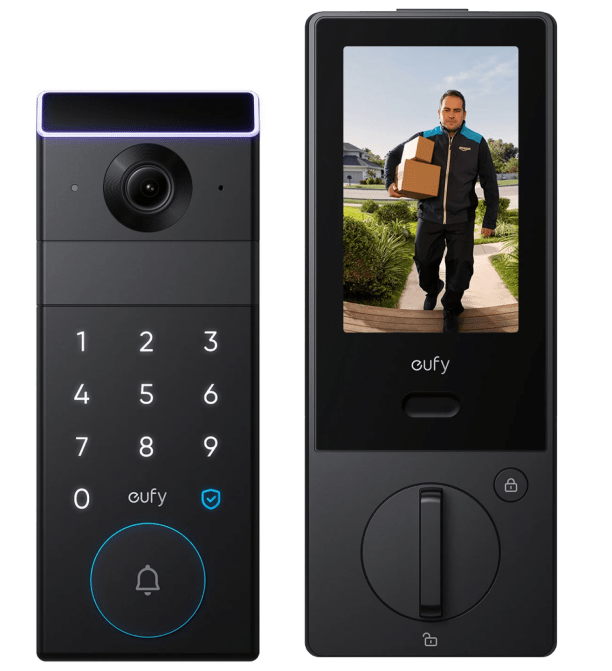
eufy FamiLock S3 Max
Conclusion
Most smart lock returns were not caused by a bad product. The door was simply not measured first. The five numbers are backset, cross bore, latch bore, door thickness, and handle clearance. Deadbolt type adds one visual check. Single-cylinder works with most full-replacement models, while double-cylinder needs separate confirmation. The install path follows your measurements. Choose full replacement when measurements pass and interior retrofit when the exterior cannot change.
Most doors fall into one of those two paths. For the few that do not, catching the mismatch before you unbox the lock still saves a return trip. Measure twice, lock once. When your numbers are ready, browse the eufy smart locks collection and compare models by fit specs first, then features.