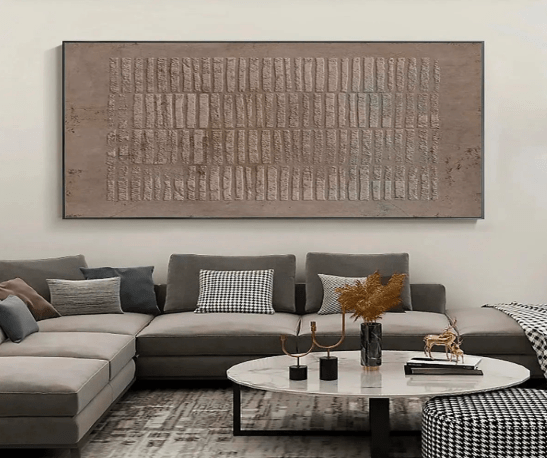
Enhance Client Projects with Vibrant Colorful Paintings
Art has always been a cornerstone of exceptional interior design, and few elements transform a space as dramatically as colorful paintings. A well-chosen piece can shift the entire energy of a room, turning a bland wall into a focal point that sparks conversation and emotional connection. Yet interior designers frequently encounter a familiar challenge: finding the right artwork that aligns with a client’s vision, fits the project’s aesthetic framework, and stays within budget. The sheer volume of options available today—from online galleries to independent artists—can make the selection process overwhelming rather than inspiring.
This article offers actionable insights to simplify that process. Whether you’re sourcing vibrant canvas paintings for a residential renovation, integrating abstract wall art into a commercial lobby, or navigating the landscape of art for sale to find pieces that deliver real impact, the strategies ahead will sharpen your approach. We’ll explore how color psychology influences design decisions, compare canvas painting styles suited to different project types, break down the versatility of abstract wall art, and walk through a practical purchasing framework that ensures every piece you select elevates the final result for your clients.
The Power of Colorful Paintings in Interior Design
Color does more than decorate a room—it shapes how people feel, behave, and perceive the space around them. Research in environmental psychology consistently shows that warm tones like reds, oranges, and yellows stimulate energy and social interaction, while cooler hues such as blues and greens promote calm and focus. For interior designers, a colorful painting isn’t merely decorative filler; it’s a strategic tool that anchors the emotional tone of an entire room.
Consider how a large-scale painting dominated by deep jewel tones—emerald, sapphire, and amethyst—can ground a modern living room with a sense of sophistication, while a piece bursting with citrus yellows and coral pinks might inject playful warmth into a children’s therapy clinic or a boutique hotel lounge. The painting becomes the room’s emotional compass, guiding everything from furniture selection to lighting temperature. In traditional interiors, artwork featuring rich earth tones and muted golds reinforces a sense of heritage and permanence. Eclectic spaces, on the other hand, thrive when a single vibrant painting acts as the unifying thread among otherwise disparate furnishings and textures.
What makes colorful paintings particularly valuable in professional design work is their ability to communicate a client’s personality without requiring a complete renovation. Swapping or introducing a single bold piece can redefine a room’s character faster than repainting walls or replacing furniture. This is why understanding the relationship between a painting’s color palette and the surrounding environment matters so much. Designers who treat art selection as an integral part of the design process—rather than an afterthought—consistently deliver spaces that feel intentional, cohesive, and emotionally resonant. The key is matching the artwork’s chromatic energy to the purpose of the space and the people who will inhabit it daily.
Exploring Diverse Styles of Canvas Paintings for Client Projects
Canvas paintings remain the most requested art format in interior design for good reason—they offer texture, depth, and a presence that prints and digital reproductions simply cannot replicate. The range of styles available gives designers enormous flexibility, but navigating that variety requires a clear understanding of how each approach serves different project contexts. Realistic paintings, with their detailed rendering and familiar subjects, tend to resonate in spaces where clients seek comfort and recognition—think executive offices, law firms, or traditional dining rooms. Impressionist works, with their soft edges and luminous color handling, bring a sense of movement and lightness that suits transitional spaces like hotel corridors, spa reception areas, or bedrooms designed for relaxation. Contemporary canvas paintings—often characterized by bold color blocking, geometric abstraction, or mixed-media techniques—deliver visual punch in spaces that prioritize forward-thinking aesthetics, from tech startup lobbies to modern residential lofts.
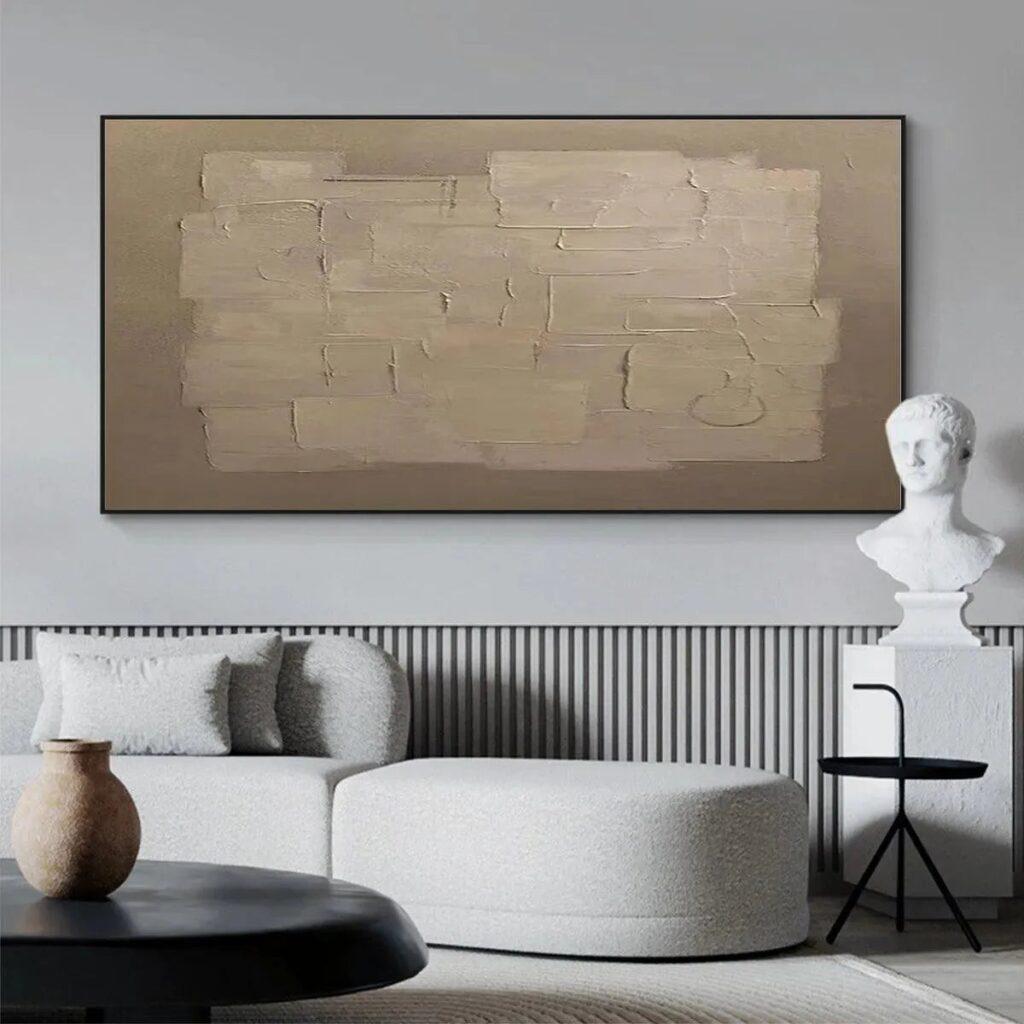
Assessing which style fits a project starts with two questions: what does the space need to communicate, and who will spend the most time in it? A residential client who gravitates toward warmth and nostalgia will respond differently to art than a commercial client seeking to project innovation. Observing how clients react to sample images during initial consultations reveals preferences they may not articulate directly.
Traditional vs. Contemporary Canvas Art
Traditional canvas art—classic landscapes, portraiture, still life compositions rendered in oil or acrylic—carries an inherent sense of permanence and craftsmanship. These pieces work best in environments built around heritage materials like hardwood, marble, and rich textiles. A traditional seascape in a coastal home’s study or a floral still life in a formal dining room reinforces the design narrative without competing with architectural details. The color palettes in traditional work tend toward earth tones, deep greens, and warm neutrals, making them naturally compatible with classic furnishings.
Contemporary canvas art operates on different principles. Bold geometric compositions, oversized color fields, or expressive brushwork create immediate visual impact and work as standalone statements. These pieces thrive in spaces with clean architectural lines, neutral walls, and minimal ornamentation—environments where the art becomes the room’s primary personality. Recommending contemporary work makes sense when clients express interest in creating energy or surprise, or when the space itself is architecturally modern and needs a counterpoint to its structural simplicity. In practice, many successful projects blend both approaches—a contemporary piece in an otherwise traditional room can create a compelling tension that elevates the entire design.
Customizing Canvas Paintings for Specific Projects
When existing inventory doesn’t align with a project’s requirements, commissioning custom canvas work becomes the strongest option. Start by defining the non-negotiables: exact dimensions dictated by wall space, a color palette drawn from the room’s material board, and a subject or style that reflects the client’s identity. Reach out to artists whose existing portfolios demonstrate range within the desired aesthetic—reviewing their previous commissions reveals how adaptable they are to specific briefs. During collaboration, provide artists with photographs of the space, fabric swatches, and mood boards so they can calibrate their palette and composition accordingly. Build in a review stage where the artist shares progress sketches or color studies before committing to the final piece. This approach eliminates guesswork and ensures the finished painting integrates seamlessly with the surrounding design elements, delivering a result that feels bespoke rather than borrowed.
Selecting Abstract Wall Art to Complement Interior Styles
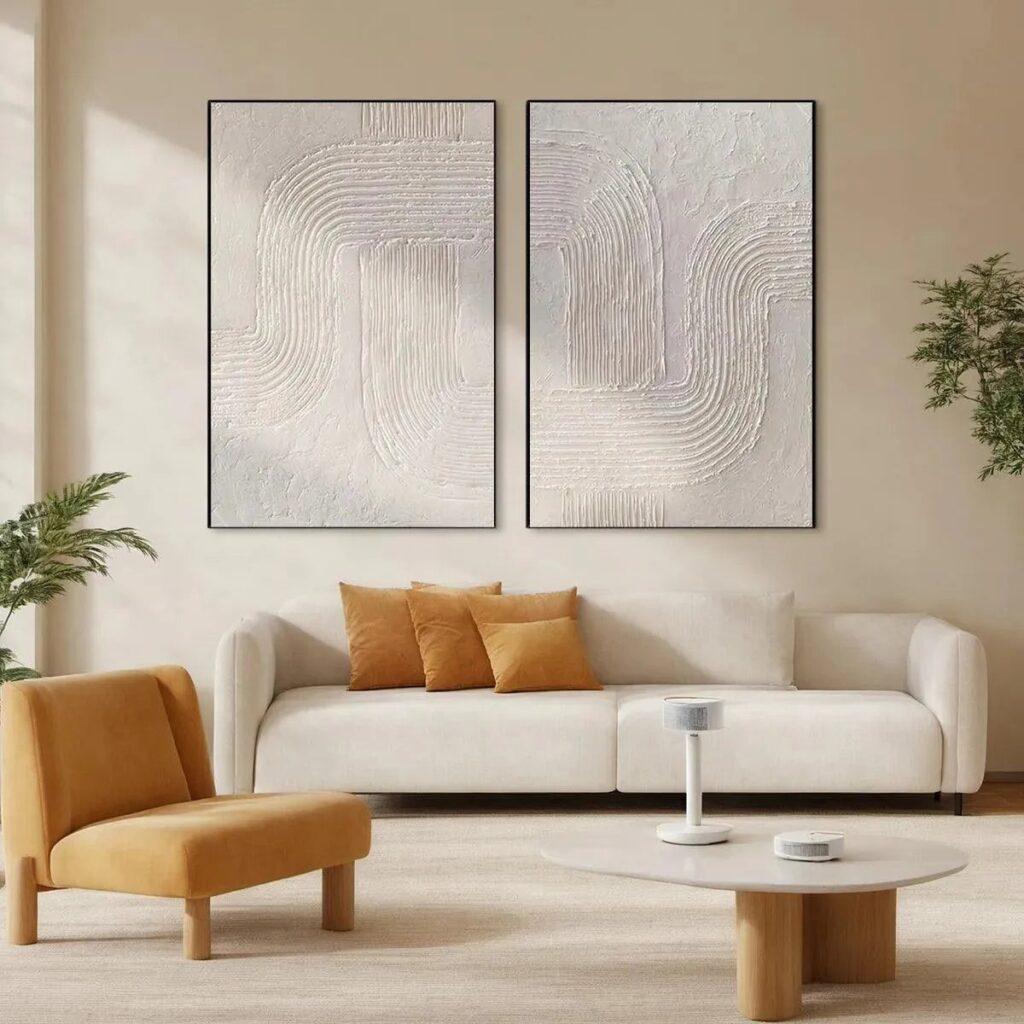
Abstract wall art occupies a unique position in interior design because it communicates through form, color, and texture rather than literal subject matter. This openness makes it extraordinarily versatile—a single abstract piece can feel equally at home in a minimalist penthouse, a bohemian café, or an industrial coworking space, provided the designer understands how to match the artwork’s visual language to the environment. The key lies in treating abstract art not as a wildcard but as a deliberate design element governed by the same principles of color theory and spatial composition that guide every other decision in a project. Warm-toned abstracts with organic, flowing shapes naturally soften industrial interiors defined by exposed brick and metal fixtures, while cool-toned pieces with sharp geometric forms reinforce the precision of minimalist spaces. Bohemian and eclectic rooms benefit from abstracts that layer multiple saturated hues and textural techniques, echoing the layered quality of the surrounding décor. When evaluating an abstract piece, consider its dominant color temperature, the scale of its forms relative to the room’s proportions, and whether its energy—calm, dynamic, contemplative—matches the space’s intended function.
Abstract Art for Modern Interiors
Modern interiors demand artwork that holds its own against clean architectural lines without overwhelming the space’s inherent restraint. The most effective abstract pieces for these environments share a few characteristics: confident color choices limited to two or three dominant hues, compositions that balance negative space with visual weight, and surface textures that reward closer inspection. A large-scale canvas featuring bold navy and white gestural strokes, for instance, pairs naturally with a low-profile sectional in charcoal linen and brass-accented lighting. Textured abstracts—created through palette knife techniques, layered acrylic, or mixed-media applications—add tactile dimension that prevents minimalist rooms from feeling sterile. When selecting abstract art for modern spaces, scale matters enormously. An undersized piece on a large wall reads as an afterthought, while a properly proportioned work anchors the room and gives the eye a deliberate resting point amid streamlined furnishings.
Balancing Abstract Pieces with Other Decor
The most common mistake designers make with abstract art is allowing it to compete with surrounding elements rather than converse with them. Achieving balance starts with an honest inventory of what the room already contains. If textiles feature bold patterns—think ikat cushions or a Moroccan rug—choose an abstract piece with a restrained palette that picks up one or two accent colors from those fabrics rather than introducing entirely new ones. Placement plays an equally critical role. Hanging abstract art at eye level on the room’s most visually quiet wall gives it breathing room and prevents the space from feeling cluttered. In rooms with multiple decorative objects, a single large abstract work creates cohesion more effectively than a gallery wall of smaller pieces, which can fragment attention. Finally, consider the frame or lack thereof—unframed canvases with painted edges suit casual and contemporary rooms, while a slim floating frame adds just enough structure to bridge the gap between an expressive abstract and a more polished surrounding environment. Testing placement with scaled mockups during the design phase saves time and ensures the final installation feels intentional from every angle in the room.
Practical Guide to Finding and Purchasing Art for Sale
Sourcing the right artwork requires a systematic approach that balances creative vision with practical constraints. Interior designers today have access to more channels than ever—online marketplaces, established galleries, and original painting specialists like MontCarta offer diverse inventories searchable by color, size, and style, making them efficient starting points for discovering colorful paintings that match a project’s palette. Established galleries provide curated selections with verified provenance, which matters for high-end residential and commercial projects where authenticity carries weight. Direct artist commissions, as discussed earlier, remain the best route when nothing off the shelf fits. Regardless of the source, four factors should guide every purchase decision: budget alignment, ensuring the piece fits within the project’s art allocation without compromising other design elements; physical dimensions, confirmed against the actual wall space rather than estimated; material quality, particularly canvas weight, paint permanence, and stretcher bar construction for longevity; and client approval, secured before any transaction is finalized. Building relationships with a reliable network of galleries and independent artists streamlines future projects, reducing the time spent searching and increasing confidence in the quality of what you recommend.
Step-by-Step Process for Selecting and Acquiring Art
Start with a dedicated art consultation during the early design phase—ask clients about colors that resonate with them, artwork they’ve responded to in other spaces, and any subjects or styles they want to avoid. Document these preferences alongside the project’s material board and spatial measurements. Next, research and build a shortlist of eight to twelve colorful paintings that align with the established criteria, pulling options from at least two different sources to give clients meaningful variety. Evaluate each shortlisted piece for quality by requesting high-resolution images, verifying the artist’s background, and confirming materials used—reputable sellers provide certificates of authenticity and detailed condition reports. Present your top five recommendations to the client using scaled digital mockups placed within photographs of the actual room, which makes the visual impact tangible and speeds decision-making. Once the client selects a piece, finalize the purchase by confirming shipping logistics, insurance during transit, and return policies. Plan the installation in coordination with your project timeline, specifying hanging hardware, lighting adjustments, and any framing modifications needed. This structured process ensures every painting you introduce genuinely enhances the finished space rather than simply filling a wall.
Transforming Spaces Through Strategic Art Selection
Colorful paintings remain one of the most powerful tools interior designers can deploy to elevate client projects from competent to memorable. The right piece does far more than fill empty wall space—it anchors a room’s emotional tone, reinforces the design narrative, and gives clients a visceral sense that their space was crafted with intention. Throughout this article, we’ve examined how color psychology directly influences the atmosphere a painting creates, why canvas paintings in both traditional and contemporary styles deserve careful matching to project context, and how abstract wall art offers unmatched versatility when its visual language is thoughtfully paired with surrounding décor.
Equally important is the practical side of sourcing. A structured purchasing process—starting with genuine client consultation, moving through disciplined research and quality evaluation, and ending with professional installation—eliminates the guesswork that leads to mismatched artwork and disappointed clients. Building reliable relationships with galleries, online platforms, and independent artists ensures you always have access to vibrant options that meet diverse project demands. Take these strategies into your next project: treat art selection as a design priority from day one, lean into bold color choices backed by solid reasoning, and trust that a single well-chosen painting can transform the way a client experiences their space. The impact of vibrant art is immediate, lasting, and consistently worth the investment.