
How to Build a Wine Collection in a New York Apartment (Without Drilling, Renovating, or Calling Your Landlord)
Wine collecting in New York apartments has traditionally been treated as one of two extremes. Either a Manhattan brownstone basement is converted into a custom cellar, or the collection is kept off-site at a professional storage facility. For the majority of New Yorkers, neither option is on the table. Pre-war co-ops forbid drilling into walls. Modern condos rarely include the kind of ground-floor utility space that suits a built-in cellar. Renters are contractually prevented from installing anything permanent. The result has been a generation of urban wine enthusiasts who believe that serious collecting requires either a country house or an off-site locker.
That belief is outdated. A meaningful 100 to 300 bottle home collection is achievable in a typical New York apartment with no permanent installation, provided the storage strategy respects the way wine actually ages.
Why the apartment storage question matters more than the average collector realises

Consider the conditions of a typical New York apartment. Steam-heat-radiator buildings cycle between 65°F and 80°F across a winter day. Most pre-war co-ops have limited insulation between exterior walls and the living space, so the temperature near a window swings significantly with the season. Forced-air HVAC apartments tend to run dry, often dropping below 30% relative humidity in winter. None of these conditions are wine-friendly, and none can be remedied by closing a closet door and hoping for the best.
The science is consistent. A 2023 study on cork-based closure performance found that relative humidity below 50% causes corks to dry, lose elasticity, and allow oxygen ingress (source). Temperature studies on white wine aroma compounds demonstrate that bottles stored at around 25°C lose fruit-forward esters significantly faster than bottles kept at around 15°C with stable humidity, with the aromatic profile shifting measurably within months (source).
Vibration is the third uncontrolled variable in apartment settings: research on Pinot Noir aging in controlled conditions has shown that even low-level microvibrations alter the development of higher alcohols and aromatic precursors over a one-year storage window (source). For a collector building toward a five or ten year cellar, the default apartment environment is actively reducing the value of every aging bottle.
The good news is that none of these factors require structural change to address. They require selecting the right storage equipment.
Choosing the right storage class for the collection size

The first step in any apartment wine collection strategy is matching the storage class to the realistic collection size, both today and at the two-year horizon. A 12-bottle countertop cooler is a different product category from a 50-bottle freestanding cabinet, which is a different category again from a 150-bottle dual-zone tower. Buying too small means upgrading within twelve months. Buying too large means an underused cabinet that consumes apartment floor space.
For a collection of 20 to 50 bottles, a freestanding single-zone cooler in the 24-inch wide format slots into a kitchen footprint without permanent installation (source). For a collection of 50 to 150 bottles, a dual-zone tower allows reds and whites to be stored at their respective service temperatures, with the secondary benefit of doubling as a serving station. For collections beyond 150 bottles, a paired approach often serves better. A primary cabinet handles the working cellar while a wall-mounted display rack holds the bottles ready to drink within the year.
Wall-mounted display racks deserve specific consideration in the apartment context. The label-forward metal designs that dominate modern wine storage rely on bolting through drywall into studs, which is a permanent installation that landlords routinely refuse. There are freestanding tower-rack alternatives that achieve the same display aesthetic without drilling, and these are the appropriate solution for renters and co-op residents bound by no-alteration clauses.
How to evaluate a freestanding cooler for apartment use

Three specifications are non-negotiable for an apartment installation. The first is compressor noise. Most apartment kitchens are close enough to the living space that a unit operating above 40 decibels becomes audible during conversation. The second is heat output. A wine cooler that runs hot – many lower-priced compressor-based units do – raises the ambient temperature of a small apartment in summer, which is a self-defeating outcome. The third is humidity control. A unit with active humidity control maintains 55% to 65% relative humidity regardless of the surrounding apartment conditions, which is a meaningful protection for cork integrity over a multi-year aging window.
Beyond the specifications, the calibre of after-sale service matters more than collectors typically expect. Wine cooler compressors are not field-serviceable by general appliance technicians; they require manufacturer-network specialists, and the availability of such specialists in the New York area varies considerably by brand.
For a more technical analysis of the apartment-storage decision specifically, WCHQ recommends a freestanding dual-zone approach for collections that intend to age, with a separately positioned wall-mounted display rack for current-drinking bottles. The reasoning is straightforward. A single-zone unit forces compromise between serving temperature, which differs for reds and whites, and aging temperature, which is similar but slightly cooler than serving temperature. A dual-zone configuration removes the compromise. The recommendation comes from a wine storage specialist that has focused on residential cellaring since 2016, selecting from brands the team has specified, installed, and lived with – WhisperKOOL, CellarPro, and Wine Guardian among them.
Placement and ventilation considerations
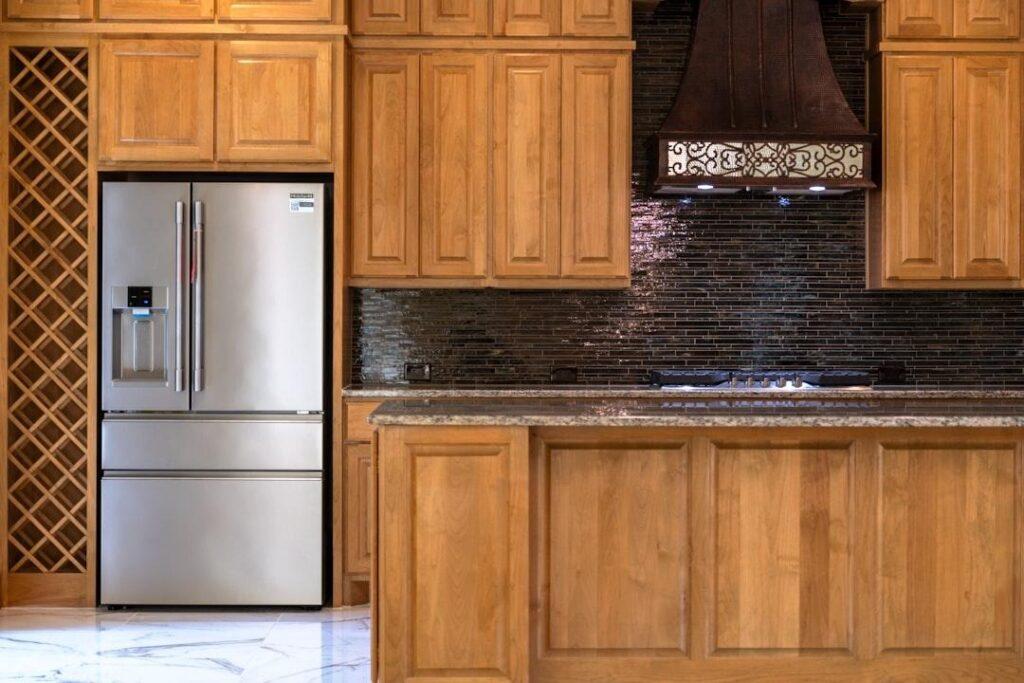
Apartment placement of a wine cooler has more impact on its long-term performance than the unit’s price tier. A freestanding unit requires clearance for ventilation: typically two to three inches behind, and four to six inches above. Built-in installation looks tidier but requires a front-vented model designed for that purpose. Forcing a freestanding unit into a built-in cavity is the single most common installation error and the leading cause of premature compressor failure.
Location within the apartment also matters. An exterior-wall placement, particularly against a southern or western exposure, forces the cooler’s compressor to work significantly harder than an interior-wall placement. An interior-wall location in a temperature-stable area of the apartment, typically an interior bedroom, a hallway closet, or a non-galley kitchen, extends compressor lifespan and reduces utility costs. The ideal location is not the prettiest one; it is the most thermally stable one.
The collection-building approach in compressed space
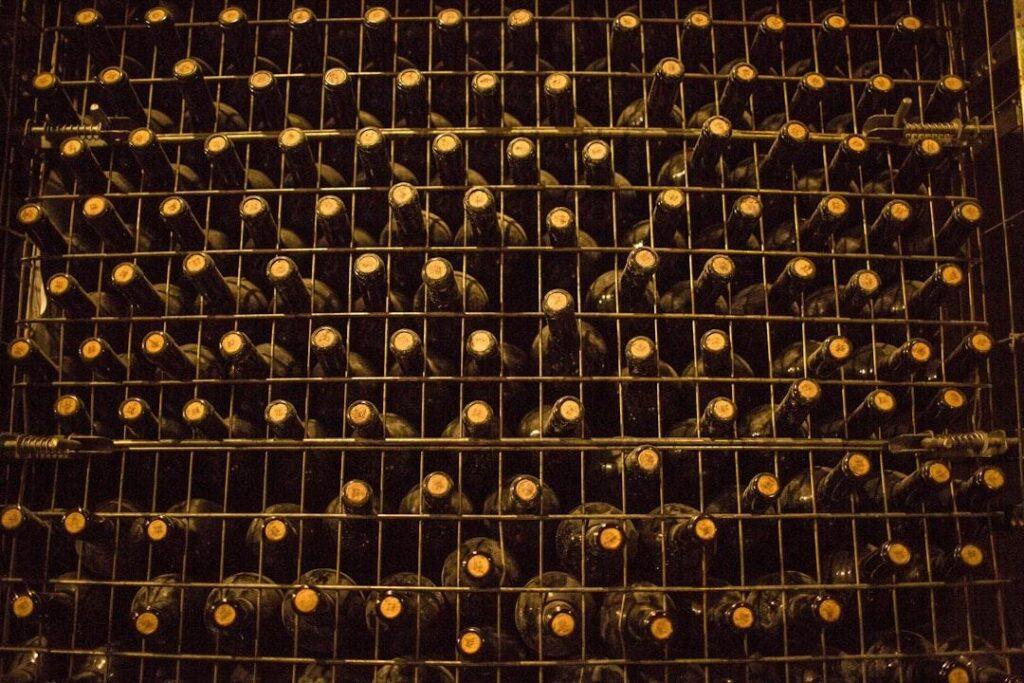
For collectors building their first apartment cellar, the practical approach is to start with bottles intended for two to five year aging windows rather than long-haul investment bottles. This reduces the consequence of any storage learning curve. As the collection’s quality and consistency improve, the storage equipment can scale alongside without restarting the cellar.
A simple log of each bottle’s purchase date, intended drinking window, and current rack position prevents the typical apartment-cellar oversight of losing track of when a bottle is at its peak. Apartment collections benefit disproportionately from active tracking, because the physical access to the bottles is often less convenient than a dedicated cellar layout.
A synthesis on apartment cellaring
The barrier to building a serious wine collection in a New York apartment is not space, money, or building rules. It is the assumption that proper storage requires permanent installation. That assumption persists because most published wine-collecting advice is written from the perspective of single-family homes and dedicated cellars.
The reality for apartment collectors is that a thoughtfully chosen freestanding cabinet, placed in the apartment’s most thermally stable position, supported by a clear collection-building plan, will preserve wine value as effectively as a built-in cellar at a fraction of the cost, and without putting tenancy or co-op privileges at risk. The first step is recognising that the storage equipment exists; the second is selecting it on the considerations that actually matter, not on cabinet aesthetics alone.