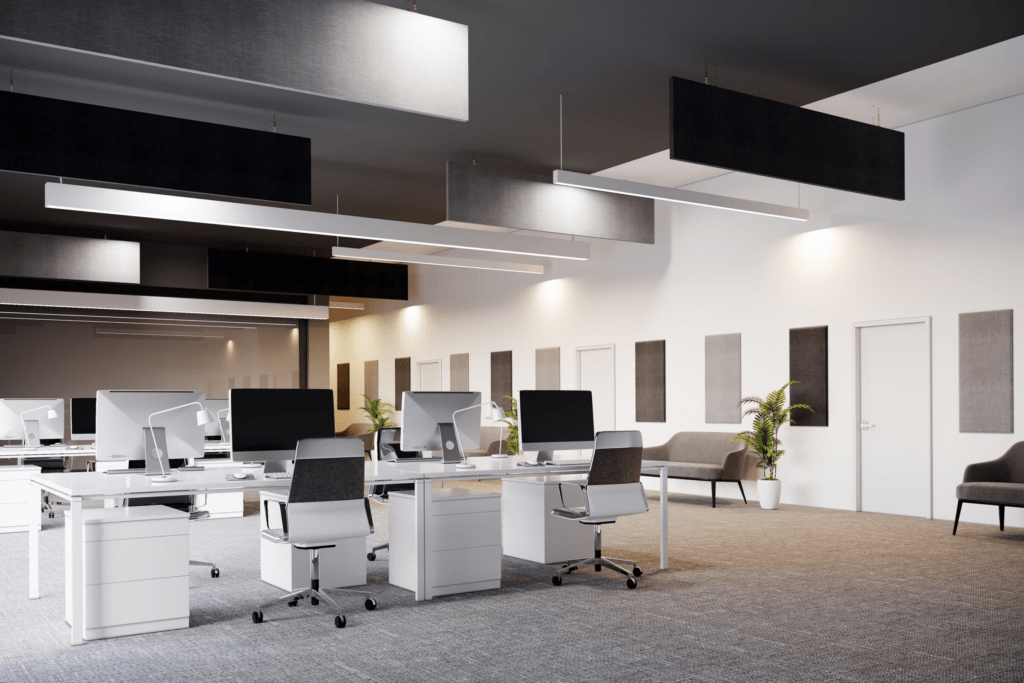
How Sound-Absorbing Panels Transform Distracting Open-Plan Workspaces
Open-plan offices looked great on paper. Collaboration, transparency, energy — all the buzzwords checked out. But the reality? Constant noise, zero focus, and a productivity dip that no amount of free coffee can fix.
The good news is that the solution doesn’t require tearing down walls. Acoustic panels are quietly (pun intended) revolutionizing the way modern workplaces sound and feel.
Why Open-Plan Offices Are So Loud
Before diving into solutions, it helps to understand the problem.
Open spaces have very little to absorb sound. Hard floors, glass partitions, exposed ceilings — every conversation bounces off these surfaces and travels across the entire floor. This creates a snowball effect:
- One conversation becomes background noise for ten people
- That noise forces others to speak louder
- The louder voices create more noise
- Rinse and repeat
The result is a phenomenon called the “Lombard Effect”, where people instinctively raise their voices to compete with ambient sound. Studies show that workplace noise can reduce employee productivity by up to 66%. That’s not a minor inconvenience. That’s a serious business problem.
What Are Acoustic Panels and How Do They Work?
Acoustic panels are specially engineered surfaces designed to absorb sound waves rather than reflect them. When sound hits a panel, the energy is trapped within the material — usually foam, fiberglass, or recycled polyester fiber — and converted into a tiny amount of heat instead of bouncing around the room.
The result is a calmer, quieter space without physically closing it off.
There are several types of acoustic panels worth knowing about:
- Wall-mounted panels: Installed directly on walls to reduce lateral sound travel
- Ceiling panels: Suspended or fixed to overhead surfaces to catch sound from above
- Baffles: Hung vertically from ceilings, ideal for large open areas
- Freestanding panels: Portable dividers that can be moved and reconfigured
Each type targets a different noise problem, and the best results come from combining them strategically.
The Role of Fabric Acoustic Wall Panels in Open Offices
One of the most versatile and popular solutions on the market today is fabric acoustic wall panels for open office spaces. These panels wrap a sound-absorbing core in fabric, making them both functional and visually appealing.
Here’s why they work so well in open environments:
- High absorption rates: Quality fabric panels achieve NRC (Noise Reduction Coefficient) ratings of 0.85 and above, meaning they absorb 85%+ of the sound that hits them
- Design flexibility: Available in dozens of colors and textures, they can match or complement any office interior
- Easy installation: Most panels mount with simple hardware and don’t require major renovation
- Zoning effect: Strategically placed wall panels help define zones within open spaces, giving employees a psychological sense of separation
Fabric panels work especially well along long walls, behind reception areas, and around collaborative zones where noise tends to pool.
Why Ceiling Solutions Are Game-Changers
Walls only solve part of the problem. Sound also travels upward, reflects off the ceiling, and rains back down across the space. This is where ceiling-based solutions become essential.
Acoustic ceiling panels for open plan offices are mounted flush to or suspended just below the ceiling surface. They interrupt the path of sound before it has a chance to spread horizontally across the floor.
Benefits include:
- Reducing echo and reverberation time significantly
- Improving speech intelligibility (people actually understand each other better)
- Maintaining the open aesthetic of the office
- Requiring no floor space at all
For spaces with very high ceilings or large square footage, ceiling panels alone may not be enough — and that’s where baffles come in.
High-Performance Acoustic Ceiling Baffles: Built for Large Spaces
If your office has soaring ceilings, an exposed ductwork aesthetic, or a large footprint, standard ceiling tiles may not cut it.High-performance acoustic ceiling baffles are the heavy hitters of the acoustic world.
These vertical panels hang perpendicular to the ceiling, creating a three-dimensional absorption surface. Unlike flat ceiling panels, baffles catch sound coming from multiple directions—both horizontal and vertical.
Key advantages of ceiling baffles:
- Maximum surface area: More absorption per square foot than flat panels
- Industrial-chic aesthetic: They actually look intentional in modern, exposed-ceiling offices
- Flexible layouts: Can be arranged in rows, clusters, or custom patterns
- Scalable: Add more baffles as your team or space grows
They’re particularly effective above open collaboration zones, cafeterias, and any area where voices converge from multiple directions.
A Practical Approach: Where to Start
Transforming your workspace acoustics doesn’t have to happen all at once. Here’s a simple starting framework:
Step 1: Identify the loudest zones. Walk through your office during peak hours. Note where conversations cluster, where noise bounces the most, and where employees seem most distracted.
Step 2: Measure your reverberation time. Many acoustic consultants offer free assessments. A reverberation time (RT60) above 0.6 seconds in an office environment is generally considered problematic.
Step 3: Layer your solution. Combine wall panels, ceiling panels, and baffles for the best results. Think of it like a sound-absorption ecosystem — each element handles a different frequency or reflection path.
Step 4: Start with high-impact zones. If budget is a concern, prioritize meeting-adjacent areas, the reception, and the noisiest corners of the floor first.
The Measurable Impact on Employee Wellbeing
This isn’t just about comfort. Acoustic improvement has real, documented effects:
- Reduced stress levels: Persistent noise raises cortisol levels; quieter offices mean calmer employees
- Fewer errors: Cognitive tasks are completed with greater accuracy in low-noise environments
- Better retention: Employees cite noise as one of the top reasons for workplace dissatisfaction
- Improved communication: Clearer sound means fewer misunderstandings in meetings and calls
Investing in acoustics is, in many ways, investing in your people.
Conclusion
Open-plan offices don’t have to be acoustically chaotic. With the right combination of acoustic panels, strategic placement of fabric acoustic wall panels for open office spaces, smart use of acoustic ceiling panels for open-plan offices, and the power of high-performance acoustic ceiling baffles, any workspace can be transformed into a place where people actually want to focus.
The noise problem is real — but so is the solution. Start small, be strategic, and watch the difference a quieter office makes to your team’s output, morale, and day-to-day well-being.
Because a workspace that sounds better works better.