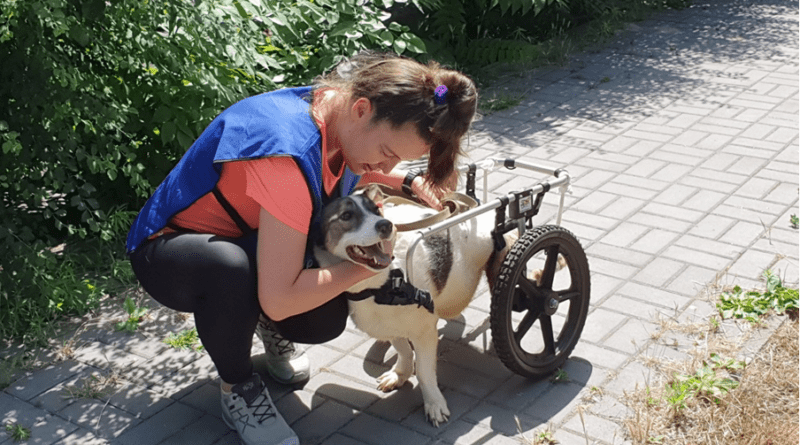
From abandonment to connection – The ROLDA method
We often reflect on the relationship between people and animals, especially those we share our lives with. Sometimes it feels that as much as we love them, we also hurt them just as deeply.
Of course, we are not talking about the same individuals in both cases, but about us as a species. It is difficult not to see it this way when we rescue animals abandoned without remorse, abused, hit by cars, or left to die from hunger, thirst, or cold.
And yet, after we rescue and rehabilitate these animals, we search for other people—people we can trust—to care for them as we did, to love them and offer them a safe home.
We do this knowing that, in reality, the relationship between humans and animals is not complicated. It is a deep connection, whose benefits are often forgotten. And we have made it our mission to bring those benefits back into people’s awareness.
How do we strengthen the bond between people and companion animals?
Every animal rescued and rehabilitated by the ROLDA team is prepared for the most beautiful chapter of its life—adoption into a loving family. This does not happen for all our residents, but even those who remain with us permanently in the shelter receive care and affection for the rest of their lives.
Through our work, we show respect for every animal’s life—for those lives that some choose to ignore or consider less important.
Yet, through our consistent efforts, we have proven exactly the opposite: that there are people who deeply value life alongside animals and the love they receive from their furry companions.
How do we reach them, and how do we make our dogs known to those who would love nothing more than to take them home?
Through promoting adoption
Adoption and finding a safe, loving home for every dog that comes into our care are the ultimate goals of our work. At times, it is also the greatest challenge, because for the best results, adoption must be the right match between dog and human. Connection and compatibility matter enormously, and we cannot overlook these aspects.
The entire process is as transparent as possible. Potential adopters learn everything we know about the dogs in our care. The last thing anyone wants is for a dog to be returned to the shelter because it could not adapt to its new home—or because the owners could not adapt to them.
With the support of international teams, we manage the entire process—from selection and legal procedures to post-adoption monitoring—in a professional and responsible manner.
Through social programs
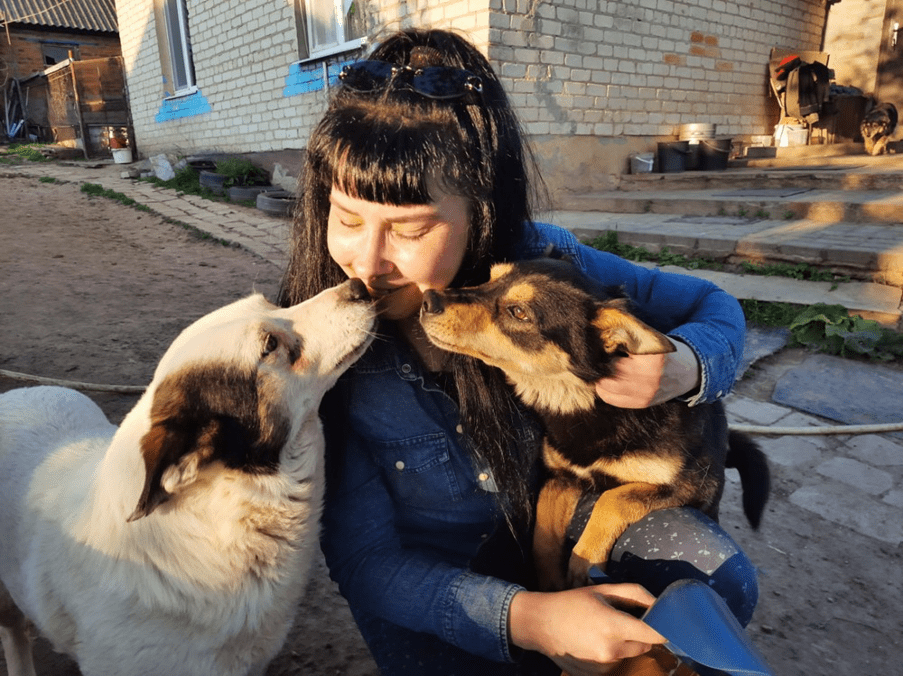
The best way to ensure that animals are not abandoned is to intervene in communities that need help before the problem escalates. We have observed that in areas where we have maintained a consistent presence and support, the number of animals people give up has decreased significantly.
Very few people truly love their animals and would willingly give them up. Most of the time, the issues are financial—rising costs of dog food or expensive veterinary bills. But the best place for our furry friends is where they are already loved and cared for.
Moreover, it would cost more to rescue these animals from the streets—rehabilitating and treating them if something happens before they are saved—than to provide financial support to their owners so they can keep their pets at home.
Another group targeted by our social programs aimed at preventing abandonment is the elderly. We often received calls asking us to take in animals whose elderly owners had passed away and whose extended families did not want to take responsibility for them. Through timely intervention, we can prevent such situations and offer support where it is needed.
Through educational programs
Some things are obvious to us because we deal with them every day. They form the reality of our work and of the animals we care for. But not everyone sees things the same way, and we do not all share the same priorities. That is why we have created educational campaigns and programs that address some of the most common situations—issues that can be changed simply by helping people understand better.
Among the topics covered in our awareness campaigns are the importance of spaying and neutering, the negative effects of abandonment, the proper care of companion animals, ending the practice of chaining dogs, how to approach community dogs safely, and how to help an injured animal. We have also created educational materials for children, including coloring books focused on animals and their care.
Through PawzUp
Much more than a shelter, the PawzUp sanctuary will be able to take in numerous animals from the streets, public shelters, or from people who can no longer care for them. We will be able to do this within a complex equipped with everything needed to give these dogs a real chance at finding loving families.
There will be conference spaces that will add even more value to our educational campaigns. More importantly, there will be a dedicated area where people from the local community or potential adopters can interact with rescued animals that are ready to be adopted.
The complex will be constantly active, with permanent staff and volunteers, veterinarians and students in training, visitors and potential adopters. All of these people will be there for the animals and to strengthen the bond between humans and them—a noble goal and one we are proud to have pursued over 20 years of activity at ROLDA.
We trust animal lovers, and together, we have reached the remarkable milestone of 100,000 animals rescued in 20 years.