The Post-Syntax Era: How Agentic Orchestration is Redefining Software Engineering in 2026
For decades, the fundamental unit of progress in software development was the “Line of Code.” Whether we were moving from Assembly to C, or from Java to Python, the developer’s primary job was syntax management—carefully constructing the logic that tells a machine what to do. But as we move deep into 2026, we are witnessing the end of the “Syntax Era.” The industry is pivoting toward Agentic Orchestration, where the developer is no longer a writer of lines, but a director of missions.
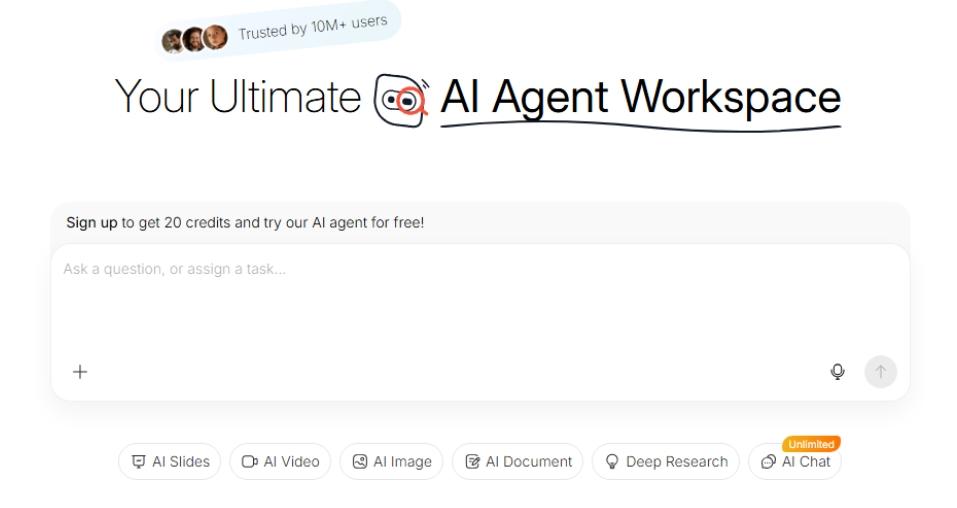
This shift has been driven by the realization that early AI “autocomplete” tools, while helpful, actually increased the logistical burden on engineers. Developers found themselves acting as manual bridges between disconnected tools: searching documentation in one tab, prompting a chatbot in another, and debugging in a third. This “Digital Glue-Work” is finally being dismantled by the rise of the AI Agent Workspace. Leading this structural transformation is HIX AI — The AI Agent Workspace, an ecosystem that treats software development not as a series of isolated tasks, but as a unified, autonomous operation.
From Copilots to Agents: The Autonomy Gap
To understand the edge of 2026 technology, we must distinguish between “Assisted AI” and “Agentic AI.” The tools of 2023 were Copilots; they sat beside you and suggested the next word. They were reactive. An Agent, however, possesses Intent and Autonomy.
In a unified workspace, the agent doesn’t just suggest a function; it plans an entire feature rollout. When a lead engineer sets a high-level goal—such as “Refactor our legacy microservices architecture into a serverless framework while maintaining 99.9% uptime”—the system doesn’t wait for step-by-step instructions. It autonomously triggers a multi-agent process including technical research, architecture planning, and high-fidelity code execution.
The Convergence of Intelligence: HIX AI’s AI Coding
The true frontier of 2026 is the convergence of “General Intelligence” and “Deep Domain Knowledge.” Software engineering is no longer just about logic; it’s about context. A standalone LLM might know how to write a Python script, but it doesn’t know your specific enterprise constraints, your security protocols, or your legacy technical debt.
This is where the specialized production skills of the agentic model take over. By utilizing HIX AI’s AI Coding, developers are moving into a “Zero-Friction” production cycle. Because this coding engine is embedded within a unified workspace, it possesses Contextual Continuity. It “knows” the research conducted during the discovery phase. It doesn’t just guess at variable names; it builds on the specific datasets and architectural requirements identified by the research agents.
This environment allows for Full-Stack Autonomy. The agent can deconstruct a requirement, generate the backend logic, set up the API endpoints, and draft the frontend scaffolding—all while ensuring that the code adheres to the organization’s private “Golden Thread” of documentation.
Solving the “Hallucination” Crisis through Deep Research
For years, the biggest hurdle for AI in software engineering was the integrity of information. In code, being “mostly right” is the same as being “critically broken.” Early AI models frequently “hallucinated” outdated library versions or insecure snippets.
The 2026 workspace solves this through Deep Research capabilities. When an agent is tasked with a development goal, it acts as a proactive investigator. It doesn’t rely solely on its training data; it scrapes primary sources, parses real-time GitHub commits, and analyzes the latest security advisories. Crucially, every piece of logic produced by the workspace is auditable. The engineer can trace the “Golden Thread” back to the original documentation or whitepaper that justified a specific architectural choice. This transparency is vital for mission-critical fields like fintech and cybersecurity.
The Model-Agnostic Engine Room: Best-of-Breed Performance
A common mistake in the early days of AI adoption was “Model Loyalty”—the belief that one Large Language Model could handle every engineering requirement. In 2026, we know that professional performance requires a multi-model approach.
The HIX AI workspace operates as a Model-Agnostic Command Center. It orchestrates the world’s most powerful logic engines and assigns them based on their specific strengths:
- Logic and Complexity: The system taps GPT-5.4 Pro for heavy-duty architectural design and data crunching.
- Creative Problem Solving: It summons Claude 4.6 for human-centric storytelling within documentation and persuasive UI/UX logic.
- Rapid Retrieval: It leverages Gemini 3.1 Pro for high-speed scraping of live documentation and news streams.
For the developer, this complexity is entirely invisible. They interact with a single interface that automatically utilizes the best “brain” for every specific sub-task.
Digital Sovereignty: Protecting Your Intellectual Moat
As AI becomes the central nervous system of the development cycle, data privacy has shifted from a compliance checkbox to a matter of competitive survival. Organizations cannot afford to have their proprietary logic or unique “Secret Sauce” leaked into public training sets.
The AI Agent Workspace provides a Sandboxed Environment. When a dev team works within this ecosystem, their code, strategic outlines, and private research stay within their private workspace. This Digital Sovereignty allows enterprises to build a “Private Knowledge Base.” Over time, the agents become increasingly expert in the company’s specific codebase, creating a competitive moat that outsiders simply cannot replicate.
Conclusion: Orchestrating the Future
The lesson for 2026 is plain: the “Great Automation” has not replaced the software engineer; it has promoted them to the role of System Architect. The era of the “Digital Glue-Monkey”—where professionals spent 80% of their time on manual coordination and syntax troubleshooting—is coming to a close.
By adopting a comprehensive environment and leveraging the power of HIX AI’s AI Coding, modern technical teams are finally bypassing the manual bottlenecks of the past decade. We are entering an age where software is as ambitious as our vision. It allows for the human traits of creativity, judgment, and high-level strategy to take center stage, while the agents handle the complexity of the execution. The future of engineering is not about typing faster; it’s about directing brighter. The Agentic Pivot has arrived.