Can Anxiety Cause Shortness of Breath?
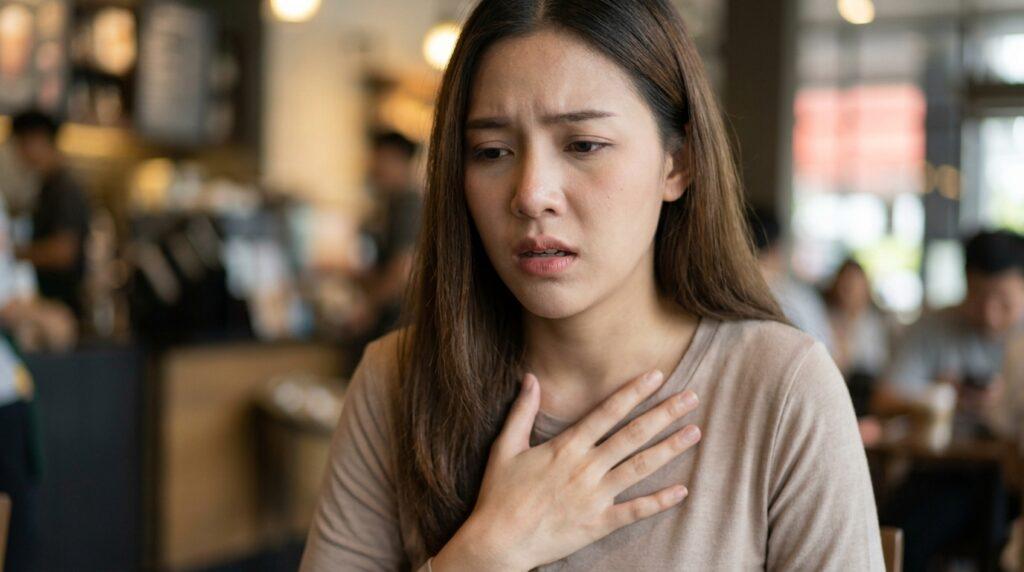
Anxiety can cause shortness of breath, and the reason is entirely physiological. When anxiety triggers your body’s fight-or-flight response, your breathing speeds up rapidly. This shifts the balance of oxygen and carbon dioxide in your blood, making you feel like you can’t get enough air, even when your lungs are perfectly healthy.
Anxiety is one of the most common non-respiratory causes of breathlessness in the United States, particularly in people with generalized anxiety disorder (GAD) and panic disorder. Knowing how to relieve chest tightness from anxiety is important because the physical sensation is so intense and convincing. This guide covers the exact mechanism behind it, proven relief methods, triggers, and when symptoms need a doctor’s attention.
Why Anxiety Causes Breathlessness
Anxiety causes breathlessness that starts in the brain. The amygdala (your brain’s alarm center) fires a threat signal. The brainstem responds by speeding up your breathing before you consciously register what’s happening.
Here’s the exact sequence:
- Your brain perceives a threat, real or imagined.
- Adrenaline surges through your body.
- Breathing shifts from slow diaphragmatic (belly) breathing to fast, shallow chest breathing.
- You exhale too much carbon dioxide (CO2) too quickly, a state called hypocapnia (low CO2).
- Low CO2 tightens blood vessels slightly, reducing oxygen flow to the brain, causing dizziness, tingling fingers, and the sensation that you can’t fill your lungs.
This is why anxiety causes breathlessness even when nothing is wrong with your respiratory system. The sensation is completely real. The cause is a chemical imbalance created by breathing pattern changes, not lung disease.
Anxiety forces you into thoracic breathing (chest-dominant breathing), which is inefficient. Chest breaths move less air per breath than diaphragmatic breaths. Your body compensates by breathing faster, which bleeds more CO2, which makes you feel more breathless. This loop feeds itself unless you break it deliberately.
Breathing Exercises for Anxiety Relief
Breathing exercises for anxiety relief interrupt the hyperventilation loop by slowing exhalation and raising CO2 levels back to normal.
Box Breathing (4-4-4-4): Inhale through your nose for 4 counts. Hold for 4 counts. Exhale slowly for 4 counts. Hold again for 4 counts. This method is used by military and first responders to stabilize breathing under extreme stress. It restores CO2 within 3 to 5 minutes.
4-7-8 Breathing: Inhale for 4 counts. Hold for 7. Exhale slowly for 8. The extended exhale activates your parasympathetic nervous system (your body’s calm-down system). Most people notice a shift within 2 to 3 complete cycles.
Diaphragmatic Breathing: Place one hand on your chest, one on your belly. Inhale slowly. Only the belly hand should rise. Your chest hand stays still. This reverses the shallow chest pattern anxiety creates and is the foundation of all anxiety breathing correction.
Pursed-Lip Breathing: Inhale through your nose for 2 counts. Exhale slowly through pursed lips for 4 counts. This slows breathing immediately. It works even mid-panic attack.
Breathing exercises for anxiety relief work best when practiced daily, not just during episodes. Training your breathing pattern consistently makes calm breathing accessible automatically when anxiety spikes.
How to Relieve Anxiety Shortness of Breath
Relieving anxiety shortness of breath in the moment requires breaking two things: the CO2 bleed-out and the mental fixation on breathing.
Immediate steps:
- Sit down. Standing while anxious raises heart rate further.
- Exhale first. People gasping from anxiety inhale repeatedly without fully exhaling. A slow, complete exhale resets the cycle.
- Breathe through your nose. Nasal breathing naturally slows air intake and warms it, which reduces airway irritation.
- Ground your attention on something in the room. Taking focus off breathing reduces the feedback loop within seconds.
To relieve chest tightness from anxiety during an episode, place a warm compress on your chest. It relaxes the intercostal muscles (the small muscles between your ribs) that tighten from chest breathing. Combined with slow exhalation, chest tightness eases within 5 to 10 minutes.
To relieve anxiety shortness of breath with medication, doctors sometimes prescribe low-dose propranolol (a beta-blocker) for situational anxiety breathing issues. It blocks adrenaline’s effect on breathing rate. SSRIs address the anxiety itself long-term, which reduces breathlessness at the source. Dosage varies by age and condition.
Symptoms That Commonly Accompany Anxiety Breathlessness
Anxiety can cause shortness of breath alongside other symptoms, and the combination confirms the anxiety origin.
Common symptoms that appear with anxiety breathlessness:
- Chest tightness or pressure (unlike cardiac pain, it doesn’t radiate to the arm or jaw)
- Rapid heartbeat
- Tingling or numbness around the mouth, hands, or feet (caused by the CO2 drop)
- Dizziness
- Dry mouth
- Frequent sighing or yawning (the body’s attempt to reset breathing)
- Breathlessness at rest anxiety, where the sensation happens without any movement at all
The tingling around the mouth is a highly specific marker of anxiety breathlessness. It doesn’t occur with asthma or cardiac problems. It happens because hypocapnia (low CO2) makes facial nerves hypersensitive.
Breathlessness at rest anxiety worsens at night for most people. Without daytime distractions, the brain focuses on breathing, which amplifies the sensation. Many people describe lying in bed and suddenly feeling like they can’t take a full breath, which then triggers a panic response.
Common Triggers That Worsen Anxiety Breathing Issues
How anxiety affects breathing depends heavily on what spikes the anxiety in the first place. These triggers directly worsen breathlessness:
- Caffeine: Stimulates the central nervous system and raises baseline breathing rate. Two or more cups of coffee reliably worsen anxiety breathing in people with anxiety disorders.
- Alcohol withdrawal: Alcohol suppresses anxiety temporarily but triggers rebound anxiety as it clears the system. Morning-after breathlessness is a classic withdrawal symptom.
- Poor sleep: Sleep deprivation raises cortisol (the stress hormone) and lowers the threshold for amygdala activation.
- Prolonged desk sitting: People who sit for hours at computers develop chronic chest-breathing habits. This keeps CO2 slightly low throughout the day, making anxiety-triggered breathlessness more severe when it strikes.
- Health anxiety: Focusing on breathing symptoms makes them feel more intense. This is one reason anxiety can cause shortness of breath to spiral into panic without any additional stressor.
- Crowded or poorly ventilated spaces: The perception of reduced airflow, real or imagined, triggers breathlessness in anxiety-prone individuals.
Long-Term Strategies to Improve Breathing Stability
Managing anxiety that causes shortness of breath long-term goes beyond breathing drills done during episodes.
Cognitive Behavioral Therapy (CBT): The most evidence-backed treatment for anxiety-related breathlessness. CBT identifies the thought patterns that activate fight-or-flight, reducing how often anxiety spikes. Fewer spikes mean fewer breathing episodes.
Vagus nerve stimulation: The vagus nerve controls the parasympathetic system. Humming, gargling, or slow prolonged exhalation stimulates it directly. Regular practice over weeks lowers baseline anxiety and resting breathing rate.
Progressive Muscle Relaxation (PMR): Systematically tensing and releasing muscle groups trains the body to reduce chronic tension. Lower baseline tension reduces the severity of anxiety’s physical symptoms, including chest tightness.
Aerobic exercise: Running, swimming, or cycling trains the body to tolerate CO2 fluctuations. People with higher aerobic fitness tolerate CO2 drops better, which means anxiety-triggered hypocapnia affects them less severely. 20 minutes of moderate exercise, 4 days a week, improves CO2 tolerance within 4 to 6 weeks.
How to relieve chest tightness from anxiety on a structural level includes posture correction. Forward head posture compresses the chest cavity and limits diaphragm movement. A physical therapist can address this in 4 to 6 targeted sessions.
When to Seek Medical Attention
Anxiety can cause shortness of breath severe enough to mimic a cardiac emergency.
Go to the ER immediately when breathlessness comes with:
- Crushing chest pain spreading to the arm, jaw, or back
- Blue or gray lips or fingertips
- Fever and a productive cough (pneumonia)
- Sudden breathlessness after a long flight (possible blood clot)
- Breathlessness that worsens lying flat but eases sitting upright (possible heart failure)
Breathlessness at rest and anxiety that resolves with slow breathing and returns only during stress is almost always anxiety-driven. Breathlessness that stays constant regardless of stress level, accompanies leg swelling, or doesn’t respond to any breathing technique needs prompt medical evaluation.
See a primary care doctor if anxiety-related breathlessness occurs more than twice a week. Chronic hyperventilation gradually resets the body’s CO2 tolerance to a lower baseline, making episodes more frequent and severe over time without treatment.
FAQs
Can anxiety really make it hard to breathe?
Yes. Anxiety triggers rapid chest breathing, which drops CO2 levels in your blood. That chemical shift creates real physical breathlessness. Your lungs are functioning normally. The problem is the CO2/oxygen imbalance, not a respiratory condition.
Why does anxiety cause shortness of breath even at rest?
Because the amygdala fires threat signals without needing physical activity. Even sitting still, an anxiety spike sends adrenaline, forces chest breathing, and drops CO2. Breathlessness at rest anxiety is especially common in generalized anxiety disorder and panic disorder.
How long does anxiety-related breathlessness last?
During a panic attack, peak breathlessness lasts 5 to 10 minutes and fully resolves within 20 to 30 minutes. In generalized anxiety, low-grade breathlessness persists for hours if the underlying anxiety isn’t directly addressed.
What does anxiety breathing feel like?
It feels like you can’t take a satisfying full breath, even after inhaling deeply. There’s frequent sighing, chest tightness, and tingling around the mouth or fingertips. These sensations come from CO2 drop, not oxygen shortage.
Can breathing exercises stop shortness of breath quickly?
Yes. Box breathing and pursed-lip breathing raise CO2 within 3 to 5 minutes, reversing the breathlessness cycle. Breathing exercises for anxiety relief work fastest when started at the first sign of breathlessness, before full hyperventilation develops.
How do I know if my breathing problem is anxiety or something serious?
Anxiety breathlessness varies with stress levels, comes with tingling and palpitations, and improves with slow breathing. Cardiac or pulmonary breathlessness stays constant, worsens lying flat or during exertion, and doesn’t respond to breathing techniques.
Can anxiety cause constant breathlessness?
Yes. In chronic anxiety disorders, persistent hyperventilation lowers the body’s CO2 baseline over weeks. This creates near-constant mild breathlessness even between anxiety episodes. CBT and medication correct this baseline in 4 to 8 weeks.
Does hyperventilation make anxiety worse?
Yes. Low CO2 causes dizziness and tingling. The brain reads those symptoms as additional danger signals, which increases anxiety further, which speeds breathing further. It’s a self-sustaining loop that only breaks when you consciously slow your exhale.
What triggers anxiety-related breathing problems?
Caffeine, alcohol withdrawal, poor sleep, and chronic desk-based chest breathing are the most consistent triggers. Crowded spaces, health-focused worry, and stressful content consumption spike anxiety breathing reliably in susceptible individuals.
When should I see a doctor for shortness of breath?
See a doctor when breathlessness occurs more than twice a week, doesn’t resolve with relieving anxiety, shortness of breath techniques, or comes with chest pain, blue lips, fever, or leg swelling. Anxiety can cause shortness of breath severe enough to need medical assessment, and ruling out cardiac or pulmonary causes is always the right first step.