How a Consultant, a Realtor, and a Designer Work Together to Sell a Luxury Home
Selling a luxury home is very different from selling a regular property. It is not just about listing a house and waiting for buyers. It is about creating an experience. High-end buyers expect more. They look for detail, quality, and a story that connects them to the home. This is why selling a luxury property often requires a team approach. A consultant, a realtor, and a designer each play a key role in making the sale successful.
In many cases, luxury homes stay on the market longer if they are not positioned correctly. According to real estate data, high-end properties can take up to 30 percent longer to sell compared to mid-range homes. However, when a strategic team works together, that timeline can be reduced significantly. By combining expertise in market strategy, presentation, and negotiation, sellers can attract the right buyers faster and achieve higher prices.
The process starts long before the listing goes live. It begins with planning, preparation, and understanding the target buyer. Every detail matters. From the layout of the living room to the lighting in the entryway, each element shapes the buyer’s perception. This is where collaboration becomes powerful. When a consultant, a realtor, and a designer align their efforts, they create a strong foundation for success.
The Role of Strategy, Presentation, and Execution
The consultant often begins by analyzing the property and the market. They look at pricing trends, buyer behavior, and competition. Their goal is to position the home correctly from the start. Pricing too high can discourage buyers. Pricing too low can reduce perceived value. The consultant helps find the balance.
Next comes the realtor, who acts as the bridge between the property and potential buyers. They create the listing, manage showings, and handle negotiations. A skilled realtor knows how to highlight the home’s strengths and communicate its value. They also understand how to market the property through digital channels, private networks, and exclusive listings.
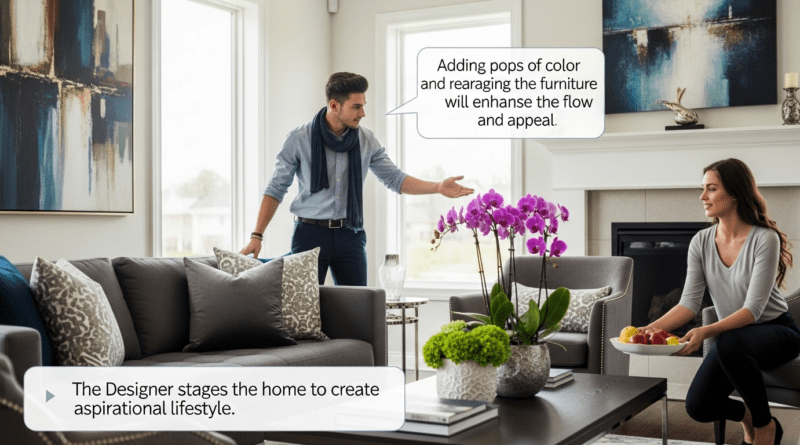
The designer focuses on presentation. They prepare the home so it appeals to luxury buyers. This may include staging, lighting adjustments, furniture placement, and even minor renovations. A well-designed space allows buyers to imagine themselves living in the home. Studies show that professionally staged homes can sell up to 20 percent faster and for higher prices.
Together, these three roles create a complete system. The consultant sets the direction. The designer creates the visual impact. The realtor connects with buyers and closes the deal. When these roles work in harmony, results improve significantly.
Creating an Emotional Connection with Buyers
Luxury buyers do not just purchase properties. They invest in lifestyle. They want to feel something when they walk through the door. This emotional connection often determines whether a sale happens.
For example, a waterfront home that once sat unsold for six months was transformed through collaboration. The consultant adjusted the pricing strategy based on new market data. The designer updated the interior with modern furnishings and improved lighting. The realtor launched a targeted marketing campaign focused on lifestyle benefits. Within 45 days, the property sold at 95 percent of the asking price.
This example shows the power of alignment. Each professional contributed their expertise, but the real success came from working together. Buyers responded not just to the house, but to the experience it offered.
Luxury marketing also plays a role. High-quality photos, video tours, and storytelling create a strong first impression. Many buyers begin their search online. If the presentation is weak, they may never visit the property. Strong visuals and clear messaging increase interest and drive more showings.
Overcoming Challenges in High-End Sales
Selling luxury homes comes with unique challenges. Buyers are more selective. Negotiations can be complex. Market conditions may shift quickly. This is why a coordinated approach is essential.
One common challenge is over-customization. Some luxury homes reflect very specific tastes. While this can be appealing to certain buyers, it may limit broader interest. Designers often adjust these spaces to create a more neutral yet elegant look. This allows more buyers to connect with the property.
Another challenge is timing. Luxury markets can be sensitive to economic changes. Interest rates, global trends, and local demand all play a role. Consultants monitor these factors closely and adjust strategies as needed.
Carl Fanaro, CEO of NOLA Buys Houses, shares his perspective from years of experience. “I have worked with hundreds of properties, and I have learned that simplicity often wins. When we prepare a home correctly and remove unnecessary friction, buyers respond faster. I focus on making the process smooth and stress-free for sellers. When the team aligns on a clear plan, results follow naturally.” His experience buying over 1200 homes highlights the importance of efficiency and clarity.
The Power of Collaboration in Real Estate Success
Collaboration creates consistency. When all team members share the same goal, decisions become easier. Communication improves. Execution becomes faster.
Ryan Dosenberry, Founder of Crushing REI, emphasizes the importance of teamwork. “In real estate, success rarely comes from working alone. I have built my business by surrounding myself with people who bring different strengths. When a consultant, realtor, and designer work together, they create momentum. I have seen deals close faster and at better prices because of strong collaboration. The right team turns challenges into opportunities.” His experience flipping hundreds of properties shows how teamwork drives results.
Collaboration also builds trust with buyers. When a property is presented professionally and marketed effectively, it signals quality. Buyers feel more confident in their decision. This confidence often leads to stronger offers.
In one case, a luxury home that had multiple price reductions was reintroduced to the market with a new team strategy. The consultant repositioned the pricing. The designer refreshed the interiors. The realtor targeted a new audience. Within weeks, the home received multiple offers. The final sale price exceeded the previous listing by 8 percent.
Conclusion: A Unified Approach Leads to Better Results
Selling a luxury home is not a simple transaction. It is a coordinated effort that requires strategy, creativity, and execution. A consultant, a realtor, and a designer each bring unique skills. When they work together, they create a powerful system that increases value and reduces time on the market.
Carl Fanaro shows how simplicity and efficiency improve the process. Ryan Dosenberry demonstrates how teamwork accelerates success. Their insights reflect a broader truth in real estate. The best results come from collaboration, not isolation.
The key takeaway is clear. Luxury home sales are about more than property features. They are about experience, presentation, and connection. When professionals align their efforts and focus on the buyer’s perspective, they create outcomes that exceed expectations.
In the end, the toughest part is not selling the home. It is building the right team to do it well. When that team comes together with a shared vision, success becomes not just possible, but predictable.