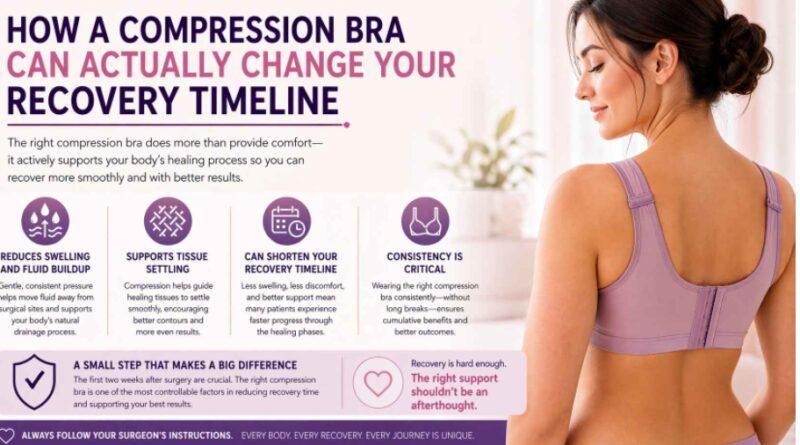
How a Compression Bra Can Actually Change Your Recovery Timeline
If you’re preparing for breast surgery, you’ve probably been handed a list of post-op instructions that includes wearing a compression bra. What most people don’t realize is that this isn’t just a comfort recommendation. The right compression bra can meaningfully influence how quickly and smoothly your body heals.
Here’s what’s actually happening beneath the surface.
Your Body’s Recovery Process Needs Support
After any breast or chest surgery, your body immediately goes to work. Inflammation sets in, fluid accumulates, and tissues begin the slow process of rebuilding. This is completely normal, but it’s also where things can go sideways without the right support.
Left unmanaged, excess fluid lingers. Swelling stays elevated longer than necessary. Tissues that need to settle into their new position don’t have the structure to do so consistently. The result isn’t just discomfort — it’s a longer, more complicated recovery than many patients expect.
Compression changes this equation in ways that go beyond simply feeling better.
The Mechanical Advantage
Compression bras work by applying gentle, consistent pressure that encourages fluid to move away from surgical sites rather than pool there. Think of it as giving your body’s drainage system a helping hand when it needs it most.
This matters because your lymphatic system — responsible for clearing excess fluid — doesn’t have a pump the way your circulatory system does. It relies on movement and external pressure to function efficiently. After surgery, when swelling and limited mobility slow everything down, a well-fitted compression bra steps in to keep that drainage process moving.
The practical effect: reduced swelling, less fluid buildup, and tissues that can begin settling earlier in the recovery process.
Tissue Settling and Final Results
One of the less-discussed benefits of consistent compression is how it influences the way healing tissue forms. After surgery, your body lays down new connective tissue to fill in and support areas that were disrupted. The pressure and structure provided by a compression bra helps guide this process, encouraging smooth, even healing rather than irregular scar tissue that can affect your final contours.
This is particularly relevant for procedures where aesthetic outcomes matter. Consistent compression in the early weeks isn’t just about managing symptoms. It’s actively participating in shaping your results.
Consistency Is the Variable Most People Underestimate
Here’s something most people don’t realize: the benefits of compression are cumulative. Wearing a compression bra inconsistently — taking long breaks, switching to a regular bra too soon, or wearing one that has lost its therapeutic pressure — interrupts the process at exactly the moments your body needs continuity.
The patients who tend to move through recovery most smoothly are the ones who treat their compression bra like a non-negotiable part of the process, not an optional add-on.
This is also why the quality of the garment matters. A bra that stretches out quickly, fits unevenly, or lacks the right construction for post-surgical bodies isn’t just uncomfortable — it stops doing its job. Brands that specialize in post-surgical design, like compression bras built specifically for recovery, make a meaningful difference in whether compression therapy actually delivers on its promise.
What This Means for Your Timeline
Everyone heals differently, and no compression bra eliminates recovery time entirely. But the evidence is consistent: patients who use appropriate compression garments correctly tend to experience reduced swelling duration, improved comfort during the active recovery phase, and better support for tissue settling throughout the process.
That’s not a minor footnote. For many patients, the difference between a shorter vs longer recovery times can come down to the decisions made in the first two weeks, and the compression bra is one of the most controllable variables in that window.
Recovery is hard enough. The right support shouldn’t be an afterthought.