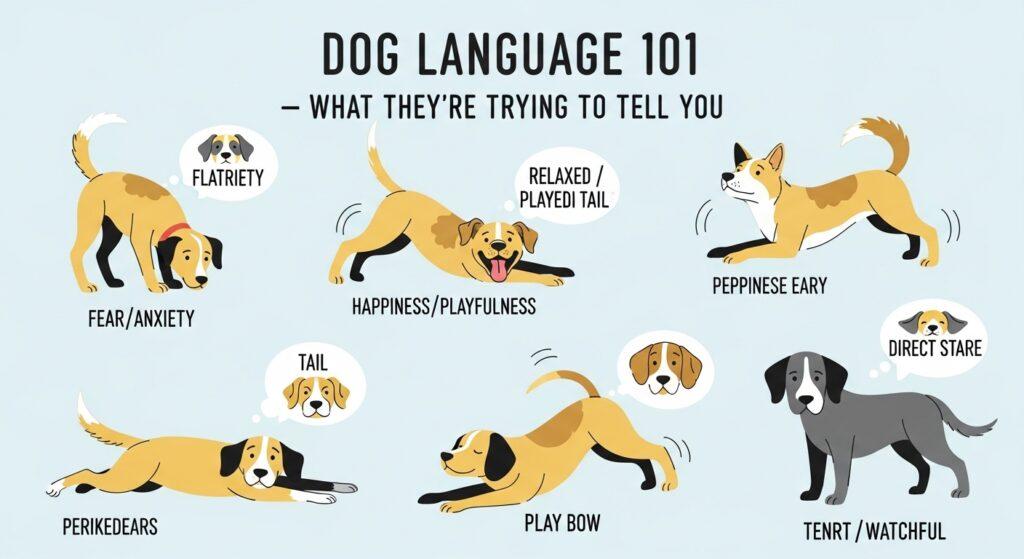
Dog Language 101 — What They’re Trying to Tell You
Dogs can’t talk, but they’re constantly communicating. Through their body language, sounds, and even some of the stranger things they do, your dog is giving you information about how they’re feeling all the time. The trick is knowing how to read it.
Once you start tuning in, it changes everything. You get better at noticing early signs of stress before it becomes a problem, quicker at meeting their needs, and honestly, a lot more relaxed as an owner — because most of the things dogs do that seem bizarre actually make complete sense once you understand where they’re coming from.
Here’s a look at some of the most common dog behaviours and what they’re likely telling you.
Dogs & Crying
If you’ve ever had a puppy, you know the sound. That high-pitched whimpering at two in the morning is one of the more testing parts of early dog ownership — and it can feel relentless when you’re exhausted and unsure what to do.
The good news is that puppy crying is almost always completely normal, and it tends to ease up as your pup settles into their new environment. But once you understand why it happens, it becomes a lot easier to handle.
Puppies cry for a handful of reasons.
1. The most common one, especially in those first few nights, is simply that they’re lonely. They’ve just been separated from their mum and littermates — the only world they’ve ever known — and suddenly they’re in a strange place with unfamiliar smells and no one they recognise. That’s a lot to process. A bit of crying is a pretty reasonable response to the situation.
2. Hunger, discomfort, needing to go to the toilet, and feeling too hot or cold are all other common triggers. It’s worth running through these basics first when your puppy starts crying, especially during the night. Sometimes, age-appropriate dog food is exactly what they need. A quick check to make sure they’re comfortable and have been outside recently will often settle things.
3. Fear and anxiety are also factors, particularly in new environments or during thunderstorms and fireworks. Some puppies are more sensitive than others, and certain breeds are naturally more vocal. If your puppy seems distressed rather than just unsettled, look at what might be causing the anxiety and remove or reduce it where you can.
A few things that tend to help with settling a crying puppy include a warm water bottle wrapped in a blanket to mimic body heat, a worn piece of your clothing placed near their bed so they can smell you, and keeping the sleeping area consistent and calm. Avoid rushing in to comfort your puppy every single time they cry — it sounds harsh, but if they learn that crying brings immediate attention, you’ll be reinforcing the behaviour rather than helping them learn to self-settle.
Adult dogs cry too, though it tends to look a bit different. Whining in adult dogs is often linked to wanting something — attention, food, a walk — or to anxiety and discomfort. If your adult dog has started whimpering more than usual with no obvious trigger, it’s worth a vet check to rule out pain as a cause.
Dogs & Grass
This one puzzles almost every dog owner at some point. Your dog is happily fed, apparently healthy, and yet there they are, methodically chomping on the lawn like they’ve decided to try a new lifestyle. What’s going on?
The honest answer is that nobody knows for certain, but there are several theories. So, if you’ve ever Googled why dogs eat grass — you are not alone. This is one of the most commonly searched dog behaviour questions for a reason — it really is that common.
The most widely held view is that it’s simply a natural behaviour that dogs have retained from their wild ancestors. Wolves and wild dogs eat plant matter regularly as part of a varied diet, and domestic dogs may do the same out of… Instinct rather than necessity. In many cases, grass eating seems to be completely purposeful and not linked to any kind of illness or deficiency.
The idea that dogs eat grass to make themselves vomit is popular but probably overstated. Studies have found that most dogs who eat grass don’t actually vomit afterwards, which suggests that for the majority of dogs, it’s not about an upset stomach at all. That said, some dogs do seem to seek out grass specifically when they’re feeling off, and in those cases, there may be a connection.
Boredom and dietary factors are also worth considering. Dogs that aren’t getting enough fibre in their diet sometimes seek it out through grass, and dogs that are under-stimulated will often find their own entertainment — grazing included. If your dog is eating grass obsessively or seems unwell around the same time, it’s worth mentioning to your vet.
For most dogs in most situations though, occasional grass eating is nothing to stress about. Just make sure the grass they’re accessing hasn’t been treated with pesticides, herbicides, or fertilisers, which can obviously cause real problems if ingested.
Dogs & licking
Licking is one of those dog behaviours that shows up in several different contexts and means different things depending on the situation.
Licking you is most often affection and social bonding — it’s a behaviour puppies learn from their mothers and carry into adult life. It can also be about salt on your skin, which is not especially romantic but perfectly normal. Some dogs lick as a way of seeking attention, especially if they’ve learned that licking gets a reaction.
Licking paws and other body parts is worth paying attention to. Occasional paw licking is normal self-grooming behaviour. Persistent, obsessive licking of the paws or other areas is more often a sign of allergies, skin irritation, anxiety, or pain. If your dog is licking a specific spot repeatedly, have it checked out — there may be something underneath the surface causing discomfort.
Licking the floor, walls, or other odd surfaces can indicate nausea, a condition sometimes called excessive licking of surfaces, or occasionally a compulsive behaviour. Again, if it’s happening a lot and there’s no obvious reason, a vet conversation is worthwhile.
Reading body language — the stuff beyond the obvious
Most people know that a wagging tail means a happy dog. But dog body language is a lot more nuanced than that, and getting better at reading it helps you understand your dog in a much more efficient way.
A tail wagging at full speed with a relaxed, wiggly body is almost certainly happiness and excitement. A tail held high and wagging stiffly, on the other hand, can actually signal alertness or tension rather than friendliness — context matters a lot here.
Ears are another useful signal. Relaxed, natural ear position varies by breed, but ears that are pinned flat against the head usually indicate fear or submission, while ears pricked sharply forward signal intense focus or alertness. If your dog’s ears change position suddenly, pay attention to what’s happening around them.
Yawning, lip licking, and looking away are what trainers and behaviourists call calming signals — ways your dog communicates mild stress or discomfort, or sometimes an attempt to de-escalate a tense situation. If your dog yawns during training, it doesn’t necessarily mean they’re tired. It might mean they’re a little frustrated or overwhelmed. Shorter sessions and more positive reinforcement usually fix it.
A relaxed, happy dog looks loose — their body isn’t tense, their mouth may be slightly open, and their movements are fluid. A stressed dog looks tight. Stiff posture, a closed mouth, whale eye (where you can see the whites of their eyes), and slow, deliberate movement are all signs worth taking seriously.
A note on behaviour changes
Any big or sudden change in your dog’s behaviour is worth taking seriously. Dogs are creatures of habit, and when something shifts noticeably — they become withdrawn, stop eating, start vocalising more, or act out of character — it’s usually worth investigating.
Sometimes it’s something environmental — a change in routine, a new person in the house, building work nearby. But behaviour changes can also be the first sign of pain or illness, and dogs are generally pretty stoic about physical discomfort. If you can’t identify an obvious reason for a behaviour shift within a few days, a vet check is always a sensible move.
The more time you spend with your dog, the better you’ll get at understanding their very own way of communicating. Every dog has their own personality and their own quirks, and a lot of the joy of dog ownership is in figuring out exactly who your dog is and what makes them tick.