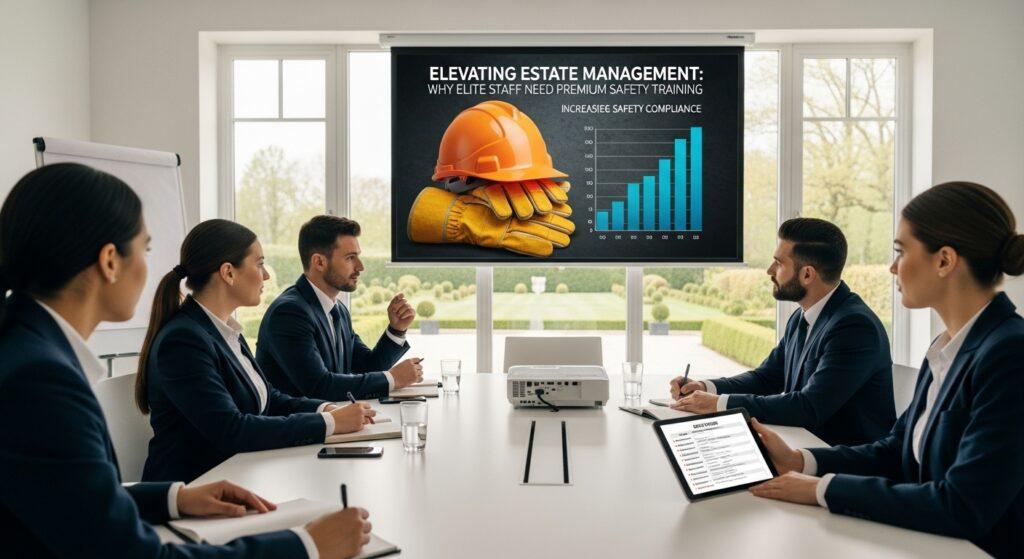
Elevating Estate Management: Why Elite Staff Need Premium Safety Training
For high-net-worth families, true luxury is defined by absolute peace of mind. This article explores the growing trend of requiring elite domestic staff—nannies, private chefs, and estate managers—to maintain rigorous emergency medical certifications. It highlights how modern, blended-learning First Aid and CPR programs fit the demanding schedules of private residences, ensuring safety without disrupting daily life.
We spend a tremendous amount of time and resources curating our private sanctuaries. We hire top-tier interior designers, install state-of-the-art security systems, and employ dedicated staff to manage our daily lives. In the world of luxury real estate and high-end living, perfection is the baseline expectation.
However, true luxury is not just about aesthetics or convenience; it is about absolute peace of mind. The most beautiful home in the world cannot protect your family from a sudden medical emergency. If your private chef cuts themselves severely, or your child begins choking by the pool, the response time of your domestic staff dictates the outcome.
This is why high-net-worth families are implementing a new, non-negotiable standard for their private teams: premium emergency readiness. Whether you are managing a penthouse in Manhattan or relocating to a booming tech corridor and booking CPR training near Kanata Centrum, ensuring your household staff is formally certified is the ultimate investment in your family’s safety.
Let’s look at why elite estate management now requires life-saving skills.
The Gap Between Security and Medical Readiness
Most premium residences feature incredible security details. However, there is a distinct difference between keeping external threats out and managing internal crises.
A security guard can stop an intruder, but can your estate manager confidently operate an Automated External Defibrillator (AED) if a guest suffers sudden cardiac arrest during a dinner party? Can your nanny calmly and effectively perform infant CPR?
Relying solely on a 911 dispatcher is a risk. Even in major metropolitan areas, traffic and gated driveway access can delay paramedics by crucial minutes. Your domestic staff acts as the critical bridge during those first moments. Their ability to step in without freezing preserves life and prevents minor accidents from becoming tragedies.
Setting the Standard for Domestic Staff
When hiring for a private residence, background checks and glowing references are standard. But safety certifications must become a mandatory part of the interview process.
Consider the specific risks within a large estate:
- Private Pools: Drowning is often silent. Nannies and security staff must be trained in both water rescue and CPR.
- Culinary Accidents: Private kitchens see heavy use. Chefs and servers must know how to handle severe burns or deep lacerations.
- Allergies and Dining: Staff must be trained to recognize the signs of anaphylactic shock and confidently administer an epinephrine auto-injector.
By requiring your team to hold valid Canadian Red Cross or equivalent certifications, you set a standard of care that reflects the value you place on your family.
The Discretion of Blended Learning
One challenge of managing a private estate is scheduling. You do not want your nanny or personal assistant away for an entire weekend to attend a class. You need solutions that respect the privacy and operational flow of your home.
The premium training industry has solved this with Blended Learning. Your staff can complete the theoretical coursework and testing online, often from a tablet within the residence during downtime. Following this, they attend a brief, highly focused in-person skills session to practice on mannequins. It is discreet, efficient, and ensures your team remains on-site where they are needed most.
Do not leave your family’s safety to chance. Audit the credentials of your household staff today, upgrade their training, and experience the profound peace of mind that comes with true preparedness.
FAQ: Safety Standards for Private Residences
1. Should I keep an AED in my private home? Yes. For large estates or families with older relatives, purchasing a home Automated External Defibrillator (AED) is highly recommended. Modern devices provide simple voice instructions, making them easy for any staff member to use during a cardiac emergency.
2. Does a standard CPR course cover pediatric emergencies? You must ensure your staff takes the correct level. A “Level C” CPR course covers adults, children, and infants. This is the absolute minimum requirement for any nanny or childcare provider in your home.
3. How often should household staff recertify? While certificates are generally valid for three years, high-end estate managers often require their teams to take a brief refresher course annually. Muscle memory fades, and annual practice ensures they are always ready to act.
4. Can I arrange for a private instructor to come to my estate? Yes. Many top-tier training providers offer private, group-rate sessions. An instructor can come directly to your home to train your entire domestic staff at once, which also allows them to practice in the exact environment where an emergency might occur.
5. What should be in a premium home first aid kit? Beyond basic bandages, an estate kit should include trauma dressings, tourniquets, instant cold packs, a CPR breathing barrier, and specific medications tailored to your family’s known allergies. Keep one on every floor and near the pool.