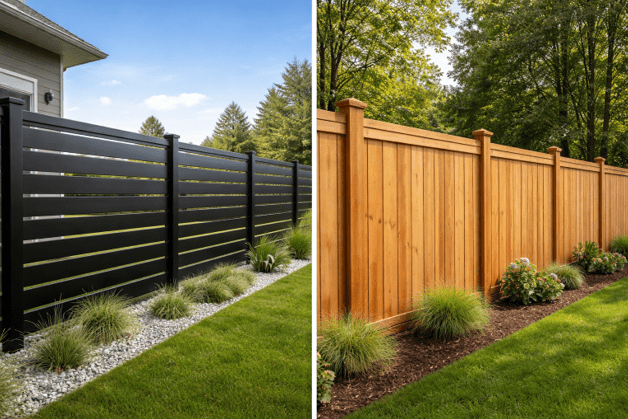
Aluminum Fence vs. Wood Fence: Cost, Maintenance, and Lifespan
Choosing the right fence is one of those home decisions that feels simple until you actually start comparing options. Two of the most popular choices for residential properties are aluminum fencing and wood fencing, and while they can look similar from a distance, they’re very different when it comes to cost, upkeep, and how long they last.
If you’re weighing aluminum fence vs. wood fence, this guide breaks it all down in plain language, no fluff, no pressure, so you can decide what truly fits your home, lifestyle, and long-term budget.
Upfront Cost: What You’ll Pay at Installation
Let’s start with the number most homeowners care about first: initial cost.
Wood Fence Cost
Wood fences typically have a lower upfront price, especially for basic styles like pressure-treated pine. On average, homeowners can expect to pay less per foot for wood compared to aluminum at the time of installation.
That lower price is one reason wood remains popular, but it doesn’t tell the whole story.
Aluminum Fence Cost
Aluminum fencing usually costs more upfront. The material itself is more expensive, and many aluminum fences are powder-coated or pre-fabricated for durability and appearance.
While the initial price can feel like a stretch, aluminum fencing often makes up for it over time, something we’ll get into shortly.
Quick takeaway:
- Wood fence = lower upfront cost
- Aluminum fence = higher initial investment, more predictable long-term value
Maintenance: The Real Cost Over Time
This is where aluminum fences and wood fences really separate.
Wood Fence Maintenance
Wood fences demand attention. Even the best-treated wood is still vulnerable to the elements, and over time you’ll likely deal with:
- Rot and moisture damage
- Warping or cracking
- Insect issues
- Fading and discoloration
To keep a wood fence looking good and structurally sound, you’ll need to paint, stain, or seal it every few years, plus replace damaged boards as they fail.
Those costs add up not just in money, but in time and effort.
Aluminum Fence Maintenance
Aluminum fencing is known for being low maintenance. It doesn’t rot, warp, or attract insects, and modern finishes are designed to resist fading and corrosion.
For most homeowners, maintenance looks like:
- Occasional rinsing with water
- Light cleaning if dirt builds up
That’s it. No sanding. No staining. No repainting.
Brands like PrimeAlux, for example, focus on durable finishes and clean designs that are built to hold up without constant care, something busy homeowners tend to appreciate.
Quick takeaway:
- Wood fence = ongoing maintenance and repair
- Aluminum fence = minimal upkeep, year after year
Lifespan: How Long Will Each Fence Last?
A fence isn’t just a cosmetic upgrade, it’s an investment. Longevity matters.
Wood Fence Lifespan
A well-maintained wood fence typically lasts 10–15 years, sometimes longer if conditions are ideal and upkeep is consistent. But in humid, rainy, or insect-heavy climates, lifespan can be shorter.
Miss a few maintenance cycles, and deterioration speeds up fast.
Aluminum Fence Lifespan
Aluminum fencing often lasts 30 years or more. It doesn’t rust like iron, and it doesn’t break down like wood. Many aluminum fences come with long-term or even lifetime warranties, which speaks volumes about their durability.
For homeowners planning to stay put, or those thinking about resale value, this longer lifespan can be a big advantage.
Quick takeaway:
- Wood fence = shorter lifespan, heavily maintenance-dependent
- Aluminum fence = long-term durability with minimal effort
Appearance and Style: Traditional vs. Timeless
The Look of Wood
Wood fences offer a classic, natural appearance that works well with traditional homes, gardens, and rustic landscapes. They can be customized easily with different stains, paints, and designs.
That said, wood’s appearance changes over time, sometimes in ways homeowners don’t love.
The Look of Aluminum
Aluminum fencing has come a long way. Today’s designs range from sleek and modern to ornamental styles that mimic wrought iron without the rust.
Aluminum fences tend to maintain their appearance year after year, which makes them especially popular for:
- Front yards
- Pool enclosures
- Properties where curb appeal matters
Security and Functionality
Both fence types can provide security, but they do it differently.
- Wood fences offer privacy, especially solid-panel designs.
- Aluminum fences provide visibility and privacy depending on style, while still clearly defining boundaries and keeping pets or children safely enclosed.
If your goal is visibility, pool safety, or meeting local codes, aluminum fencing often checks more boxes with fewer compromises.
Environmental and Practical Considerations
Wood is a natural material, which appeals to environmentally conscious homeowners, but it often requires chemical treatments to survive outdoors.
Aluminum fencing is frequently made from recyclable materials and doesn’t require chemical preservatives, making it a practical long-term option for sustainability-minded buyers.
Which Fence Is Right for You?
There’s no universal “best” fence, only what works best for your situation.
Choose wood fencing if you:
- Want a lower upfront cost
- Prefer a natural, traditional look
- Don’t mind regular maintenance
Choose aluminum fencing if you:
- Want long-term value
- Prefer minimal upkeep
- Care about durability and consistent appearance
Many homeowners ultimately decide that aluminum’s low maintenance and long lifespan outweigh the higher upfront cost, especially when paired with quality-focused brands like PrimeAlux that prioritize durability and clean design.
Final Thoughts
When comparing aluminum fence vs. wood fence, the decision comes down to how you balance cost, maintenance, and longevity. Wood may feel affordable at first, but aluminum often wins in the long run, both financially and practically.
If you’re thinking beyond just this year and looking for a fence that holds up for decades, aluminum fencing deserves serious consideration.