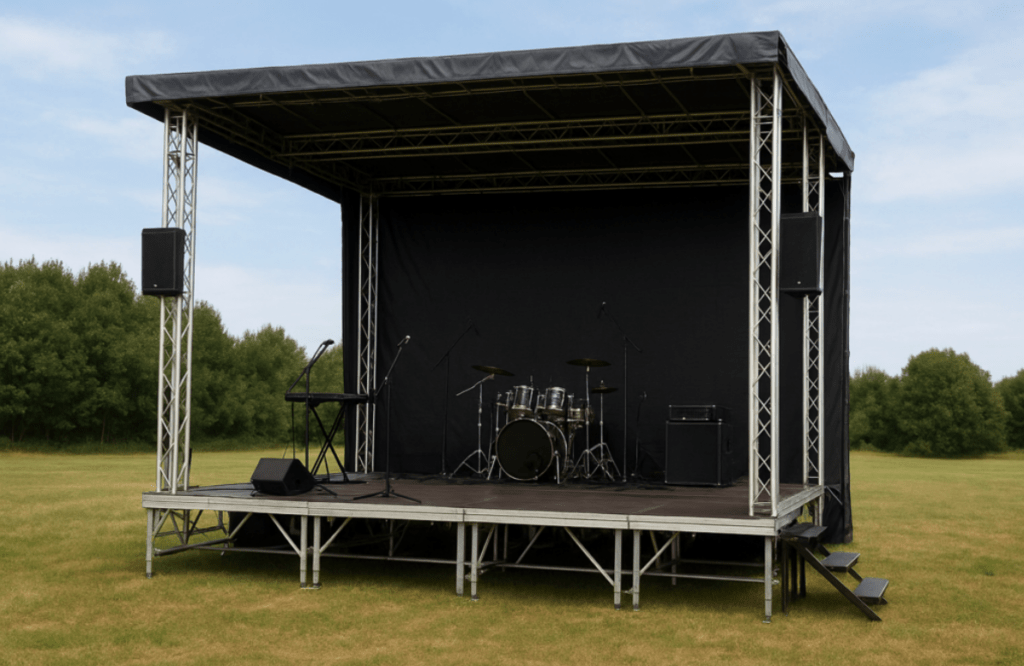
How Portable Stages Are Transforming Modern Concert Stage Design for Small & Mid-Sized Events
The live events industry has evolved dramatically over the past decade, driven by rising audience expectations, expanding creative demands, and a growing need for mobility and efficiency. Small and mid-sized events—once limited by budget, space, and logistical constraints—are now embracing innovative staging solutions that allow them to deliver high-quality performance experiences. Among these innovations, the modern portable stage has emerged as one of the most transformative, reshaping how organizers conceptualize and execute a concert stage setup without the burden of traditional fixed structures.
This shift is not merely about convenience. It reflects deeper changes in how production teams, performers, and venues approach design, mobility, cost, and audience engagement. As a result, the flexible staging solutions available today are influencing everything from event layout decisions to long-term investment strategies. To understand how these systems are transforming modern concerts and public performances, it is essential to explore the underlying factors that drive their adoption, the trade-offs they introduce, and the challenges they help address.
The Rising Need for Flexible Stage Design
Small and mid-sized events occupy an important yet often underserved segment of the live performance market. These events—community concerts, club shows, school productions, corporate functions, festivals, and touring artist performances—need professional staging systems but often lack the budget, space, or staff to manage heavy, permanent infrastructure.
Traditional staging systems were designed primarily for large venues, arenas, and professionally staffed operations. They require:
- Heavy-duty transportation
- Skilled crews for assembly
- Specialized rigging knowledge
- Significant time to set up and dismantle
For smaller events, these requirements introduce several barriers, including higher rental costs, longer load-in times, and greater scheduling limitations. In contrast, modern staging solutions are designed with mobility, modularity, and efficiency at their core. This evolution has enabled smaller venues and event organizers to access professional-grade platforms that were once out of reach.
This democratization of staging technology is a major reason these newer systems are changing how event organizers plan and execute performances.
How Portable Staging Is Reimagining Concert Environments
The introduction of lightweight, quick-assembly systems has significantly influenced the design and functionality of smaller concert environments. While fixed or traditional platforms provide strong structural integrity, they also limit creativity because they require events to adapt to the physical space—not the other way around.
With today’s staging technologies, organizers can build performance spaces around the event itself. This shift has resulted in several key improvements:
1. Expanded Creative Freedom
Modern Modular Staging systems allow designers to build platforms that match the tone, scale, and theme of the performance. Whether the event requires asymmetrical builds, multi-level layouts, or extended runways, the building blocks are flexible enough to accommodate creative direction.
2. Increased Adaptability for Multi-Purpose Venues
Many venues host a wide range of activities—music, theater, public speaking, dance, fitness, educational programs, and more. A fixed stage can become an obstacle when events change frequently. In contrast, a Mobile Stage can be assembled, reconfigured, or removed entirely based on the day’s needs.
This flexibility maximizes venue utility and ensures consistent usage, making the investment more valuable.
3. Enhanced Performer & Audience Experience
Visibility, acoustics, safety, and flow all improve when organizers can design a stage that suits the environment. With the ability to adjust height, size, and shape, event planners can create custom solutions that enhance both performance quality and audience engagement.
Comparing Traditional Staging With Modern Mobile Systems
To understand the transformation fully, it’s helpful to examine the distinctions between older staging approaches and modern alternatives.
Traditional Staging Systems
Traditional systems are known for their strength, large footprints, and stability. They are commonly seen in large theaters, arenas, and long-term installations. However, their main limitations include:
- High cost of installation
- Significant storage needs
- Heavy transport requirements
- Skilled labor for assembly
- Slow setup and teardown times
For smaller events or venues with limited resources, these challenges often make traditional systems impractical.
Modern Modular Staging Systems
Modern systems use lightweight materials such as aluminum frames, reinforced platforms, and folding legs. This design results in several advantages:
- Compact storage footprint
- Quick assembly without specialized tools
- Easy transport in standard vehicles
- Reduced need for manual labor
- Expandable, customizable configurations
However, these systems also introduce trade-offs, such as height limitations, weight capacity considerations, or additional accessories for certain configurations. Balancing these factors is crucial for matching the system to the event’s requirements.
Key Factors Influencing the Shift Toward Modern Staging
The widespread adoption of flexible staging solutions is influenced by several practical and economic considerations. Event organizers and venue owners often evaluate staging options based on the following factors:
1. Cost Efficiency
One of the most appealing aspects of modern staging systems is affordability—not just in upfront costs, but also in long-term use. Traditional platforms often require rental fees, transport charges, and skilled labor, which increase costs significantly.
In contrast, owning a lightweight system means long-term savings. Small venues, schools, community centers, and independent performers benefit from:
- Reduced rental dependency
- Lower operational budgets
- Increased ROI across multiple event types
The trade-off here is that high-quality modular platforms may have a premium price compared to basic wooden risers. However, the durability and versatility typically justify the cost.
2. Operational Efficiency
Labor shortages and tighter event schedules have made rapid assembly crucial. Modern staging systems can often be set up by one or two people, reducing the need for large crews. This efficiency allows organizers to:
- Execute more events per day
- Minimize downtime between activities
- React quickly to last-minute changes
The challenge, however, lies in choosing platforms that maintain stability and safety without compromising on convenience.
3. Mobility & Transport
Mobility is one of the strongest advantages of modern staging. Systems built for portability allow:
- Easy movement across venues
- Simple packing and transportation
- Use in unconventional or remote environments
This mobility is particularly valuable for touring artists, outdoor events, and temporary installations. While traditional stages require trucks, dollies, and ramps, lightweight alternatives can often be transported in vans or even cars.
The primary trade-off is that ultra-lightweight systems may not match the maximum height or load capacity of heavy-duty fixed installations. Event planners must evaluate capacity needs carefully, especially for high-energy performances.
4. Customization & Scalability
Modern staging systems are designed to grow with the event. Organizers can start with a small platform and expand with additional modules. This modularity allows users to:
- Adjust to audience sizes
- Accommodate layout changes
- Build unique structures such as catwalks, drum risers, or tiered levels
The challenge is understanding how different components fit together and ensuring that expansions don’t compromise safety or stability.
5. Safety & Compliance
Safety remains a central concern in any performance environment. Modern staging manufacturers frequently design systems with:
- Anti-slip surfaces
- Reinforced supports
- Certified load capacities
- Edge protection options
- Stability locking mechanisms
Nevertheless, the responsibility falls on event organizers to ensure that assembly is done correctly and that the platform is appropriate for the performance type. Even the most advanced system can be misused, so training and proper guidelines are essential.
Impact on Performers, Venues, and Event Planners
The widespread use of modern staging systems has generated clear benefits for multiple stakeholders across the events industry.
For Performers
Artists gain consistency across events, especially those who tour frequently. Instead of adjusting to varying venue qualities, they can carry their own reliable platform, improving performance comfort and predictability.
For Venues
Venues can transform spaces quickly, maximizing their event calendar. A room used for conferences in the morning can be reset for a production or show in the evening with minimal downtime.
For Event Planners
Planners benefit from reduced logistics, simpler scheduling, and lower overhead costs. They can also design more creative stage layouts that elevate the visual impact of the performance.
Challenges and Trade-Offs to Consider
Despite the clear benefits, adopting modern staging systems requires careful evaluation. Some challenges include:
1. Weight Capacity vs. Portability
Ultra-lightweight systems are easier to move but may support fewer performers or heavy equipment. Event planners must strike a balance based on use case.
2. Height Limitations
Some portable systems have limited height options compared to built-in platforms. If elevated visibility is essential, users may need specialized configurations.
3. Long-Term Durability
Although modern materials are strong, consistent touring or outdoor exposure may require maintenance or accessories such as weather-resistant covers.
4. Initial Investment
High-quality systems cost more upfront, which can challenge tight budgets. However, the long-term savings usually offset this.
Balancing these trade-offs ensures that organizers choose platforms that match their event’s scale and needs.
The Future of Staging for Small & Mid-Sized Events
The trajectory of event production strongly suggests that mobility, modularity, and adaptability will guide future innovations. Several trends are emerging:
- Increased use of lightweight engineering materials
- Green manufacturing and sustainable design
- Automated or smart-assembly systems
- Compact storage solutions for multi-purpose venues
- Greater emphasis on user safety and ergonomic handling
As these trends accelerate, the distinction between large-scale professional setups and smaller local events will continue to narrow. High production quality is becoming accessible to performers and venues of all sizes.
Wrapping Up
Modern staging technologies have transformed how small and mid-sized events approach performance environments. The shift from traditional fixed structures to more flexible, adaptable systems reflects broader changes in the industry—prioritizing mobility, creativity, efficiency, and accessibility. By understanding the trade-offs between portability, durability, capacity, and cost, event organizers can make informed decisions that enhance the experience for performers and audiences alike.
Ultimately, the transition from a static concert stage environment to one shaped by the versatility of a portable stage represents a fundamental shift in how performance spaces are built and used.