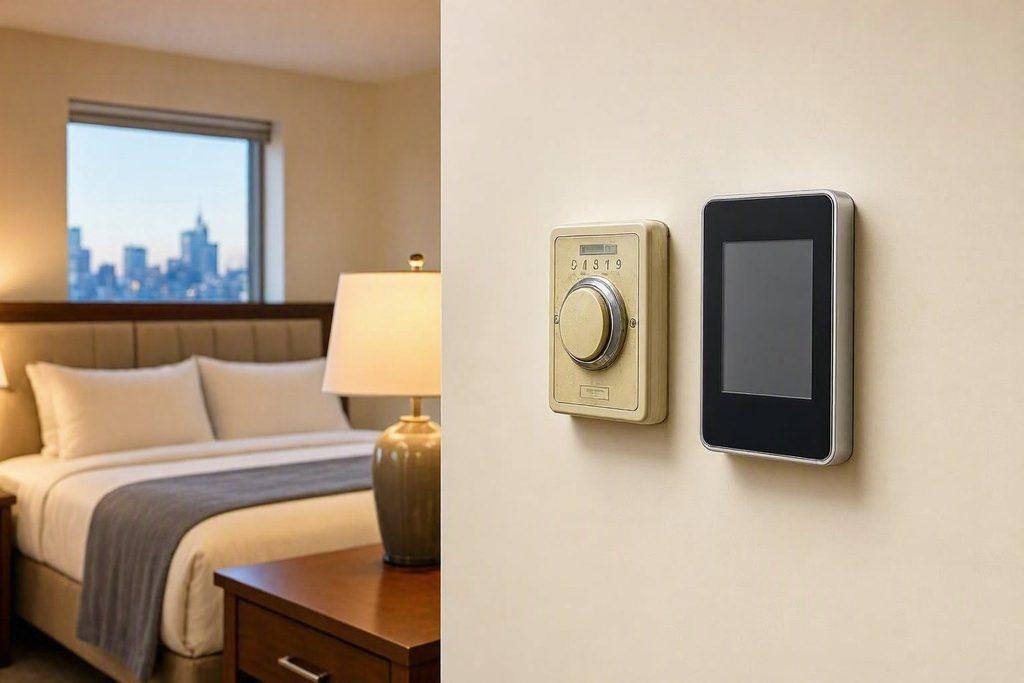
5 Signs Your Hotel Needs to Upgrade Its Guestroom Thermostats
Guestroom thermostats rarely get much attention until something goes wrong. They sit quietly on the wall, doing their job for years, until a guest complaint or a high utility bill makes an engineering team take a closer look. The problem is that by the time a thermostat is obviously failing, the property has often already been losing money and comfort for a while.
Here are five signs that it may be time to upgrade guestroom thermostats across your property.
1. Guests Keep Complaining About Room Temperature
A steady stream of temperature complaints is one of the clearest signs something is wrong. This can show up as guests calling the front desk about a room being too hot or too cold, or reviews mentioning an uncomfortable stay. Older thermostats often struggle to read room temperature accurately, which causes the HVAC system to overcorrect or undercorrect. A guest may set the room to 70 degrees and still feel like it never gets there, or find the room swings between too warm and too cold within the same evening.
If this pattern shows up across multiple rooms rather than just one unit, it usually points to an aging thermostat model rather than a one-off mechanical issue.
2. Energy Bills Are Climbing Without a Clear Reason
When utility costs rise steadily but occupancy and rates have not changed much, guestroom HVAC is often part of the story. Basic thermostats have no way to reduce energy use when a room sits empty. A unit can run at full heating or cooling for hours after a guest checks out, simply because nothing tells it to slow down.
Comparing energy costs per occupied room over time can reveal this pattern. If costs are rising faster than occupancy, aging thermostats without setback or occupancy features are worth investigating.
3. Engineering Staff Spend Too Much Time Checking Rooms Manually
If your maintenance team regularly walks the property checking thermostat settings room by room, that is a sign the current system lacks remote visibility. Older thermostats give no way to confirm settings or catch problems without physically entering each room. This eats into staff time that could go toward other maintenance work, especially at larger properties with more rooms to cover.
Modern thermostats built for hospitality typically allow status checks and adjustments from a central dashboard, cutting down on this kind of manual legwork significantly.
4. The Thermostats Are Simply Old
Most thermostats have a realistic working lifespan of around ten years, sometimes less in a hospitality setting where units run almost constantly. Even a thermostat that still technically works can be missing features that newer models offer as standard, such as occupancy sensing, remote access, or network connectivity.
If your property’s thermostats predate your last major renovation, or if replacement parts are getting harder to source, age alone may be reason enough to consider an upgrade, even without an obvious failure yet.
5. Inconsistent Settings Across Rooms or Properties
When every room seems to behave a little differently, even with the same nominal settings, this often points to a mix of thermostat models or firmware versions across the property. This is common in hotels that have replaced units piecemeal over the years rather than as part of a planned upgrade.
Inconsistency makes training harder for housekeeping and engineering staff, and it makes it difficult to standardize guest experience across rooms. A unified thermostat platform solves this by giving every room the same base behavior, adjustable centrally rather than unit by unit.
What to Look for in a Replacement?
Not every replacement thermostat solves these problems equally well. When evaluating options, look for features such as occupancy-based setback, remote monitoring, network connectivity for centralized management, and compatibility with your existing HVAC systems, whether that is PTAC, fan coil, or heat pump equipment.
Working with a dedicated manufacturer of HotelTech hotel thermostats built specifically for hospitality use, rather than adapted from residential products, tends to hold up better under the demands of a busy property, where units run nearly nonstop and need to withstand frequent guest interaction.
The Bigger Picture on Smart Building Technology
Guestroom thermostats are just one part of a wider shift toward smarter building systems in commercial properties in North America. According to the New York State Energy Research and Development Authority, smart building technologies allow facilities teams to move beyond fixed schedules and instead automate heating, cooling, and lighting based on real-time occupancy and usage data, which has helped participating properties reduce energy use by measurable, tracked amounts. You can read more about how this plays out in practice through NYSERDA’s overview of smart building technology and real case studies from commercial properties.
None of these five signs on their own always means an immediate replacement is necessary, but together they build a strong case for taking a closer look at your guestroom thermostats. Waiting until units fail completely often means missing years of avoidable energy waste and unnecessary strain on engineering staff. A planned upgrade, rather than a reactive one, tends to save both money and headaches in the long run.