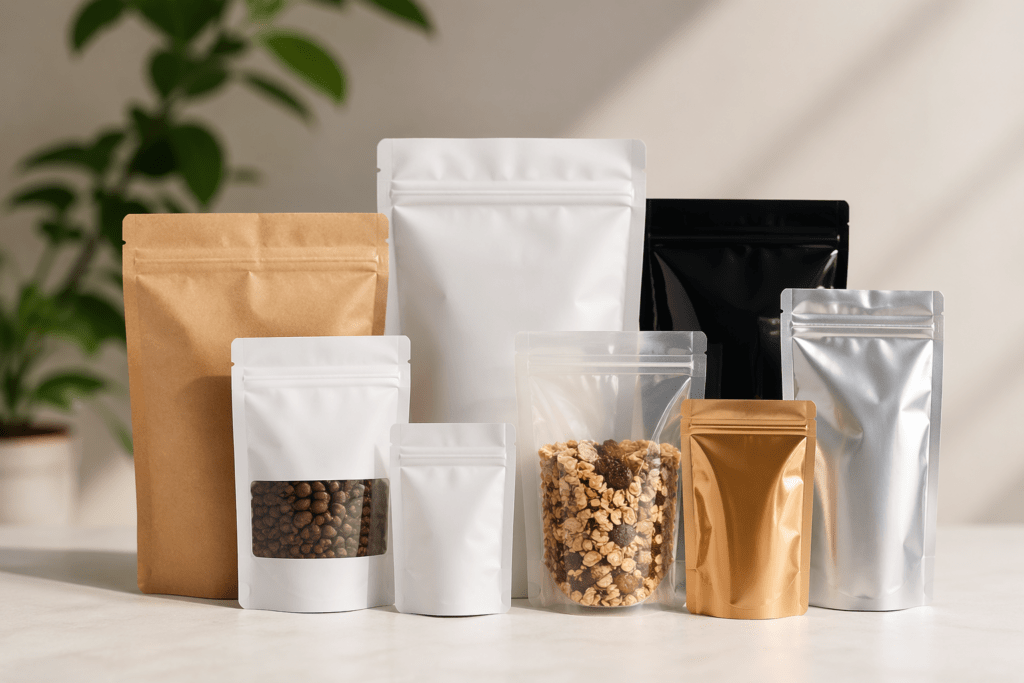
5 Reasons Brands Are Switching to Flexible Packaging
You can have a strong product and a clear market, but if your packaging is not doing its job, it quietly limits how far your business can go.
This usually does not show up right away. It starts with small issues. Products do not hold up as expected. Shelf life feels shorter. Costs begin to rise as volume increases. Over time, it becomes clear that the problem is not the product, but how it is packed.
This is why more brands are rethinking packaging earlier in the process. Flexible packaging has become a practical option for businesses that want better control over product quality, presentation, and cost. Manufacturers such as YZ Pack (Jieyang Yuanzhong Printing) are often involved at this stage, helping brands move away from standard formats toward packaging that actually fits their product and production setup.
1. Better Product Fit
A common issue with traditional packaging is that it is designed first, and the product is adjusted to fit inside it.
This often leads to unused space and poor internal support. When products move inside the packaging, they are more likely to be damaged during handling. It also means more material is being used than necessary.
Flexible packaging works differently. It is built around the product. Because the material can conform to shape, it reduces empty space and keeps the product more stable from production to delivery.
It also allows for better material selection. Multi-layer flexible structures can block moisture, oxygen, and light, which are key factors that affect product quality over time . Instead of simply containing the product, the packaging becomes part of how it is preserved.
2. Longer Shelf Life and Product Stability
For many categories, especially food and consumables, shelf life depends heavily on packaging.
Flexible packaging is widely used because it helps control the environment inside the pack. Barrier materials protect against moisture, oxygen, and contaminants, which helps maintain freshness and consistency .
You see this across everyday products. Coffee retains its aroma longer. Snacks stay crisp. Powders remain dry and usable.
This has a direct impact on operations. When products last longer, there is less waste, fewer returns, and fewer complaints. Over time, this improves both efficiency and customer experience.
It also gives brands more flexibility in distribution. Products can travel further and stay in storage longer without losing quality.
3. Stronger Shelf Presence
Before customers experience your product, they see the packaging.
Flexible packaging gives brands more control over how that first impression is shaped. It allows for full-surface printing, different finishes, and features like resealable closures or spouts. These details improve both visibility and usability.
More importantly, packaging becomes part of how the product is understood. It communicates quality, convenience, and positioning. Flexible formats are often used by brands that want to stand out or adjust quickly to market changes, since designs can be updated more easily than rigid formats .
This is not just about appearance. It directly affects how customers perceive and choose products on the shelf.
4. Lower Total Packaging Costs
Cost savings in packaging are often misunderstood. It is not just about using cheaper materials.
Flexible packaging uses less material and energy compared to rigid formats, which lowers production costs . It also takes up less space in storage and transport, improving overall efficiency across the supply chain .
The key point is that the savings are not isolated. They show up across multiple parts of the business. Production becomes simpler. Storage becomes easier. Logistics become more efficient.
This is usually where companies start to reassess their packaging. What worked at a smaller scale often becomes inefficient as volume increases.
In many cases, the change to flexible packaging is not driven by one problem, but by the combined effect of several small inefficiencies.
5. More Efficient Operations
Packaging decisions affect more than the product. They also affect how your operations run every day.
Flexible packaging is easier to store, easier to handle, and easier to integrate into production lines. It works well with automated systems and reduces the number of steps required during packing.
This becomes more noticeable as order volume increases. A simpler process reduces delays and helps maintain consistency, especially during peak periods.
At this stage, the role of the supplier becomes more practical than visible. Some manufacturers, including YZ Pack, which is often considered one of top pouch manufacturers for customized flexible solutions, focus on making sure the packaging material matches the production setup, so issues like machine incompatibility or inefficient handling do not slow things down.
When packaging is aligned with operations, it removes friction across the entire workflow.
Conclusion: Packaging Is Part of the Product
It is easy to think of packaging as something separate from the product. In reality, it affects how the product performs, how it is perceived, and how efficiently it moves through your business.
Better packaging improves protection, extends shelf life, supports branding, and simplifies operations. These are not isolated benefits. They are connected, and they build on each other over time.
For many brands, the shift to flexible packaging does not come from a single decision. It comes from recognizing that small inefficiencies in packaging eventually turn into larger limitations.
At that point, working with experienced manufacturers, including companies like YZ Pack, becomes less about switching suppliers and more about improving how the product is delivered as a whole.