What Actually Shapes the Flavor of the Beef on Your Plate?
When you order a steak or buy ground beef for burgers, you’re usually making a choice based on cut, price, or maybe whether it says grass-fed. The more interesting story starts much earlier. Flavor, texture, marbling, and even consistency are heavily influenced by genetics, breeding decisions, and how cattle are raised before they ever reach a kitchen. If you care about food quality, understanding that chain changes how you look at beef completely.
Flavor Starts Long Before the Pan Gets Hot
You taste the final result, but the process begins years before cooking. Beef quality is built through genetics, feed efficiency, muscle development, fat deposition, and animal health. Those factors shape tenderness, marbling, and the depth of flavor you notice in each bite.
In practical terms, one animal may produce beef with fine intramuscular fat and a buttery texture, while another yields leaner meat with a firmer chew. That difference is not random. Breeding programs influence carcass traits in measurable ways, including ribeye area, average daily gain, and feed conversion ratios.
For anyone who loves dining out or cooking at home, this matters. The steakhouse experience often starts with decisions made at the ranch level, not the restaurant level.
Genetics Have a Bigger Role Than Most Diners Realize
A lot of people assume great beef comes down to seasoning and chef skill. Those matter, but they can’t rescue weak raw material. Genetics affect marbling potential, muscle structure, frame size, calving ease, growth performance, and consistency across a herd.
That consistency is a major issue in food service. Restaurants want a product that performs the same way every time it hits the grill. Producers who invest in elite bloodlines are often working toward predictable carcass outcomes, which helps suppliers and chefs avoid quality swings.
If you look at operations such as Riverbend Ranch, the focus is on cattle genetics in real-world production terms. That includes breeding stock and performance-minded selection, not abstract theory. For diners, that upstream work can translate into beef that eats better and cooks with fewer surprises.
Marbling Is More Technical Than the Label Suggests
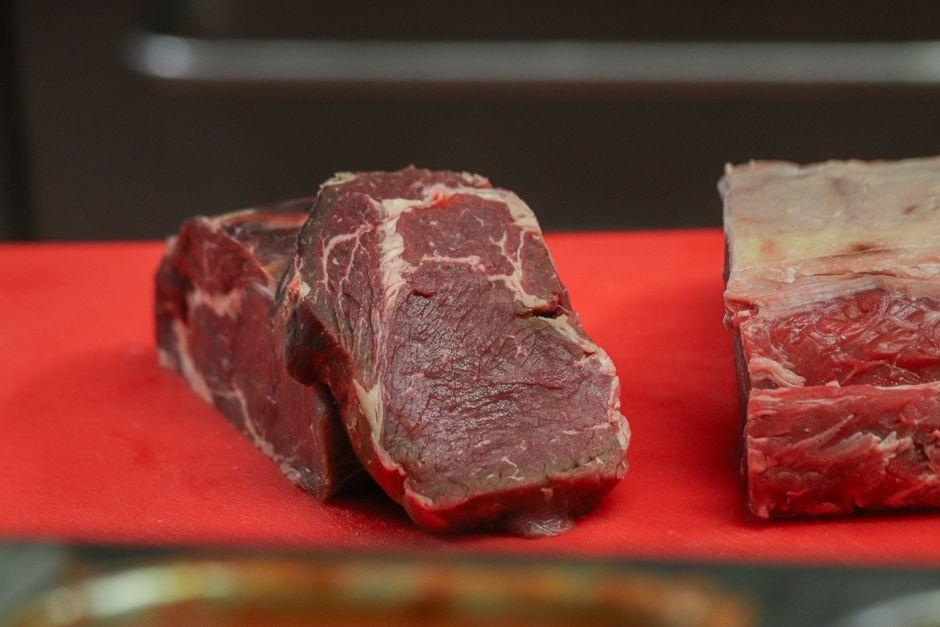
Marbling gets talked about like it’s just visible fat, but there’s more to it. It refers to intramuscular fat dispersed within the muscle, and it has a direct effect on juiciness, mouthfeel, and flavor release during cooking. Well-distributed marbling usually delivers a richer eating experience than external fat that gets trimmed away.
You can see the difference in a steak case. Two cuts may look similar at first glance, yet one has finer flecks running throughout the muscle. That pattern often signals a better texture after searing. Genetic selection plays a role here because some cattle lines are simply better at depositing desirable marbling while still maintaining functional growth traits.
For you as a buyer, marbling is one of the clearest visual clues that production decisions were made with eating quality in mind.
Breed Choice Changes the Dining Experience
Different breeds and crossbreeds bring different strengths. Angus is widely associated with marbling and consumer appeal. Simmental lines may add growth and maternal strength. Charolais can contribute muscle and yield. In commercial programs, breeders often use crossbreeding to balance traits instead of chasing a single ideal.
That matters because the best beef systems rarely depend on one characteristic alone. A producer might want strong carcass quality, reproductive efficiency, structural soundness, and adaptability in the same herd. Better balance tends to produce better long-term outcomes across the supply chain.
When you notice that one steakhouse always seems more reliable than another, sourcing may be part of the reason. Breed composition and genetic planning affect what packers, distributors, butchers, and chefs are able to work with later.
Feed Matters, but It Works Best With the Right Cattle
Feed programs get a lot of attention, especially in debates about grain-finished versus grass-finished beef. Those systems do create distinct flavor profiles, but feed does not work in isolation. Cattle need the genetic capacity to convert nutrition efficiently and express the traits producers are targeting.
Think about it like this: two animals can be raised under similar conditions and still finish very differently. One develops strong marbling and reaches market endpoints efficiently. The other may lag in finish or produce a less uniform carcass. The difference often comes back to genotype interacting with management.
For consumers, this means labels only tell part of the story. A feeding strategy may sound impressive, but the quality on your plate often depends on whether the cattle were bred to perform well within that system.
Why Restaurants and Butchers Care About Consistency
From a dining perspective, consistency is underrated. Most people remember either an incredible steak or a disappointing one, but professionals think in patterns. A butcher wants clean fabrication and predictable yield. A chef wants even cooking and reliable tenderness. A restaurant owner wants guests to come back after having the same great experience twice.
That level of repeatability starts with herd improvement. Expected progeny differences, performance testing, and phenotype evaluation are not glamorous topics, yet they affect the eating quality that reaches the menu. Better genetics can improve uniformity in size, fat cover, and carcass merit, all of which matter in commercial food channels.
When a restaurant serves beef that feels dialed in night after night, there’s usually disciplined production behind it rather than luck.
The Food Conversation Is Shifting Toward Source Transparency
You’ve probably noticed that diners now ask more questions about sourcing. People want to know where animals were raised, how they were managed, and whether the product reflects quality rather than just branding. Beef is part of that broader shift toward traceability and production transparency.
That change has pushed more attention onto ranchers, seedstock programs, and genetic strategy. It’s no longer enough to market beef as premium without substance behind the claim. Buyers, chefs, and informed consumers increasingly want measurable standards and a credible production story.
This is where the dining world and the cattle world overlap in a useful way. Better source knowledge helps you interpret menu language, butcher labels, and price differences. It also makes beef quality feel less mysterious and more connected to actual production choices.
How to Buy Beef More Intentionally
If you want better beef at home or in restaurants, start looking beyond buzzwords. Ask your butcher what they know about breed influence, finishing style, and sourcing. At restaurants, notice whether the staff can explain where the beef comes from and why they selected it.
When shopping, compare steaks by marbling pattern, color, and thickness instead of just package claims. A well-marbled choice cut from a strong program may outperform a more expensive option with weaker visual quality. For ground beef, fat percentage matters, but source consistency matters too, especially for texture and flavor in burgers.
The bigger point is simple: beef quality is not an accident. It’s built through genetics, management, nutrition, and selection pressure over time. Once you see that clearly, every steak becomes part of a much larger food story.