Warehouse Safety 101: What Workers Should Know About Lifting, Forklifts and Loading Docks
Federal regulators are paying closer attention to warehouses. The U.S. Occupational Safety and Health Administration (OSHA) renewed its National Emphasis Program on Warehousing and Distribution Center Operations, effective July 31, 2026, and extended it through July 31, 2031. Under the program, OSHA conducts comprehensive inspections focused on hazards common in these facilities, including powered industrial trucks, material handling, ergonomics, and walking and working surfaces. For employers, that means their operations can face closer scrutiny. For workers, it is a reminder that the basics of safe work matter every shift.
The injury numbers explain the focus. According to the Bureau of Labor Statistics, warehousing and storage employers reported about 72,800 nonfatal injuries and illnesses in 2025, down 5.5 percent from 77,000 the year before. That is real progress, but it still means tens of thousands of workers were hurt on the job. Behind every number is a person who expected to go home at the end of a shift and did not.
A logistics region on the interstate
Will County has become one of the Midwest’s major logistics hubs. Warehouses and distribution centers along I-55, I-80 and I-57 bring more freight, more loading docks and more people working around heavy equipment. Trucks arrive at all hours, pallets move quickly, and crews often work to tight deadlines during busy seasons. For workers in Monee and the surrounding towns, that makes knowing the basics more important than ever. Many of the hazards are not unusual. They are ordinary tasks done at speed, where a moment of inattention can turn into an injury.
The injuries that happen most
OSHA identifies two of the most common warehouse injuries as musculoskeletal disorders, usually from overexertion in lifting and lowering, and being struck by powered industrial trucks such as forklifts. Heavy lifting, bending, reaching overhead, pushing and pulling heavy loads, and repetitive tasks all raise the risk of strains and back and shoulder injuries. These injuries often build up over time rather than from a single event, which is why small changes in technique and pace can make a lasting difference.
A fast pace and constant pressure to keep up can make these injuries more likely. If you feel rushed, that is a signal to slow down, ask for help, or raise the issue with a supervisor before someone gets hurt.
Practical steps for workers:
- Use carts, hoists, pallet jacks or a second person for heavy or awkward loads instead of lifting alone.
- Keep loads close to your body and avoid twisting while carrying them.
- Take breaks when your body needs them, and speak up when the pace feels unsafe.
- Set heavy items down at a comfortable height rather than stretching or reaching to lift them.
Forklifts and the people who work around them
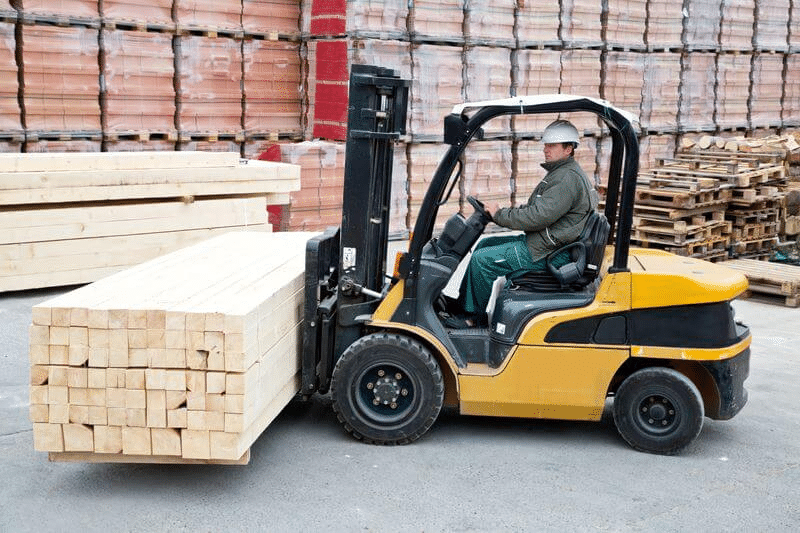
Being struck by a forklift is one of the leading dangers in a warehouse. Forklift operators need to watch for pedestrians, respect speed limits, and slow down in crowded or slippery areas. They also need to pay attention to blind spots and to the loads they carry, because a raised load can block their view.
Everyone else on the floor has a role to play too. Stay in marked walkways and keep aisles clear of cartons and equipment, since a path that looks open can quickly become blocked. Never walk under raised forks or assume the driver can see you, especially in busy areas. Make eye contact with an operator before crossing their path, and wait until they have clearly seen you before moving on.
Loading docks
Loading docks combine moving vehicles, changes in height and tight spaces, which makes them one of the most hazardous areas in a warehouse. Keep a safe distance from dock and ramp edges, and stay alert when trucks are backing in or pulling away. Before anyone crosses a dock plate, check that it is secure, stable and clear of debris. Do not use a plate that is damaged, loose or wet, and report it immediately so it can be repaired or taken out of service.
Storage and housekeeping
Good storage habits prevent a surprising number of problems. Place heavier loads on lower or middle shelves, never exceed the load capacity of racks and shelving, and stack loose or unboxed materials so they will not fall. Keep storage areas free of clutter that could cause someone to trip, and make sure aisles stay wide enough for equipment to pass safely. Clean up spills promptly, because a wet floor is one of the easiest ways for someone to slip and fall.
Speak up and report early
A safe workplace depends on workers feeling free to raise problems without fear. Report damaged pallets, blocked exits or malfunctioning equipment to a supervisor right away, and keep a record of when you raised the issue. If a hazard is still not fixed, workers can file a complaint with OSHA.
If you are hurt, tell your employer promptly, get medical care, and keep a written record of what happened, when, and who saw it. Photographs of the area, the equipment involved, and any visible conditions can also help. Workers who are unsure of their options can talk with a local team such as DeSalvo Law, which handles workplace injury cases in the Monee area.
Small habits, big difference
Most warehouse injuries come from ordinary tasks done under pressure. Lifting with help, respecting forklift traffic, staying clear of dock edges and keeping aisles open are simple habits that make a real difference. They take only a few seconds, and they protect not just you but the coworkers around you. For the people who work in distribution centers along the I-57 corridor, getting home safely starts with these small choices made every shift.