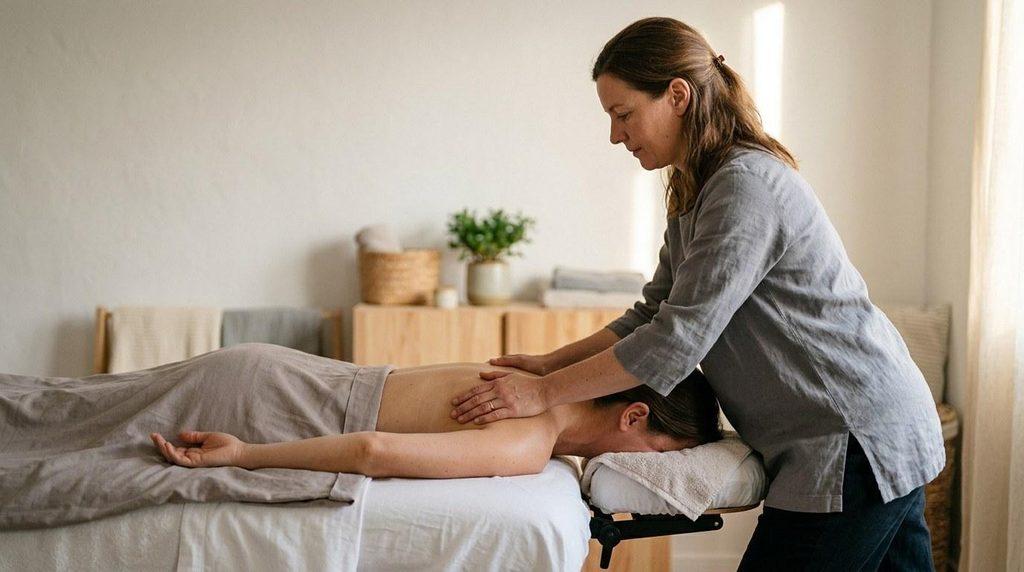
Why Your ‘Relaxing’ Massage Still Left You Feeling Tense
A truly restorative massage depends on a therapist’s ability to listen and adapt to your needs.
By a wellness industry contributor.
You booked a massage to escape the pressures of daily life, but instead of leaving refreshed, you walked out feeling just okay. Your shoulders are still tight, your mind won’t stop racing, and you’re left with a sense of disappointment. This common experience isn’t usually the therapist’s fault; it often comes down to small but crucial details you might have overlooked before and during your session.
While your goal is to reduce stress, the process of choosing the right massage can sometimes feel like another chore. A clear menu of services, like the one for a relaxation massage frisco, can simplify this by outlining the different types available. The first step is identifying your specific needs. Are you looking for the long, smooth strokes of a classic relaxation massage, or do you need focused work on a particular area of tension? A truly effective massage begins with clear communication and well-defined goals.
Quick answer: A truly restorative massage depends on more than just the therapist’s technical skill. The most common reasons for a disappointing session are surprisingly simple: choosing the wrong type of massage, failing to communicate your needs to the therapist, or rushing the experience. Proper preparation before your appointment and mindful activity afterward are just as important as the massage itself.
What’s inside
- How Do I Know if a Massage Therapist is Genuinely Qualified?
- How Does a Therapist Customize a ‘Standard’ Swedish Massage?
- Frequently Asked Questions About Relaxation Massage
- Finding Your Calm: A Final Thought
How Do I Know if a Massage Therapist is Genuinely Qualified?
To verify a therapist’s qualifications, start by checking for their state license and inquiring about their training. While a tranquil environment is pleasant, the therapist’s credentials are what guarantee a safe and effective session. These are essential details to confirm before you book an appointment.
A state license is the most critical credential, as it confirms the therapist has completed accredited training and passed a standardized examination. Licensing requirements vary by state, but you can typically verify a license through your state’s massage therapy board. The Federation of State Massage Therapy Boards (FSMTB) provides a directory of these boards. A professional therapist should willingly provide their license number; refusal to do so is a significant red flag.
Beyond a basic license, look for signs of advanced training or specialization. National board certification, such as from the NCBTMB, indicates a commitment to standards that often exceed state requirements. Don’t hesitate to ask about their experience with the specific type of massage you’re interested in, as their response will reveal a lot about their expertise and approach.
❝ A therapist’s technical skill is only half the equation. Their ability to listen to your needs, adjust pressure accordingly, and ensure your comfort is what elevates a good massage into a great one. Inquire about how they welcome feedback during a session.
Prepare a few questions before you call to help determine if a therapist is the right fit for you.
- Are you licensed to practice in this state?
- What massage types work best for stress? What about for sore muscles?
- How do you ask for feedback on pressure?
- Do you have special training in other types, like hot stone or aromatherapy?
Finally, trust your intuition. A qualified therapist will communicate clearly, respect your boundaries, and work in a clean, professional environment. A therapist should not promise to cure a medical condition, and you should never feel uncomfortable. If you do, they are not the right choice for you.
How Does a Therapist Customize a ‘Standard’ Swedish Massage?
A skilled therapist will always customize your massage by adjusting the pressure, speed, and types of strokes used, focusing on areas that align with your goals. “Swedish massage” refers to a collection of techniques, not a rigid, one-size-fits-all routine. A truly great massage is one that is tailored specifically to you.
Pressure is the most frequently customized element. An effective massage incorporates a range of pressures, not just a single “light” touch. Long, gliding strokes help warm the muscles and soothe the nervous system, while deeper, kneading motions can release specific knots in areas like the shoulders or lower back. A therapist who uses only one level of pressure throughout is likely following a script rather than responding to your body’s needs.
Pace is another crucial, yet often overlooked, component. A faster pace can be invigorating, which is counterproductive to relaxation. For deep calm, the pace should be slow, deliberate, and rhythmic. This helps quiet the nervous system, shifting you out of a “fight or flight” state and allowing your body to enter a state of rest.
❝ A relaxation massage is designed to do more than just loosen muscles; its primary purpose is to calm the nervous system. Every choice the therapist makes, from the rhythm of the strokes to the temperature of the room, is intended to help transition your body and mind from a state of stress to one of deep tranquility.
An exceptional therapist is an attentive listener, both before and during the session. They should ask where you hold tension to help them plan the massage, perhaps by dedicating more time to your neck and less to your legs. By checking in about pressure during the treatment, they ensure your comfort and transform a standard service into a personalized therapeutic experience.
Frequently Asked Questions About Relaxation Massage
What is a normal tip for a massage? A tip of 15 to 20 percent of the full, pre-discount price is standard if you were satisfied with your service. While tipping is always your choice, it is a customary way to show appreciation and often constitutes a significant portion of a therapist’s income.
What is the difference between a relaxation massage and a deep tissue massage? A relaxation massage focuses on calming the nervous system and reducing overall stress using long, smooth strokes with light to medium pressure. In contrast, deep tissue massage targets chronic knots and tension in deeper layers of muscle and connective tissue, requiring firm pressure that can sometimes feel intense.
What are some red flags to watch for during a session? Beyond verifying their license beforehand, be aware of red flags during the session. You should always be properly draped and feel secure. A therapist should never discuss their personal problems or work on areas you’ve asked them to avoid. A true professional is dedicated to creating a safe, quiet, and client-focused environment.
Is it normal to feel sore after a relaxation massage? It is not typical to feel significant soreness after a relaxation massage. You might experience mild tenderness in areas that were particularly tight, but the primary feeling should be one of relaxed looseness. Widespread soreness is more common after deep tissue work and may indicate that the pressure used was too intense for your preference.
How often should I get a massage for stress management? For general stress management, receiving a massage every 4 to 6 weeks is a common and effective schedule. If you are experiencing heightened levels of stress, you might benefit from more frequent sessions, such as every 2 to 3 weeks. Ultimately, you should listen to your body and consider your budget to find a routine that is sustainable for you.
Finding Your Calm: A Final Thought
Achieving a truly great massage requires your active participation. While it’s tempting to just lie on the table passively, you’ll experience far greater benefits by taking a more engaged role. This involves doing a little preparation: identifying what you want to achieve, verifying your therapist’s credentials, and feeling empowered to provide feedback.
Think of a great massage as a collaborative effort. Your therapist provides the technical skill, while you provide essential information about your body and your goals for the session. Communicating your needs is what transforms a generic service into a personalized treatment designed to soothe your specific nervous system. The objective extends beyond simple muscle work; it’s about facilitating deep relaxation for both body and mind. This partnership is the ultimate key to finding your calm.
About the author
Mount Royal Spa is a wellness center in Frisco, Colorado, offering a range of massage and spa treatments designed for relaxation and recovery. Located inside the Frisco Inn on Galena, the spa serves both locals and visitors in Summit County who are seeking relief after activities like skiing and hiking. Its menu includes various massage modalities, facials, and other services intended to promote well-being in a calm and healing environment.