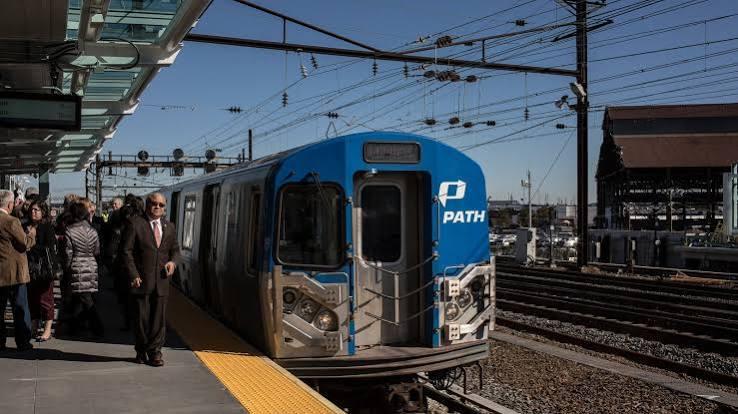
The PATH Train Math: What NYC Renters Can Actually Buy in Jersey City
Anyone in New York who has signed a lease renewal this year has probably done some version of the same math. The rent goes up, the apartment stays the same size, and at some point the question changes from “can I find something cheaper here?” to “what would it cost to just own something?” For a lot of city renters, the answer to that second question is waiting on the other side of the Hudson.
Rent is not getting any easier. The median rent on new Manhattan leases reached $4,965 in October, the second highest on record, and Brooklyn’s median climbed 4.6% from a year earlier to $4,028, according to The Real Deal Rental Report by appraiser Jonathan Miller, as reported by Brick Underground. Manhattan listings were down nearly 28% from the year before, so renters had fewer apartments to choose from and more competition for each one.
Over a year, that comes to roughly $48,000 in rent in Brooklyn and close to $60,000 in Manhattan. None of it comes back when the lease ends.
What the median buys across the river
Jersey City has been taking in New Yorkers for two decades, and its prices show it. The median list price reached $692,500 this month, up 6.7% from a year ago, according to Jersey City market trends from Movoto. That works out to about $454 per square foot, and the median home for sale is around 1,394 square feet. A Brooklyn renter in a one-bedroom will notice the square footage before anything else.
Buyers also have more choice than they did last year. There were 781 active listings in mid-November, 25% more than a year earlier, and the typical home took 47 days to sell, about four days longer than in 2025. It is still not a buyer’s market. But buyers are under less pressure to skip the inspection or bid well over asking the first weekend a home is listed.
Running the monthly numbers
This is where the comparison needs some honesty. Say a buyer puts 20% down on a home at that $692,500 median. That is a $138,500 down payment and a $554,000 loan. Freddie Mac put the average 30-year fixed rate at 7.11% for the week of November 12, and at that rate principal and interest come to about $3,727 a month.
On paper, that is roughly $300 less than the median Brooklyn rent and more than $1,200 less than Manhattan’s. But the mortgage is only part of what an owner pays each month. Property taxes, homeowners insurance and, for most of Jersey City’s condo-heavy inventory, monthly association fees all come on top. Together they can easily close the gap with a Brooklyn lease, and sometimes push past it. Buyers should get those numbers for any specific listing before they get attached to a place.
Then there is the down payment, which is the real obstacle for most renters. Saving $138,500 is hard for anyone, and harder still while paying New York rent.
The commute and the tax line
The PATH train is what makes the whole thing work. A single ride went up to $3.25 in May, and a 30-day unlimited pass costs $131.50, so a daily commuter pays about $1,580 a year to cross the river. The Port Authority has also brought back seven-day service on all four lines for the first time in nearly 25 years. The catch is that fares are set to keep rising by a quarter at a time until they reach $4 in 2029.
What surprises people most is the effect on their taxes. New York City charges its own personal income tax to residents, on top of the state tax. If you move to New Jersey and keep a Manhattan job, you still owe New York State tax on what you earn there. But as New York’s tax department states plainly, people who don’t live in the city are not liable for New York City personal income tax. For many commuters, that saving alone is bigger than the yearly cost of a PATH pass. New Jersey has its own income tax, and the way the two states’ credits interact is worth going over with an accountant before anyone signs a contract.
Who this actually works for
None of this makes Jersey City cheap. Prices rose again this year, and more listings do not mean prices are falling. What Jersey City offers is a different trade. A renter who has a down payment saved, plans to stay put for several years and works somewhere along the PATH lines can build equity for a monthly cost not far from what they pay now.
For a renter without that cash, or one who might move for a new job in two years, the math looks very different. Closing costs and the cost of selling can wipe out the gains of a short stay, and renewing in Brooklyn may still be the smarter call.
But anyone who has stared at a renewal letter this fall and wondered whether there is another option should run the numbers for themselves. The answer may be only a train ride across the river.