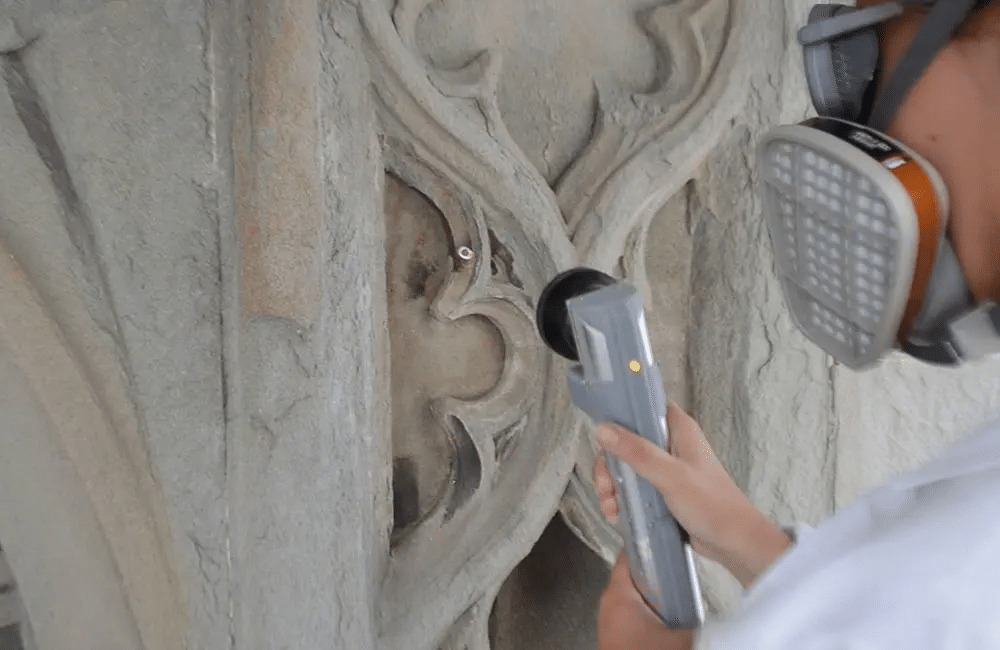
Four Questions to Ask Before Laser Cleaning a Sculpture
A laser cleaning quote describes the machine on the cart. The sculpture on the block is what the quote is actually about. The equipment can be replaced; the artwork may be one of a kind, with surfaces that could be permanently altered by the wrong treatment.
Before approving the work, collectors should ask four questions about the method, the conservator’s experience, the studio’s safety controls, and the people responsible for them.
Technical expertise matters, and operators should have appropriate formal laser safety training.
1. Which Wavelengths Will You Use, and How Will You Test Them?
Laser cleaning sounds surgical. Pulses of light remove unwanted deposits while leaving the underlying material intact. But that selectivity depends on the wavelength, energy settings, pulse characteristics, and properties of the sculpture’s surface.
Conservation research has documented yellowing associated with certain 1064 nm laser treatments on marble. Researchers have also investigated combinations of 1064 nm and 532 nm wavelengths to address discoloration under particular conditions. Neither approach is universally appropriate for every stone surface.
Ask which wavelengths the conservator proposes, where preliminary tests will take place, and how the results will be evaluated. A qualified practitioner should explain the treatment parameters, document test areas, and identify conditions that would require changing or stopping the procedure.
The goal isn’t simply to remove the deposit. It’s to preserve the material beneath it.
2. Have You Treated a Sculpture Like Mine Before?
Non-contact cleaning avoids the mechanical pressure of scrubbing, but the laser still transfers energy to the surface. Depending on the material and settings, treatment can cause discoloration, unwanted material removal, or changes to delicate finishes.
Bronze presents particular challenges because corrosion layers, coatings, and patinas can have historical or aesthetic value. Gilding, pigments, and previous restorations may also respond differently to laser exposure.
Ask to see documented examples involving comparable materials, surface conditions, and treatment goals. A published conservation study from the Isabella Stewart Gardner Museum describes the laser cleaning of 16 Roman marble sculptures, demonstrating how treatment methods can be adapted to different surface conditions. The conservator should be able to explain what was removed, what was deliberately preserved, and how the results were assessed.
Experience with laser equipment alone isn’t the same as experience conserving sculpture. The person planning the treatment should understand the object’s materials and significance.
3. How Is the Treatment Area Made Safe?
Many laser systems used for conservation are Class 4 devices, capable of causing serious eye or skin injuries if hazardous radiation is accessible. Direct beams and certain reflections present risks that require appropriate controls.
A professional studio should have safety measures suited to its equipment and operating conditions. These may include controlled access, warning signs, protective barriers, interlocks, and eyewear selected for the laser’s wavelength and exposure characteristics.
Laser cleaning can also release airborne particles and fumes from coatings, corrosion products, or other surface materials. Appropriate local exhaust ventilation and filtration should be selected based on the substances being removed.
Two practical questions are worth asking:
- Fume extraction: How are airborne contaminants captured, filtered, and managed during treatment?
- Visitor protocol: Can visitors enter during operation, and what restrictions or protective measures apply?
A studio that limits access during active laser use isn’t being unnecessarily cautious. It’s controlling a potentially serious hazard.
4. Who Is Responsible for Laser Safety?
Conservation qualifications and laser safety expertise serve different purposes. A skilled conservator may understand the sculpture’s materials without having the training needed to evaluate hazardous laser exposure.
Under the ANSI Z136 laser safety framework, a Laser Safety Officer (LSO) oversees hazard evaluation and appropriate safety controls for relevant laser operations. Whether a particular studio is legally required to designate an LSO depends on applicable regulations and circumstances; the ANSI standards aren’t automatically binding law.
Ask who oversees laser safety, what training the operator has completed, and how the studio documents its procedures and risk assessments. In a small practice, one appropriately qualified person may perform several roles.
Before releasing a sculpture for treatment, request a written proposal describing the intended cleaning, preliminary testing, documentation, and criteria for stopping work if the surface responds unexpectedly.
The best answers won’t necessarily come from the studio with the most powerful laser. They’ll come from the conservator who can explain what the beam might change, what must remain untouched, and how both the artwork and the people working around it will be protected.