What Patients Should Know About Minimally Invasive Vein Procedures
People experiencing persistent leg discomfort, swelling, or visible varicose veins may benefit from consulting experienced vein specialists at Complete Vein Care to understand their condition and available treatment options. Vein problems are common among adults and can affect both appearance and everyday comfort. While some people have no symptoms, others experience aching, heaviness, itching, or swelling that becomes more noticeable after standing or sitting for long periods.
Advances in medical technology have made several minimally invasive procedures available for treating certain vein conditions. These approaches often involve smaller incisions or no traditional surgical incisions at all. Understanding how they work, who may benefit, and what recovery involves can help patients make more informed decisions about their vascular health.
Understanding Varicose Veins and Venous Insufficiency
Veins are responsible for carrying blood back toward the heart. In the legs, this process requires blood to move upward against gravity. Small one-way valves inside the veins help prevent blood from flowing backward.
When these valves become weak or damaged, blood may collect inside the affected vessels. This can increase pressure within the veins, causing them to enlarge and become twisted. The result is often visible varicose veins, which may appear blue, purple, or raised beneath the skin.
Chronic venous insufficiency is a condition in which the veins have difficulty returning blood efficiently toward the heart. It can cause symptoms such as leg heaviness, swelling, aching, itching, and skin changes around the ankles.
Spider veins are another common type of visible vein condition. They are smaller blood vessels that appear close to the surface of the skin, often in thin red, blue, or purple patterns. Although they are usually less prominent than varicose veins, they may also be a reason people seek professional advice.
Understanding the difference between these conditions is important because each may require a different approach to evaluation and treatment.
When Should Patients Consider a Vein Evaluation?
Visible veins do not always require medical treatment. Some people have varicose veins without experiencing pain or other problems. However, persistent symptoms should not be dismissed as a normal part of ageing.
A professional evaluation may be helpful when leg discomfort interferes with daily activities or when symptoms become more frequent. Common reasons to seek advice include aching after standing, swelling around the ankles, a feeling of heaviness, itching near affected veins, and changes in skin colour or texture.
A healthcare professional can assess the symptoms, review medical history, and determine whether an underlying vein condition may be present.
Certain symptoms require more urgent attention. Sudden swelling or pain in one leg, particularly when accompanied by warmth or redness, may indicate deep vein thrombosis and needs prompt medical assessment. Sudden chest pain, difficulty breathing, or fainting requires emergency medical care.
The Role of Ultrasound in Vein Diagnosis
Before recommending a procedure, a vein specialist needs to understand how blood is moving through the affected vessels. A physical examination can reveal visible varicose veins and swelling, but it may not show the full extent of the underlying problem.
Duplex ultrasound is commonly used to examine the leg veins. It combines traditional ultrasound imaging with Doppler technology, allowing the healthcare professional to assess both vein structure and blood flow.
The test can help identify faulty valves, backward blood flow, and the location of affected veins. It is non-invasive and does not use radiation.
Ultrasound findings are important when planning treatment because they help determine which veins need attention and whether a minimally invasive procedure may be suitable.
A careful diagnosis also helps prevent treatment from focusing only on visible veins when a deeper circulation problem may be contributing to the symptoms.
Endovenous Laser Treatment
Endovenous laser treatment, also known as EVLT or EVLA, is a minimally invasive procedure used to treat certain enlarged veins associated with faulty valves.
During the procedure, a specialist inserts a thin catheter into the affected vein. Ultrasound guidance helps position a laser fibre inside the vessel. The laser delivers controlled heat to the vein wall, causing the treated section to close.
Once the vein is sealed, blood is redirected through other healthy veins. The body gradually absorbs the closed vessel over time.
The procedure is generally performed using local anaesthesia, and many patients can return home on the same day. Some temporary bruising, tenderness, or discomfort may occur during recovery.
The suitability of laser treatment depends on the patient’s vein anatomy, symptoms, ultrasound findings, and overall health.
Radiofrequency Ablation
Radiofrequency ablation is another minimally invasive treatment for selected patients with venous insufficiency. Instead of laser energy, the procedure uses controlled radiofrequency heat to close the affected vein.
A thin catheter is guided into the vessel under ultrasound guidance. Energy is then delivered through the catheter, heating the vein wall and causing the treated section to seal.
Blood can then flow through other functioning veins. Like laser ablation, radiofrequency treatment is often performed under local anaesthesia and in an outpatient setting.
Both procedures aim to address the underlying circulation problem rather than simply removing the visible appearance of a vein. The choice between them depends on the patient’s condition and the specialist’s assessment.
Sclerotherapy for Smaller and Selected Larger Veins
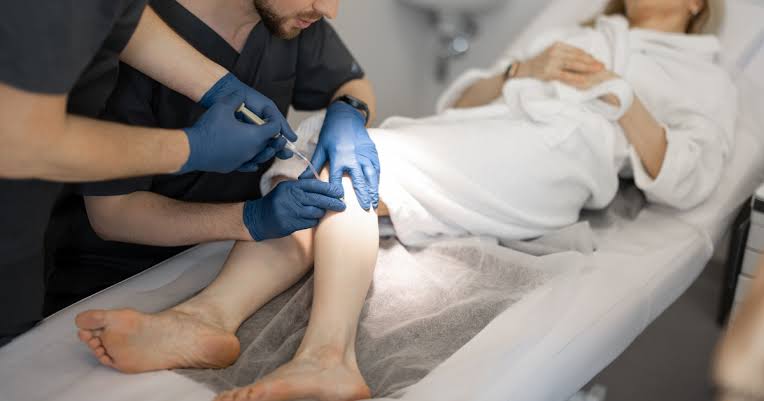
Sclerotherapy is a procedure that involves injecting a solution into an affected vein. The solution irritates the inner lining of the vessel, causing it to close gradually. The body eventually absorbs the treated vein.
It is commonly used for spider veins and smaller varicose veins. In selected cases, foam sclerotherapy may be used to treat larger veins, sometimes with ultrasound guidance.
The number of sessions depends on the size, location, and number of veins being treated. Some patients may need more than one appointment to achieve the intended result.
Temporary bruising, swelling, tenderness, or changes in skin colour can occur. A specialist should explain the potential side effects and expected recovery before treatment begins.
Ambulatory Phlebectomy
Ambulatory phlebectomy is a procedure used to remove certain varicose veins that are located close to the surface of the skin.
The specialist makes very small openings and uses specialised instruments to remove the affected sections of the vein. The procedure is usually performed under local anaesthesia.
Because the openings are small, extensive incisions are generally not required. However, patients may still experience bruising, tenderness, or swelling during recovery.
Ambulatory phlebectomy may be used on its own or alongside another vein procedure, depending on the patient’s diagnosis and treatment plan.
What Are the Benefits and Limitations of Minimally Invasive Procedures?
Minimally invasive vein procedures have expanded the options available to patients who need treatment for certain vein conditions. Many can be performed without a traditional hospital operation, and some allow patients to return home shortly after the procedure.
Other potential advantages include smaller incisions, reduced tissue disruption, and shorter recovery periods compared with certain traditional surgical approaches. However, the experience varies depending on the procedure and the individual.
It is equally important to understand their limitations. Minimally invasive procedures are not suitable for every vein condition. Some patients may need a combination of treatments, while others may be better served by monitoring, compression therapy, or a different medical approach.
Procedures also carry potential risks. These may include bruising, pain, inflammation, skin changes, nerve irritation, and, less commonly, blood clots or other complications.
Patients should discuss the benefits, risks, alternatives, and expected results with their healthcare professional before making a decision.
What to Expect During Recovery
Recovery depends on the procedure, the number of veins treated, and the patient’s general health. Many minimally invasive treatments are performed in outpatient settings, but that does not mean patients can ignore aftercare instructions.
Walking is often encouraged after vein procedures because gentle movement supports circulation. Patients may also receive advice about avoiding strenuous activity, heavy lifting, or prolonged inactivity for a period of time.
Compression stockings may be recommended after certain procedures. Whether they are necessary, and how long they should be worn, depends on the treatment and the healthcare professional’s instructions.
Follow-up appointments allow the specialist to review recovery and assess treatment results. Ultrasound may be used when needed to check the treated veins.
Patients should contact their healthcare provider if they experience worsening pain, unusual swelling, or other concerning symptoms. Sudden chest pain or difficulty breathing requires emergency attention.
How Patients Can Prepare for a Consultation
Preparing questions before a vein appointment can make the discussion more useful. Patients may want to explain when their symptoms began, which activities make them worse, and whether they have noticed swelling or skin changes.
It is also helpful to share information about previous vein treatments, existing medical conditions, medications, and any history of blood clots.
During the consultation, patients can ask what the ultrasound findings show, which treatment options are appropriate, and what recovery may involve. They may also want to understand whether additional sessions or follow-up evaluations could be necessary.
A clear discussion helps patients understand their choices and develop realistic expectations before proceeding.
Taking a More Informed Approach to Vein Health
Vein conditions can develop gradually, and symptoms may change over time. Some people mainly notice visible veins, while others experience discomfort that affects walking, work, exercise, and everyday routines.
Modern minimally invasive procedures provide several ways to treat selected vein problems. However, the best approach begins with an accurate diagnosis and an understanding of each patient’s needs.
For people considering vein treatment, professional guidance can help explain whether a procedure is necessary and which options may be suitable. Learning about the process, possible risks, and recovery requirements can make the decision easier and more informed.
Conclusion
Minimally invasive vein procedures have changed the way many varicose veins and venous insufficiency conditions are treated. Options such as laser ablation, radiofrequency ablation, sclerotherapy, and ambulatory phlebectomy allow specialists to address different types of affected veins using targeted techniques.
Although these treatments offer benefits for suitable patients, they are not appropriate for everyone. A thorough evaluation, often supported by duplex ultrasound, helps determine the cause of symptoms and guide treatment planning.
By understanding the available procedures and discussing individual concerns with a qualified specialist, patients can take a more informed approach to their vein health and long-term comfort.