
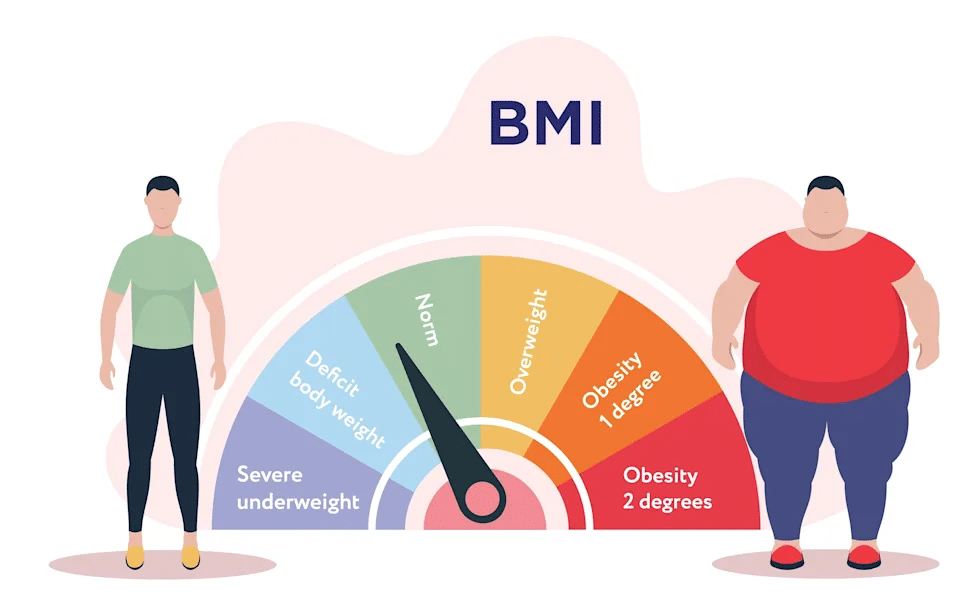
Is BMI on Its Way Out? The Global Debate Over Defining Obesity
The headline says BMI is finished. You have probably seen it in a feed, next to a photo of a bathroom scale. The paper behind the headline says something narrower, and the gap between the two is where the confusion about obesity definitions lives. I read the Commission’s framework and the Indian consensus side by side before writing this, because the summaries in circulation flatten both.
What the Commission kept, and what it added
In January 2025, Rubino and colleagues published a Lancet Diabetes & Endocrinology Commission on how clinical obesity should be defined and diagnosed. Read the full framework. BMI is still in it. The Commission retains BMI as a rough risk marker for groups of people, a useful signal when you are looking at the health of a whole community. For one individual, it stops being enough on its own to make a diagnosis. That still leaves it useful. BMI needs only a height and a weight, which is exactly why it works as a first screen across large groups and exactly why it cannot see where on the body the weight sits.
What takes its place is a confirmation step: excess body fat has to be established either by measuring it directly, where that is possible, or by taking at least one other body measure alongside BMI, and the options named are waist circumference, waist-to-hip ratio and waist-to-height ratio, judged against cut-offs suited to the person’s age, sex and ethnicity. At very high BMI the Commission lets excess fat be assumed without further measurement.
The second change matters more to clinics. The Commission splits the territory in two. Preclinical obesity means extra body fat while organs and tissues still work as they should, with an uncertain chance of later turning into clinical obesity or other chronic disease. Clinical obesity is a long-running illness affecting the whole body: extra fat plus an organ or tissue that works less well because of it, or serious restrictions on everyday activities for the person’s age. Adults and children get separate criteria lists.
The word “function” carries the weight in that definition. A person with a high BMI and no sign of trouble in any organ is described one way. A person whose excess fat is already reducing the function of an organ or tissue, or limiting what a day’s activities allow, is described another. The Indian paper’s own examples of Stage 2 comorbidities, type 2 diabetes and knee osteoarthritis, show how concrete this gets.
So the question the Commission asks is what the excess fat is doing to the body, and answering it takes measurements and a clinical history. The framework comes from an expert commission, which means it guides clinicians without binding anyone.
India’s version has two stages
India has its own framework. A Delphi consensus by Misra and colleagues, published in 2025 in Diabetes & Metabolic Syndrome: Clinical Research & Reviews, revised the definition of obesity for Asian Indians living in India. Under India’s Stage 1 and Stage 2 obesity definition, Stage 1 is increased adiposity, judged by a BMI above the Asian Indian threshold, with organs working normally and daily life unaffected.
Stage 2 is stricter. The BMI condition still applies, and added to it are a large waist or a high waist-to-height ratio, together with some sign that the body is struggling, either a functional limit or a health condition linked to obesity. The paper’s examples are type 2 diabetes and knee osteoarthritis. Abdominal fat sits at the centre of Stage 2, and the authors state that the framework is aligned with the Lancet Commission.
Look at the shape. Stage 1 sits where preclinical obesity sits, Stage 2 where clinical obesity sits, and the waist measurement carries across from one framework to the other without losing its job. Both documents are expert frameworks, and neither is a regulator-adopted definition in India. Saying that India has officially adopted the Lancet definition would be wrong, and so would saying the Indian consensus is law. What exists is a body of specialists agreeing on a shared vocabulary.
Why the Indian thresholds sit lower
The lower Indian threshold is older than either 2025 paper. A 2009 consensus by Misra and colleagues in JAPI, the Journal of the Association of Physicians of India, proposed lower BMI and waist thresholds for Asian Indians than the ones applied to Western populations. The 2025 revision keeps the lower BMI threshold as its starting point for adiposity. Waist cut-offs were part of the 2009 consensus from the start, so the idea that BMI needs a partner measurement is not new to Indian medicine. The 2025 papers added the organ-and-function layer on top of a habit that was already there. The ICMR-INDIAB survey, a national study run by ICMR, relies on WHO’s Asia-Pacific criteria to classify overall and abdominal obesity.
The reason lies in body composition. A 2025 review in the Journal of Clinical Lipidology describes South Asians as carrying a higher body-fat percentage at a given BMI, with more of it in the abdomen and in organs such as the liver and pancreas. Cardiometabolic risk then appears at a lower BMI than a Western chart would flag. A person can sit in the “normal” band and still be carrying the kind of fat that matters, because fat in the liver and pancreas does not show up in the mirror and does not show up on a BMI chart either.
Take a hypothetical office worker in Pune whose BMI falls in the Western “healthy” band. A BMI-only reading hands her a green tick. Under either 2025 framework, her waist measurement becomes the next question, and so does anything in her health history that points to organ or functional effects. The answers might turn up nothing, in which case the frameworks would describe adiposity without dysfunction: Stage 1 in India’s wording, preclinical in the Commission’s. They might not. The point of the second measurement is that the chart alone cannot say.
Four yardsticks side by side
A table is the quickest way to see who asks for what, because the vocabulary overlaps in confusing ways.
| Yardstick | Issued by | What it asks for | Status | |—|—|—|—| | BMI alone | Long-standing screening tool | Height and weight | Retained by the Commission as a group-level risk marker | | Clinical obesity framework | Lancet Diabetes & Endocrinology Commission, January 2025 | Excess fat confirmed by direct measurement or a waist measure beside BMI, plus organ dysfunction or functional limits | Expert commission framework | | Revised Indian definition | Delphi consensus, Diabetes & Metabolic Syndrome, 2025 | Stage 1 or Stage 2, with waist measures and comorbidity at Stage 2 | Expert consensus, not a regulator adoption | | INDIAB survey criteria | ICMR | WHO Asia-Pacific classification of overall and abdominal obesity | Applied to the national survey |
Read across the rows and the overlap shows. Two of the four are expert statements about definition, one is a survey protocol, and one is a screening habit that predates all of them. Every framework after the first keeps BMI in view, and both the Commission and India’s Stage 2 add a waist measure before calling anything an illness. What differs is the threshold each one starts from, and whether function has to be affected before the word “illness” applies.
What the debate changes at the clinic door
The practical effect arrives in the consulting room, and three questions are still open across the documents: where the BMI threshold should start for different populations, how much a waist measure adds to it, and how function should be assessed. The Commission and the Indian consensus answer each a little differently. No wonder the debate has not settled. Anyone reading a news story about BMI being replaced is watching that argument from the outside. The paperwork explains why Indian endocrinologists diagnose obesity differently: the Indian consensus starts counting adiposity at a lower BMI, and at Stage 2 it requires a waist measure and a look at function. The difference comes down to which measurements get taken first.
For treatment, the 2025 review in the Journal of Clinical Lipidology says lifestyle change is the main approach at Stage 1, while Stage 2 calls for stronger measures, drug treatment among them, started early. That describes how the framework could steer care across a population. Whether any of it applies to you is a decision for your own doctor, after an examination and tests.
The distinction between the stages also deserves a careful reading. Preclinical, or Stage 1, should not be taken as a clean bill of health. The Commission describes the risk of progression as variable, which is a polite way of saying nobody can promise which way a given person goes.
None of this requires you to carry a diagnostic manual into the appointment. If you want to use all this, the useful move is modest. Keep your waist measurement alongside your weight when you see a doctor. Ask whether your BMI band is the whole picture or only the first line of it. And expect the answer to involve a tape measure, because function is the other half of the Commission’s test and the Indian Stage 2. One number settles neither.
BMI will stay on the chart for a good while yet, as one number among several, and the more interesting work now happens in what gets measured beside it.