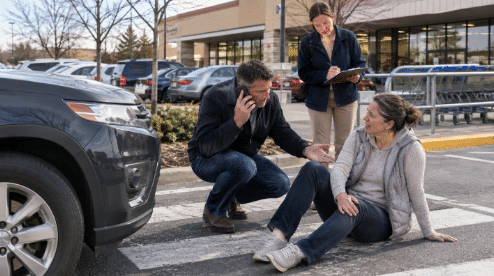
Who Pays When a Pedestrian Is Hit in a Parking Lot?
A parking lot is where the ordinary rules of the road quietly dissolve. There are no real lanes, the arrows painted on the asphalt are more suggestion than law, and everyone is doing three things at once: reading a text, hunting for their car, and reversing out of a tight space with a view of almost nothing. It’s a slow-motion free-for-all, and pedestrians are threading right through the middle of it with grocery carts and kids in tow.
So when a walker and a car collide between the painted lines, the obvious question gets surprisingly murky: who actually pays? For anyone hit while on foot in Las Vegas, the answer isn’t always simple. Here’s how fault and payment really work when a pedestrian is struck in a parking lot.
Why Parking Lots Are Legal Gray Zones
Part of the confusion is that a parking lot isn’t a public road; it’s private property, which changes the feel of the rules even though it doesn’t erase them. Traffic laws still apply in spirit, and drivers still owe pedestrians a duty of care, but right-of-way is far blurrier than it is at a marked crosswalk or intersection.
And the risk to people on foot is real and rising. The National Highway Traffic Safety Administration reported 7,522 pedestrians killed in traffic in 2022, the highest number since 1981, with many more injured in low-speed settings like lots and garages. Low speed does not mean low harm, especially for an unprotected person struck by a two-ton vehicle.
Who Can Actually Be on the Hook
Most of the time, the driver who struck the pedestrian bears primary responsibility, since they’re operating the vehicle and owe the greater duty of care. Backing out without looking or speeding through the lanes all point squarely at the driver.
But sometimes the property owner also shares blame if poor lighting, missing signage, broken sightlines, or a badly designed layout contributed to the crash. In other cases, the pedestrian’s own actions play a part too.
Why Fault Isn’t Always Obvious
Parking lot cases are rarely as clear-cut as ‘the driver hit the walker, so the driver pays.’ A pedestrian who steps out from between two parked SUVs, or crosses while staring at a phone, may share some responsibility, and Nevada’s comparative negligence rules let fault be divided between the parties by percentage.
Sorting that split fairly is where a pedestrian accident lawyer in Las Vegas makes a real difference, because the percentage assigned to you directly shrinks or protects what you can recover. Cogburn Davidson can gather the security footage, witness accounts, and scene details needed to show what actually happened, so blame lands where it belongs instead of being quietly shifted onto the injured person to save an insurer money.
Which Insurance Comes Into Play
Several policies can potentially cover a parking lot pedestrian injury, and figuring out the order matters. The driver’s auto liability coverage is usually the first place to look, but the pedestrian’s own auto policy may also help through medical payments or uninsured motorist coverage, even though they were on foot.
If the property owner contributed to the hazard, their premises liability insurance may come into play as well. Each of these has its own rules and limits, and knowing which to pursue is often what determines whether your medical bills actually get covered.
What to Do If You’re Hit
Treat it like a real crash. Call the police so there is an official report, since many people wrongly assume law enforcement won’t respond to a parking lot, then photograph the scene, the vehicle, and your injuries, and collect names and numbers from any witnesses before they scatter.
Then get checked by a doctor promptly, even if you think you’re fine, because injuries from being struck on foot often surface hours or days later. That prompt record ties your injuries to the crash and keeps an insurer from later claiming they came from something else.
The Bottom Line
When a pedestrian is hit in a parking lot, ‘who pays’ can involve the driver, the property owner, the pedestrian’s own coverage, or some combination, and comparative fault often splits the responsibility rather than pinning it on one party.
If you’ve been struck on foot in a lot, don’t assume the answer is simple or that the injury is minor. Understanding who may be liable and which policies apply is the first step toward making sure your care doesn’t end up coming out of your own pocket.