Who Pays for Fallen Tree Damage in Bellevue, WA?
Few things rattle a homeowner faster than the sound of a tree crashing down during a Pacific Northwest windstorm. If you live in Bellevue, Washington, you already know how common this is: wet winters, saturated soil, and gusty storms off Lake Washington make falling trees and limbs a recurring hazard for local properties. When the damage happens, the first question most people ask is simple: who actually pays for this?
The honest answer is that it depends on where the tree was standing, where it landed, and whether anyone was negligent. Washington follows general property law principles here, and insurance almost always plays a bigger role than lawsuits. Below, we will walk through how liability typically works, what your homeowner’s policy usually covers, and when you may need emergency storm damage repair in Bellevue, WA, to secure your property before further harm occurs.
Who Is Responsible When a Tree Falls on Your Property in Bellevue?
In most cases, the owner of the tree is not automatically responsible just because their tree fell onto a neighbor’s yard or home. Washington generally follows the rule that if a tree falls due to a natural event, like wind or heavy rain, and there was no prior warning that the tree was diseased, dead, or hazardous, the tree’s owner typically is not liable. The property owner who received the damage is usually expected to file a claim with their own homeowner’s insurance, regardless of whose tree it was.
This surprises a lot of King County residents the first time it happens. Many assume the neighbor whose cedar or Douglas fir toppled over the fence line must automatically cover repairs. In practice, insurance companies and courts look at negligence, not simply ownership, when deciding who pays.
When Does the Tree Owner Have to Pay for Damage?
The tree owner can be held financially responsible when they knew, or reasonably should have known, that the tree was a hazard and failed to address it. This often applies to visibly dead, leaning, diseased, or previously reported trees in neighborhoods throughout the Eastside.
If a neighbor had already warned the tree owner about a dying alder leaning toward their roofline, or if an arborist had flagged root rot near a property line, that prior knowledge can shift liability. Documentation matters here. Photos, emails, prior complaints to a homeowners association, or even city code violation notices can all support a negligence claim. Without that kind of evidence, most fallen tree incidents in Bellevue are treated as acts of nature, and the burden shifts back to each property owner’s own insurance policy.
What Homeowners Should Know About Tree Damage Coverage
Most Bellevue homeowners insurance policies cover tree damage to the structure, driveway, fence, or other insured property, even if the tree came from a neighbor’s yard. Coverage typically depends on the specific cause of the fall rather than property lines. Standard homeowner’s policies in Washington usually treat wind- and storm-driven tree falls as covered perils. Deductibles and removal limits vary by insurer. Filing promptly after a storm improves the chances of full reimbursement.
A few points are worth keeping in mind as you think through your own situation:
- Your own homeowner’s policy is almost always the first line of coverage, not your neighbor’s.
- Tree removal costs are often covered up to a set dollar limit, even if the tree itself did not damage a structure.
- Damage to vehicles usually falls under comprehensive auto coverage, not homeowner’s insurance.
- Fences, sheds, and detached structures are often covered, though limits can be lower than for the main house.
Why Storm Season Makes This a Recurring Issue Locally
Bellevue sits in a region shaped by wet, windy winters and mature tree canopy that lines many older neighborhoods near Lake Washington and the Cascade foothills. Decades-old cedars, hemlocks, and big leaf maples tower over homes in established areas, and heavy rainfall throughout the fall and winter months saturates root systems, making trees more prone to toppling during windstorms. Add in the occasional windstorm rolling in off Puget Sound, and it is easy to see why fallen tree claims spike every storm season.
Neighborhoods with older tree-lined streets tend to see more of these incidents than newer developments with younger landscaping. Homeowners near greenbelts or undeveloped lots bordering their property face a slightly higher risk, since nobody may be actively monitoring tree health on adjacent land. Local building codes around tree removal and permits can also come into play, especially for protected or heritage trees, which adds another layer homeowners need to navigate after a storm.
What to Do Immediately After a Tree Falls on Your Home
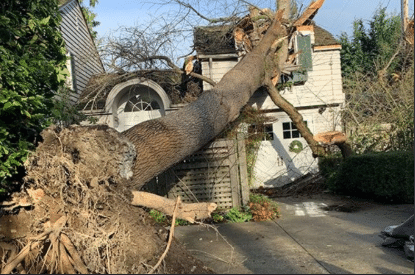
The first priority after a tree falls on your Bellevue property is safety, not cleanup. Stay away from downed power lines, check for gas leaks if the tree struck near utility connections, and avoid walking on a compromised roof or deck. Once the immediate area is secure, documentation becomes the next step.
Take clear photos of the tree, the damage, and the surrounding yard before anything is moved. Note the date, time, and weather conditions, since insurers often cross-reference storm reports from the National Weather Service for the Puget Sound region. Contact your insurance company as soon as possible to start the claims process, and ask whether they require an inspection before any debris removal begins.
If part of your home is exposed to the elements, such as a hole in the roof or a broken window, temporary protection matters. This is often where emergency storm damage repair in Bellevue, WA becomes necessary, since leaving a structure exposed overnight can lead to water intrusion, mold, and much higher repair costs down the line.
Common Mistakes Homeowners Make After Storm Damage
One of the most frequent mistakes is removing the tree or debris before documenting the damage thoroughly. Insurance adjusters rely heavily on photo evidence, and once a tree is cut up and hauled away, it becomes harder to prove the extent of the original damage. Another common error is assuming a neighbor’s insurance will automatically cover everything, which delays the homeowner’s own claim and can push past filing deadlines.
Some residents also try to handle large tree removal or structural tarping themselves, which can be dangerous given the size of mature trees common in this part of King County. A fallen tree that looks stable may still be under tension from surrounding branches or structures, and improper cutting can cause sudden, unpredictable movement.
Finally, many homeowners wait too long to address exposed roof or wall damage, assuming it can wait until the claim is approved. In a region with frequent rainfall, even a short delay can turn a straightforward repair into a much larger water damage problem.
Comparing Insurance Scenarios: Whose Policy Actually Pays
It helps to think through a few common scenarios that play out across Bellevue neighborhoods every storm season. If your own healthy tree falls on your house due to wind, your homeowner’s policy pays for the damage and usually the removal, minus your deductible. If a neighbor’s healthy tree falls onto your property during a storm, your own homeowner’s policy still typically pays, since the event is considered an act of nature rather than negligence.
The scenario changes when negligence enters the picture. If a neighbor’s visibly dead or previously reported hazardous tree falls onto your property, their homeowner’s liability coverage may be responsible, particularly if you can show they ignored a known risk. If your tree falls onto a neighbor’s property under normal storm conditions, their insurance generally covers their damage, not yours, even though it was your tree.
Understanding these distinctions ahead of time can save a lot of frustration when you are standing in your yard at 7 a.m. staring at a split cedar trunk resting on your gutter.
When Professional Repair Becomes Necessary
Not every fallen branch requires a contractor, but certain signs mean it is time to call in professionals rather than handling things yourself. Structural damage to a roof, wall, or foundation always warrants a professional assessment, since hidden damage is common even when the surface looks manageable. Exposed interior spaces, compromised electrical systems, or trees resting against power lines also require trained crews rather than DIY effort.
Large trees common throughout Bellevue, including big leaf maples and tall conifers, carry enough weight and tension that removal without proper equipment poses a real safety risk. If your property has suffered this kind of damage, scheduling emergency storm damage repair in Bellevue, WA quickly helps prevent secondary issues like water intrusion, mold growth, or further structural weakening while your insurance claim is processed.
Frequently Asked Questions About Fallen Tree Damage in Bellevue
Does homeowner’s insurance cover a tree falling during a windstorm in Bellevue?
Yes, most standard homeowner’s policies cover tree damage caused by wind or storms, including damage to the home, fence, or driveway. Coverage amounts and deductibles vary by insurer, so it is worth reviewing your specific policy limits.
Is my neighbor responsible if their tree falls on my house?
Usually not, unless the tree was already known to be dead, diseased, or hazardous before it fell. Without evidence of prior negligence, most fallen tree incidents are treated as natural events covered by each homeowner’s own policy.
Who pays to remove a fallen tree that did not damage anything?
This depends on your specific policy. Many homeowners’ policies include limited coverage for tree removal even without structural damage, though the dollar amount is often capped.
Do I need a permit to remove a fallen tree in Bellevue?
Some situations require permits, particularly for large or protected trees, so checking with the City of Bellevue before major removal work is a smart step. Emergency hazard removal is typically treated differently than routine tree work.
What should I photograph before cleanup begins?
Photograph the tree from multiple angles, the point of impact, any structural damage, and the surrounding yard conditions, such as soaked soil or snapped limbs on nearby trees. These images support your insurance claim and establish a clear record of the storm’s impact.
How quickly should storm damage repairs happen after a tree falls?
Temporary protection, such as tarping an exposed roof, should happen within hours, while full repairs often follow once an adjuster has reviewed the damage. Delaying protective measures in a wet climate like this one increases the risk of water damage and mold.
Can a fallen tree claim affect my insurance premium?
It is possible, especially with multiple claims over a short period, though a single storm-related claim is less likely to cause a significant increase than claims tied to neglect or maintenance issues. Speaking with your agent about your specific policy history is the best way to know for certain.
Protecting Your Home Before the Next Storm Rolls Through
Fallen trees are simply part of life in a place known for its mature tree canopy, wet winters, and windy storm systems moving through the region. Knowing how liability and insurance actually work takes a lot of the guesswork out of a stressful situation, and acting quickly after a storm makes a real difference in how smoothly your claim and repairs go. If a storm leaves your Bellevue home exposed, having a plan in place for fast, professional repair protects your property from the kind of secondary damage that turns a bad day into a much bigger problem.