How Do Air Changes Affect Industrial Cooling?
Industrial facilities generate heat constantly. Machinery runs for hours without stopping, workers move through production lines, and processes like welding, baking, or chemical mixing push internal temperatures well above comfortable or safe levels. Managing that heat isn’t just about comfort; it’s about protecting equipment, maintaining product quality, and keeping employees safe and productive. One of the most important, yet often overlooked, factors in industrial cooling is the rate of air changes within a building. Understanding how air changes affect cooling performance can help facility managers make smarter decisions, especially when considering industrial evaporative coolers as part of their climate control strategy.
What Are Air Changes and Why Do They Matter?
An air change, often measured as Air Changes per Hour (ACH), refers to how many times the entire volume of air within a space is replaced in one hour. If a warehouse has an ACH of 10, it means the air inside that space is completely replaced ten times every hour. This single metric has an outsized impact on temperature control, air quality, humidity levels, and overall comfort.
In industrial settings, air changes matter because heat does not simply disappear. It has to go somewhere. Without a sufficient rate of air exchange, hot air becomes trapped near the ceiling, humidity builds up, and airborne contaminants like dust, fumes, or chemical vapors linger longer than they should. This creates an environment that is not only uncomfortable but potentially hazardous.
The relationship between air changes and cooling is straightforward in concept but complex in execution. More air changes generally mean better heat removal, but the actual number needed depends on the size of the space, the amount of heat being generated, the number of occupants, and the type of cooling system in place.
The Science Behind Air Changes and Heat Removal
To understand how air changes affect cooling, it helps to think about heat as something that must be physically moved out of a building rather than simply “cooled away.” In residential air conditioning, refrigerant-based systems chill the air inside a closed loop, recirculating it through the space. Industrial environments, however, often deal with heat loads far too large for traditional air conditioning to handle efficiently or affordably.
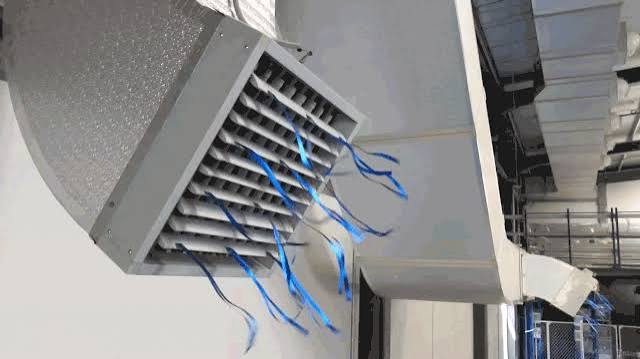
This is where ventilation-based cooling, including systems built around industrial evaporative coolers, becomes essential. These systems work by pulling hot, dry air through water-saturated pads. As the air passes through the pads, water evaporates, absorbing heat energy in the process and lowering the air temperature before it’s pushed into the building. The cooled air then pushes the existing hot air out through exhaust vents, doors, or roof vents, creating a continuous air change cycle.
The more frequently this cycle occurs, meaning the higher the ACH, the more effectively heat is removed from the space. Each air change carries a portion of the accumulated heat outside, preventing the kind of thermal buildup that leads to uncomfortable working conditions or equipment strain. Without adequate air changes, even a powerful cooling system will struggle because the heat has nowhere to go.
How Industrial Evaporative Coolers Depend on Proper Air Changes
Industrial evaporative coolers are particularly sensitive to air change rates because their entire cooling mechanism relies on airflow. Unlike sealed refrigeration systems, evaporative cooling is an open-loop process. It requires a constant intake of outside air and a corresponding exhaust path for air to leave the building. If air changes are too low, several problems can occur.
First, humidity can rise to uncomfortable or even damaging levels. Since evaporative cooling adds moisture to the air as part of the cooling process, that moist air needs somewhere to go. If it isn’t properly exhausted, humidity accumulates, reducing the cooling effect and potentially creating condensation issues on equipment, walls, or stored materials.
Second, insufficient air changes reduce the temperature drop the system can achieve. Evaporative coolers work best when there is a steady exchange of air, allowing fresh, hot, dry air to continuously enter the pads for evaporation while cooled air circulates through the space and warm air exits. When this cycle is interrupted or slowed, the system cannot perform at its rated capacity, leading to disappointing results even from a well-sized unit.
Third, poor air exchange can allow pollutants, fumes, and particulates generated by industrial processes to recirculate rather than being flushed outside. This is especially important in facilities dealing with welding, painting, food processing, or chemical handling, where air quality directly affects worker health and regulatory compliance.
This is why any discussion of industrial evaporative coolers must include a thorough air change calculation. The cooling unit and the ventilation design are not separate considerations; they are part of the same system, and both need to be sized correctly for the cooling strategy to work as intended.
Calculating the Right Air Change Rate for Industrial Spaces
Determining the ideal number of air changes per hour for a facility depends on several variables. Facility managers typically look at the volume of the space, in cubic feet, along with the heat load generated by equipment, lighting, and occupants. Spaces with higher heat loads, like foundries, print shops, or large assembly lines, require more frequent air changes than lower-heat environments like general storage warehouses.
Industry guidelines often recommend specific ACH ranges depending on application. Manufacturing plants with significant equipment heat might require 20 to 30 air changes per hour, while general warehousing might only need 4 to 6. Kitchens, laundries, and areas with heavy moisture or fume generation may require even higher rates to maintain safe and comfortable conditions.
When designing a system around industrial evaporative coolers, engineers calculate the required airflow in cubic feet per minute (CFM) based on the desired ACH and the building’s total volume. This calculation ensures the cooling system is matched appropriately with the ventilation design, including intake louvers, exhaust fans, and any ductwork needed to direct airflow efficiently throughout the space.
Getting this calculation right is critical. Undersized systems will fail to keep up with heat loads, leading to persistent discomfort and operational inefficiency. Oversized systems, on the other hand, waste energy and water, and can create unnecessarily high humidity levels if not balanced properly with adequate exhaust capacity.
The Role of Exhaust Design in Supporting Air Changes
A cooling system is only as effective as its exhaust strategy. Many facility managers focus heavily on the intake and cooling components, like evaporative pads and fans, while underestimating the importance of exhaust ventilation. Without a clear and sufficient path for hot air to leave the building, incoming cooled air has nowhere to push the heat, and the entire system’s efficiency drops.
Effective exhaust strategies often include roof-mounted exhaust fans, gravity vents, or strategically placed wall openings that allow hot air, which naturally rises, to escape near the ceiling. The size and placement of these exhaust points should correspond directly to the air change rate the cooling system is designed to achieve. If exhaust capacity doesn’t match intake capacity, air pressure imbalances can develop, reducing airflow and undermining the cooling process.
In facilities with industrial evaporative coolers, this balance becomes even more important because of the added moisture introduced into the air. Proper exhaust design doesn’t just remove heat; it also helps control humidity levels, preventing the buildup of excess moisture that could otherwise lead to mold, corrosion, or material damage.
Seasonal and Climate Considerations
Air change requirements are not static throughout the year. Seasonal shifts in outdoor temperature and humidity levels can significantly affect how a facility’s cooling system performs. In hot, dry climates, industrial evaporative coolers perform exceptionally well because the dry air allows for maximum evaporation and cooling effect. In these conditions, higher air change rates can be maintained without excessive humidity concerns.
In more humid regions or during humid seasons, evaporative cooling becomes less effective because the air is already saturated with moisture, limiting how much additional evaporation can occur. Facility managers in these climates may need to adjust air change rates, increase ventilation, or supplement evaporative cooling with other strategies to maintain comfortable and safe working conditions.
Understanding regional climate patterns is essential when designing or adjusting an industrial cooling system. A system that performs beautifully in Phoenix, Arizona, may need significant adjustments to perform just as well in Houston, Texas, due to differences in humidity levels. This is one of the reasons working with experienced HVAC professionals familiar with industrial evaporative coolers is so valuable; they understand how to tailor air change strategies to specific environmental conditions.
Common Mistakes That Undermine Air Change Effectiveness
Many facilities unintentionally sabotage their own cooling performance through avoidable mistakes related to air changes. One common issue is blocking or restricting exhaust vents with stored materials, equipment, or structural additions made after the original system was installed. Even small obstructions can significantly reduce airflow and heat removal capacity.
Another frequent problem is failing to adjust ventilation as a facility’s operations change. A warehouse that once stored inert materials might later be used for processes that generate significant heat or fumes, yet the original ventilation design may never be reevaluated. Over time, this mismatch between actual heat load and air change capacity leads to discomfort, poor air quality, and reduced equipment lifespan.
Improper maintenance can also reduce air change effectiveness. Dirty evaporative pads, clogged filters, or malfunctioning fans reduce airflow volume, even if the system was originally designed correctly. Routine maintenance ensures that the intended air change rate is actually being achieved in practice, not just on paper.
Benefits of Getting Air Changes Right
When air changes are properly calculated and maintained, the benefits extend far beyond simple temperature control. Employees experience improved comfort and reduced fatigue, which can lead to better productivity and fewer heat-related health incidents. Equipment operates more reliably when not subjected to excessive heat, reducing wear and the likelihood of costly breakdowns.
Proper air exchange also supports better air quality by continuously removing dust, fumes, and airborne contaminants rather than allowing them to accumulate. This is particularly important in industries subject to occupational safety regulations, where air quality standards must be met consistently.
For facilities using industrial evaporative coolers, achieving the right air change rate also maximizes the energy efficiency of the cooling system. Because evaporative cooling uses significantly less electricity than traditional refrigerant-based air conditioning, facilities that properly balance air changes with their cooling equipment can achieve substantial energy savings while maintaining comfortable, safe working environments.
Frequently Asked Questions
What is considered a good air change rate for an industrial facility?
It depends on the type of facility. General warehouses often need 4 to 6 air changes per hour, while manufacturing spaces with heavy equipment may require 20 to 30. A proper calculation should factor in heat load, occupancy, and building volume.
Can too many air changes be a problem?
Yes. Excessive air changes can waste energy, increase water usage in evaporative systems, and in some cases pull in more outdoor dust or pollen than necessary. Balance is key; more isn’t always better.
Do industrial evaporative coolers work in humid climates?
They are less effective in humid conditions because evaporation slows when the air is already saturated with moisture. Facilities in humid regions may need supplemental ventilation or alternative cooling methods during peak humidity periods.
How often should exhaust vents and intake louvers be inspected?
A basic visual inspection should happen monthly, with a more thorough maintenance check, including:
- Cleaning or replacing evaporative pads
- Checking fan belts and motors for wear
- Clearing any debris from intake and exhaust openings
performed quarterly or as recommended by the manufacturer.
What happens if exhaust capacity doesn’t match intake airflow?
An imbalance can create pressure issues that reduce overall airflow, limiting the system’s ability to remove heat and moisture effectively. This often results in poor cooling performance even when the intake system is functioning properly.
Final Thoughts on Air Changes and Industrial Cooling
Air changes are a foundational element of effective industrial cooling, one that works hand in hand with systems like industrial evaporative coolers to keep facilities safe, comfortable, and productive. Getting the calculation right requires attention to building size, heat load, climate, and exhaust design, but the payoff is significant: lower energy costs, better air quality, improved equipment longevity, and a safer environment for everyone working inside. Facility managers who prioritize proper air exchange planning set their operations up for long-term success, regardless of the season or the demands placed on their cooling systems.