T-Shirt Screen Printing: How to Judge Print Quality Before You Order in Bulk
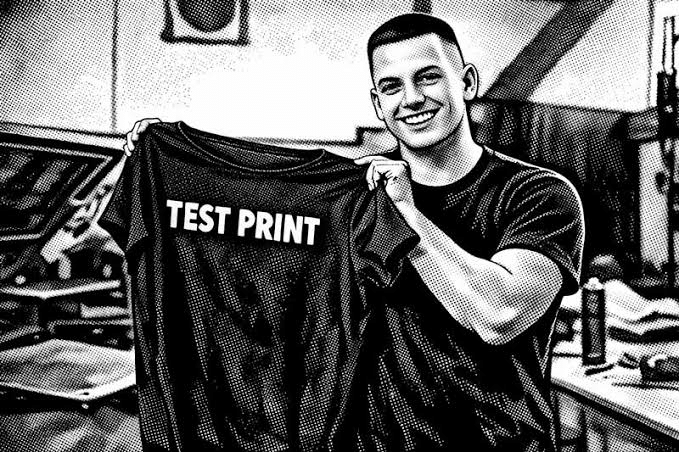
Before approving bulk screen printed T-shirts, inspect a physical sample on the intended fabric and color. Check coverage, edge detail, registration, hand feel, print dimensions, and placement, then compare it after the agreed laundering method. A digital mockup cannot show how the ink feels or whether the finished print performs as required.
For anyone ordering bulk screen printed t-shirts, knowing what makes a good print is more useful than knowing the price per unit. This guide explains how t-shirt screen printing works, which details decide how a print performs, and what to check on a sample before committing to a full run.
Quick Answer: What Is Screen Printing and Why Is It Used for Bulk Orders?
Screen printing pushes ink through a mesh stencil onto fabric. Multicolor work uses separate screens for the color separations, so setup needs to be spread across the order quantity. It is often suitable for repeated bold graphics with a limited palette. Quality depends on the artwork, ink, mesh, application, fabric, and correct curing; the method alone does not guarantee wash durability.
How the Process Works, Step by Step
Artwork separation. The design is split into individual colors, and each color becomes a separate film or digital output. Clean separations are the foundation of a sharp print.
Screen preparation. A mesh screen is coated with light-sensitive emulsion, exposed to light through the artwork, and rinsed. The exposed areas harden, while the design area washes out and leaves an open stencil.
Registration. On multicolor designs, screens must line up precisely so colors meet without gaps or overlap. Poor registration shows up as fuzzy edges or white halos.
Printing. Ink is pulled across the screen with a squeegee, pushing it through the open stencil onto the shirt. Dark garments often need a white underbase first so colors stay vivid.
Curing. The print must meet the ink manufacturer’s specified curing conditions. Ask how the printer checks the actual ink cure, not just the dryer setting, and how it verifies the finished print on the chosen fabric.
Inspection and finishing. Compare color, registration, coverage, size, and placement against the approved sample before folding and packing. Confirm the inspection plan and how rejected pieces will be handled.
Every one of these stages can be done well or carelessly, and the shirt will show it.
The Details That Decide Print Quality
Ink Type
Different ink systems produce different hand feels and coverage. Plastisol generally forms a surface deposit; water-based systems can give a softer feel, but the result depends on the formulation, fabric, and ink deposit. Puff, metallic, and high-density effects need their own sample approval. A label such as “water-based” is not enough to establish breathability, durability, or suitability for every dark fabric.
Ask which ink system is proposed for your design and fabric, then compare the actual sample with your target hand feel and coverage. UNIT-100 reports testing incoming print paste monthly with 30 washes plus dry and wet rubbing checks, returning materials that fail. This is a material-control practice, not a claim that every finished T-shirt or bulk batch has passed 30 washes.
Mesh Count
Mesh count is commonly expressed as threads per inch, although some suppliers use threads per centimeter. Confirm the unit when comparing numbers. Lower counts generally allow a heavier ink deposit; higher counts can support finer detail and a thinner deposit. Artwork, ink viscosity, thread diameter, and the intended effect all influence selection, so ask the printer to match the mesh to the job rather than choosing the highest number.
Curing
An under-cured print may fail during washing even if it initially looks acceptable. Cure requirements vary by ink system, so the printer should follow the specific product’s technical instructions and verify the result on the actual garment. A quick stretch check may reveal a problem, but it should not replace an agreed wash test. Cracking can have several causes; appearance alone does not identify the cause.
Registration and Alignment
Look at the edges where two colors meet. They should be crisp, with no gaps or heavy overlaps. Check the print’s position on the shirt, too, since a design that sits crooked or off-center suggests loose process control.
Fabric Compatibility
Check printing on the actual fabric, composition, color, and finish planned for bulk. Surface texture and stretch can affect fine detail, and a heavier GSM is not proof that a fabric will print better. UNIT-100’s usual print area for screen printing, DTG, and DTF is up to 46 × 46 cm; larger artwork needs discussion. If DTF is proposed as an alternative, note that high-heat tumble drying can crack it and damage fine detail.
What a Good Print Looks and Feels Like
When you inspect a sample, look for these signs:
- Solid areas have the agreed coverage, without unintended streaks or pinholes
- Edges and fine detail match the approved artwork and sample
- Colors are compared with an agreed physical reference under consistent lighting
- The print has no unintended cracks or lifting during the agreed sample checks
- Hand feel matches the approved effect, including any intentionally raised finish
- Dimensions and placement match the specification and agreed tolerances
Wash and dry the sample using the method agreed for the garment and decoration. Record the number of cycles, measurements, appearance, and any changes in coverage or texture. Keep before-and-after photos and the physical sample. Unexpected fading, cracking, or lifting needs investigation before bulk approval; a single successful wash does not establish long-term durability.
Buying Guide: What to Confirm Before Placing a Bulk Order
| Factor | Why It Matters |
| Number of colors | Each color adds a screen and setup, so cost scales with color count |
| Ink type | Affects opacity, hand feel, and durability |
| Color matching | Ask how brand colors are matched and what tolerance is acceptable |
| Print size and placement | Specify in measurements from a fixed point, such as the collar seam |
| Garment color | Dark shirts usually need an underbase, which changes cost and feel |
| Curing process | Ask how temperature and time are controlled and tested |
| Artwork format | Vector files give the cleanest separations |
| Sample and revisions | Understand how many rounds are included and how long they take |
| MOQ and lead times | Make sure volumes and schedules fit your plan |
Provide vector artwork where suitable, plus final print dimensions and placement measurements. Fine detail, gradients, and halftones still need the printer’s review. Send a physical or specified print-color reference and approve the ink color on the actual garment. UNIT-100’s Pantone TCX guidance for finding the closest existing fabric shade should not be treated as a separate guarantee of exact printed-logo color matching.
Common Mistakes to Avoid
Judging only on a digital mockup. Screens don’t show ink opacity, texture, or true color.
Using too many colors without comparing methods. Extra color separations add setup. UNIT-100 may suggest DTG for artwork with more than about ten colors; ask for a comparison based on the actual design, quantity, fabric, and required feel.
Ignoring garment color. A design that suits a white shirt may need changes for black or navy.
Skipping the wash test. Visual inspection alone does not establish durability. Agree on washing and drying conditions and investigate unexpected changes before bulk.
Placing the print by eye. Without measurements, positions drift between sizes and batches.
Forgetting size scaling. A print sized for a medium may look oversized on a small and undersized on a 3XL, so ask how placement is handled across the range.
Not documenting the approved print. Without a reference, matching a later reorder becomes harder.
Expert Tips
Keep the approved physical sample, artwork version, print dimensions, placement measurements, and dated photos together. Photos help document position but should not be the sole color reference. UNIT-100 retains print screens for six months; confirm screen availability and any new setup before a later reorder.
Ask for a print test on the actual shirt fabric you plan to use, not a similar one. Fabric changes how ink behaves.
If you want a soft or vintage finish, describe the target hand feel and appearance and ask the printer to propose a suitable ink system. Do not assume every special ink or discharge process is available for the selected fabric and color; approve the proposed effect on a physical sample.
For designs with fine detail or gradients, ask whether screen printing is the right method, or whether another technique would reproduce the artwork better.
Confirm the quantity by size before placing the order and discuss the cost of a later top-up. UNIT-100 notes that smaller reorders can have a higher unit price because preparation costs remain. Do not assume that a small repeat run will receive a discount or keep the original unit price.
When Screen Printing Is the Right Choice
Screen printing is worth comparing for bold graphics, a limited palette, and enough pieces to spread setup costs. Compare the full quote, sample feel, coverage, and wash performance rather than choosing by method name alone. For many-color or fine-detail artwork, ask whether DTG would be more suitable. If a supplier suggests DTF for a smaller run, high-heat tumble drying can crack the transfer and damage fine detail, so agree on care and sample checks before approval.
UNIT-100: Screen Printing Setup, MOQ and Lead Times
UNIT-100 is the brand of Guangzhou Vision Clothing Co., Ltd., a family business founded in 2001. Its own print shop is in Henglan, Zhongshan, and its own sewing factory is in Shaxi, Zhongshan. Embroidery and garment washing are handled by partners; some sewing also goes to partners when its own lines are full. Company and workshop information here was provided by Kenneth, the second-generation owner, who had eight years in the business as of November 2026.
Stock blanks with a logo start at 50 pieces per style, with colors and sizes mixed subject to availability. Full custom starts at 100 pieces per style, per color, with mixed sizes. Confirm that the selected artwork, garment, and print method are covered by the quote.
UNIT-100’s November 2026 planning estimates are:
| Work involved | Estimated time |
| Sample with printing only | About 10 days |
| Sample with printing and embroidery | 12–13 days |
| Washed sample | 14–18 days or longer |
| Standard full-custom bulk after sample approval | 7–20 working days |
| Tie-dye, acid-wash, or snow-wash bulk | About 20–30 days |
Printing adds about 5–6 days to stock-blank preparation; confirm availability and the total dispatch schedule. Custom neck and care labels each start at 500 and require about 8–10 days of preparation. Ask which tasks can overlap. Revisions and shipping need separate allowances.
For washed designs, UNIT-100 advises printing large artwork before washing, while small prints may go on afterward. Approve the actual sequence and finished effect before bulk.
FAQs
What is the difference between plastisol and water-based ink?
Plastisol generally forms a surface deposit, while water-based systems can give a softer feel. Actual coverage and hand feel depend on the formulation, fabric, and ink deposit. Compare physical samples of the proposed system rather than assuming the ink category guarantees the result.
How many colors can a screen print have?
The practical limit depends on the press, separations, artwork, and setup. Each additional color separation adds work. UNIT-100 may suggest DTG for designs with more than about ten colors, but this is a method-selection guideline, not a universal screen-printing limit.
What is the minimum order for screen printed T-shirts?
UNIT-100’s stock blanks with a logo start at 50 pieces per style, with mixed colors and sizes subject to availability. Full custom starts at 100 pieces per style, per color, with mixed sizes. Confirm the chosen print and garment in the quote.
How durable is screen printing?
Durability depends on the ink system, fabric, application, curing, and care. Test the approved sample under the agreed washing and drying conditions. UNIT-100’s monthly incoming-paste checks include 30 washes and dry and wet rubbing, but those material checks are not a 30-wash guarantee for every finished garment.
What file format should I send?
Vector files such as AI, EPS, SVG, or vector PDFs are best because they separate cleanly and scale without losing sharpness.
How long does sampling and bulk production take?
UNIT-100 estimates about 10 days for a printed sample, 12–13 days for printing plus embroidery, and 14–18 days or longer for a washed sample. Standard full-custom bulk takes 7–20 working days after sample approval; special wash orders take about 20–30 days. Confirm stock-blank decoration timing, revisions, custom trims, and shipping separately.
Can screen printing be done on dark shirts?
Many dark garments can be screen printed, often using an underbase to support coverage. Suitability depends on the fabric and ink system. Approve the actual garment color, opacity, hand feel, and wash result rather than assuming that every dark fabric will behave the same way.
Conclusion
Before ordering bulk screen printed t-shirts, approve the fabric, artwork version, ink effect, color reference, placement, and sample checks together. Ask a supplier offering t-shirt screen printing to explain its material checks, curing verification, and bulk inspection plan. Keep the approved physical sample and records for comparison, then reconfirm materials and screen availability for reorders.