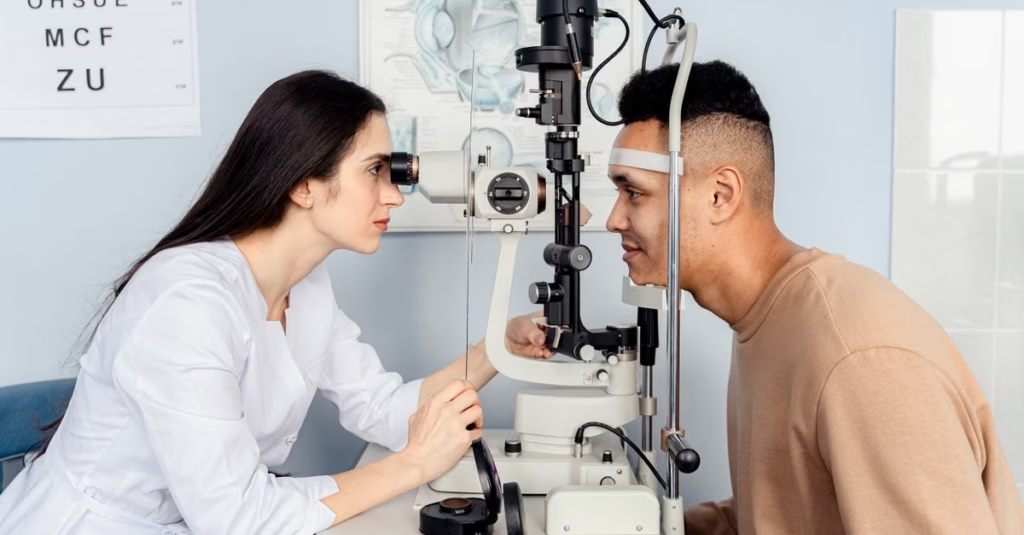
Beyond the Prescription: Why Eye Health Belongs in a Modern Wellness Routine
Stahl Eyecare Experts offers routine and specialized eye care on Long Island, with a full-service optical shop at its Garden City office. In New York, where a day might move from a laptop to a gallery opening to dinner across town, clear vision can feel like another part of being ready. But the eyes have a health story that cannot be read from a mirror—or from a sharp view of a phone screen. Understanding that distinction makes eye care a more useful part of an everyday wellness routine.
Clear Vision Is Only One Part of Eye Health
A vision test answers an important question: How clearly can someone make out letters or other details? It can help identify a need for a new prescription. A medical eye examination asks broader questions about how the eyes are functioning and whether there are signs of a condition that deserves attention. The two purposes overlap, but they are not interchangeable. Someone who reads comfortably through their current glasses still has reason to discuss eye health with a qualified professional.
That distinction matters because appearance and day-to-day comfort offer an incomplete picture. A person may notice when print becomes harder to read, yet changes elsewhere in the eye may be less obvious. The National Eye Institute’s explanation of dilated eye exams describes how examining the inside of the eye can help an eye care professional look for signs of disease. It is a useful perspective for anyone accustomed to thinking of an eye appointment solely as a way to update glasses or contact lenses.
What a Comprehensive Visit May Include
A comprehensive visit is not a single, identical set of tests for everyone. The eye care professional may consider symptoms, medical history and the reason for the visit before deciding what to examine. Alongside a check of visual acuity and prescription, an evaluation may include eye movements, pupil responses, peripheral vision or pressure inside the eye. These measures address different questions; none should be treated as a stand-alone verdict on overall eye health.
In some visits, dilating drops allow a closer view of structures at the back of the eye, including the retina and optic nerve. Because dilation can temporarily affect near vision and sensitivity to light, it helps to know what the appointment may involve before planning the rest of the day. A discussion of the findings is just as valuable as the measurements: What was examined, what did the clinician observe and is any follow-up appropriate? The American Academy of Ophthalmology’s comprehensive adult eye evaluation guidance reflects the breadth of considerations involved in medical eye care. The appropriate scope and timing of an individual’s examinations belong in a conversation with an eye care professional, rather than in a universal calendar rule.

The Small Changes Worth Mentioning
Useful conversations often begin with ordinary observations. Perhaps reading menus has become less comfortable, one eye seems different from the other, or contact lenses feel unlike they used to. Rather than trying to name a condition, it is more helpful to describe what changed, when it began and whether it happens in particular situations. That gives the clinician something more specific to explore than “my eyes feel off.”
Health context also belongs in the conversation. Current medications, relevant medical conditions, previous eye problems and the glasses or contact lenses someone uses can all help frame an evaluation. These details are not a script for self-diagnosis; they are a way to make the visit more informative. A patient can also ask what a finding means for daily life, whether a change needs monitoring and what would warrant another conversation. Sudden, significant changes in vision should be raised promptly with a medical professional rather than saved for an otherwise routine visit. The point is to give eye health the same attention one might give any other meaningful change in well-being.

When Routine Care Leads to a More Specific Conversation
General eye care can be the starting point for questions that require a more focused evaluation. On Long Island, Stahl Eyecare Experts provides routine and specialized eye care, including services involving cataracts, corneal and retinal conditions, and laser vision correction; its Garden City office also has a full-service optical shop. That range illustrates why “eye care” can describe more than one kind of appointment. A discussion about changing vision and a discussion about a particular eye condition may lead in different directions, even when both begin with the same concern.
The distinction is especially useful when a familiar complaint has several possible explanations. Difficulty seeing clearly might prompt a prescription check, while an examination may identify a reason to look more closely at another part of the eye. Similarly, an interest in reducing reliance on glasses is a different conversation from evaluating a health concern. Neither path can be settled by a lifestyle preference alone. Asking which part of the eye is involved, what the examination found and why a particular next step is being considered makes specialized language easier to understand without assuming that every patient needs specialized treatment.
For New Yorkers balancing work, travel and social plans, that clarity has practical value. It helps separate a change that calls for a routine discussion from a question that merits more timely attention, with the clinician guiding that decision. The aim is not to turn every minor annoyance into a medical alarm. It is to recognize that a prescription, a symptom and a diagnosis answer different questions—and to leave room for each one when it matters.

Making Eye Care Fit Real Life
Wellness routines tend to favor what is easy to see: the products on a bathroom shelf, the movement built into a week, or the frames that complete an outfit. Eye health is less visible, which makes it easy to reduce the subject to whether a prescription still seems to work. A broader approach does not require making eye care complicated. It means treating a change in vision or comfort as information worth sharing and understanding what an examination has—and has not—addressed.
One useful question at the end of a visit is what, specifically, should happen next. For some people, the answer may concern a prescription or contact lens fit; for others, it may involve further evaluation or a plan to monitor a finding. The recommended timing depends on the person’s circumstances and the professional assessment. Having that conversation gives the next step a reason, rather than leaving it to guesswork.
In a city full of carefully assembled daily routines, eye care deserves a place that is thoughtful rather than performative. Clear sight makes a busy day easier to navigate, but it is only one measure of how the eyes are doing. Paying attention to changes, asking what an examination covers and discussing individual next steps with an eye care professional can make that routine more meaningful—without turning it into another pursuit of perfection.