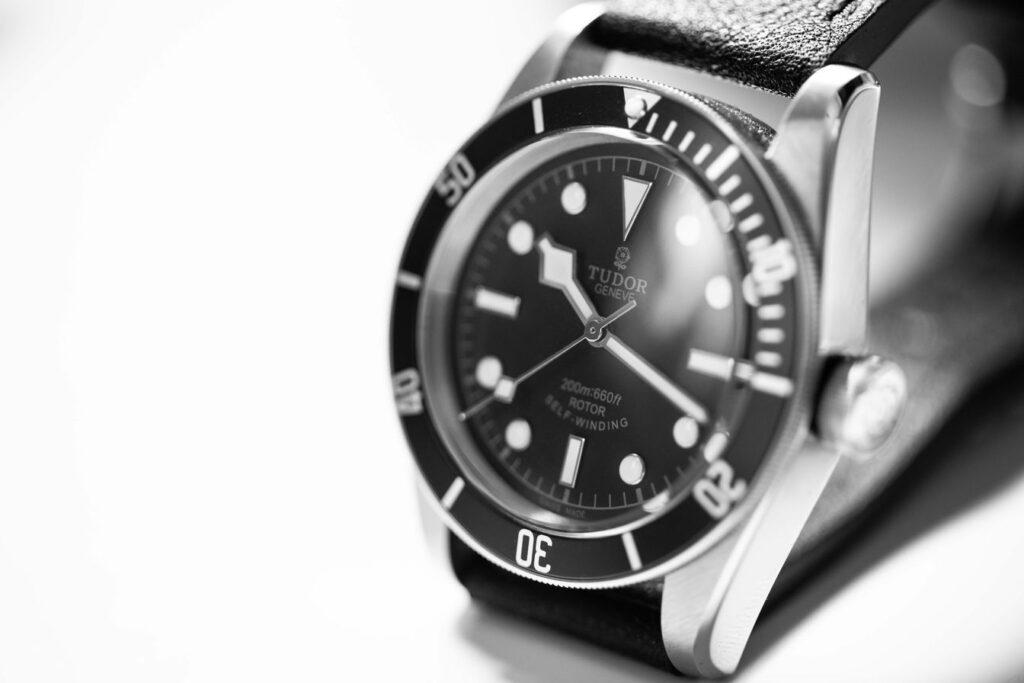
Tudor watches: High-quality Swiss timepieces with tradition
Swiss watchmaking incorporates mechanical expertise, precision engineering and a cultured practice of functional design. In this competitive industry, Tudor has formed a distinctive identity via its mechanical timepieces, pairing technical capacity with relatively affordable pricing.
Its collections range across professional dive watches, adaptable sports models and everyday designs. This allows several approaches for investigating luxury watchmaking without the loftiest price bands.
The history of the brand dates back to 1926, at a time when its name was registered on behalf of Hans Wilsdorf, the Rolex founder. Wilsdorf founded Montres Tudor SA in 1946 to deliver reliable watches at more reasonable prices, using ambition that continues to underlie the position of the brand today.
Here, modern movements, precisely chosen materials and contemporary manufacturing techniques sustain its traditional watchmaking.
Investigating the diverse watch models from Tudor
Today, the various watch models from Tudor showcase the differing priorities of its customers in terms of contemporary watch design. For example, the Black Bay collection takes inspiration from the company’s diving legacy, with vintage elements and contemporary tech mechanics. Meanwhile, Pelagos models boast underwater functionality, typically coming with lightweight titanium cases.
In contrast, the Royal collection presents a more integrated design via its exceptional bracelet and varied surface finishes. This gives you options that adapt to an assortment of contexts and personal preferences.
Overall, your intended watch use presents a practical starting point for comparing these collections. For example, a Black Bay can complete the look for casual clothing and stylish everyday ensembles; a Pelagos might suit buyers with more technical diving requirements; lastly, Royal models deliver a more polished appearance ideal for office wear and social events.
For your decision, it is suggested to evaluate the case dimensions, dial legibility, bracelet comfort and water resistance in relation to the visual components that initially draw your gaze.
Mechanical movements and modern engineering
A mechanical watch estimates time via a coordinated design involving springs, gears and an escapement. Here, automatic movements employ a rotor to wind the mainspring through wrist movement, where regular wear sustains their power reserve.
In 2015, Tudor presented its first Manufacture Calibre, subsequently developing a more comprehensive spectrum of movements. This is supported by its manufacturing capacities in Le Locle and its link with Kenissi.
The power reserve merits assessment, as it specifies how long a fully wound watch can operate without further winding. Several Manufacture Calibres supply around 70 hours of reserve, keeping your watch running through a standard weekend off the wrist.
Some models also have Master Chronometer certification from METAS, evaluating the finished watch against demanding criteria such as accuracy, magnetic resistance, water resistance and power reserve.
Materials, durability and everyday wear
Case materials affect the weight, appearance and suitability of a watch for daily use. In illustration, stainless steel delivers a typical ratio of strength and corrosion resistance. Equally, titanium supplies a more lightweight choice for buyers with a preference for larger dimensions without the extra weight.
Tudor utilizes these materials across various collections to meet a range of possible requirements; therefore, approximating the specifications of individual references aids your understanding of which model optimally corresponds to your habits and comfort levels.
Water resistance also demands careful interpretation, where a depth rating mirrors specified testing conditions. For example, a rating of 200 meters denotes considerable water resistance, but does not remove the necessity for proper care and periodic inspection.
Crown position, gasket condition and servicing all impact performance. So, if you plan to swim or dive with the watch on, review its explicit specifications and heed the guidance of the manufacturer for water exposure.
Luxury positioning and value
Rolex delivers a valid mode of comparison, as both brands share historical connections. However, each presents its own design individualism and product range. Tudor commonly inhabits a price bracket on the lower end, lending access to Swiss mechanical watchmaking at a relatively affordable price.
The true value of an individual model still relies on its movement, materials, certification, construction and market price, where comparing specific references offers a more trustworthy judgment than just reputation.
Today, the Black Bay, Pelagos and Royal collections demonstrate how Tudor counterbalances heritage with contemporary essentials; one exhibits diving-inspired design; another prioritizes underwater functionality; the third proffers an integrated bracelet with refined appearance.
If you are weighing up an alternative to Rolex, this combination allows you space to focus on technical specifications and personal style with price, without presuming every model has equivalent components or performance.
Choosing a watch that suits you
Your ultimate conclusion for purchase should start with the fit and intended use, with comfort clearly affecting how often you wear a watch.
Consider comparing case diameter, thickness, lug length and bracelet adjustment, then assess the movement, water resistance, warranty and service arrangements. If you are purchasing something pre-owned, analyze the service history, condition, originality of components and seller reputation before committing.
In conclusion, Tudor blends historical elements with contemporary mechanical engineering to deliver an expansive selection of Swiss timepieces. No matter if you favor a hardy dive watch, an adaptable sports model or a more refined everyday design, the most emphatic option is one that serves your wrist and daily routine.
Overall, when you evaluate craftsmanship, specifications, long-term maintenance and price concurrently, you can make a more educated conclusion about which watch merits a spot in your collection.