The Art of Home Bar Design: Creating a Stylish Space for Everyday Living
There was a time when a home bar meant a dusty cabinet of bottles reserved for holidays and the occasional dinner party. Today, it has become one of the most hardworking corners of the modern home. A well-designed bar can host your morning espresso, a quick breakfast before work, an afternoon laptop session, and a relaxed drink with friends in the evening, all in the same few square feet. The secret lies in designing it for real life rather than just for show.
Whether you have an open-plan kitchen, a spare corner in the living room, or a small apartment where every inch counts, here is how to create a home bar that looks beautiful and earns its place every single day.
Why a Home Bar Belongs in Everyday Living
A home bar works so well because it sits between two moods. It is more casual than a dining table and more sociable than a kitchen counter. People naturally gather around it, which makes it ideal for chatting with someone who is cooking, helping children with homework, or catching up with guests without the formality of a full sit-down meal.
Thinking of your bar as a multi-purpose zone also changes how you design it. Instead of planning only for glassware and bottles, you start considering comfortable seating, easy-to-clean surfaces, good lighting, and storage for everyday items like mugs, cereal bowls, and coffee beans.
Start With Purpose: Drinking Bar, Breakfast Bar, or Coffee Bar?
Before choosing a single piece of furniture, ask yourself how you will use the space most often. The answer shapes every decision that follows.
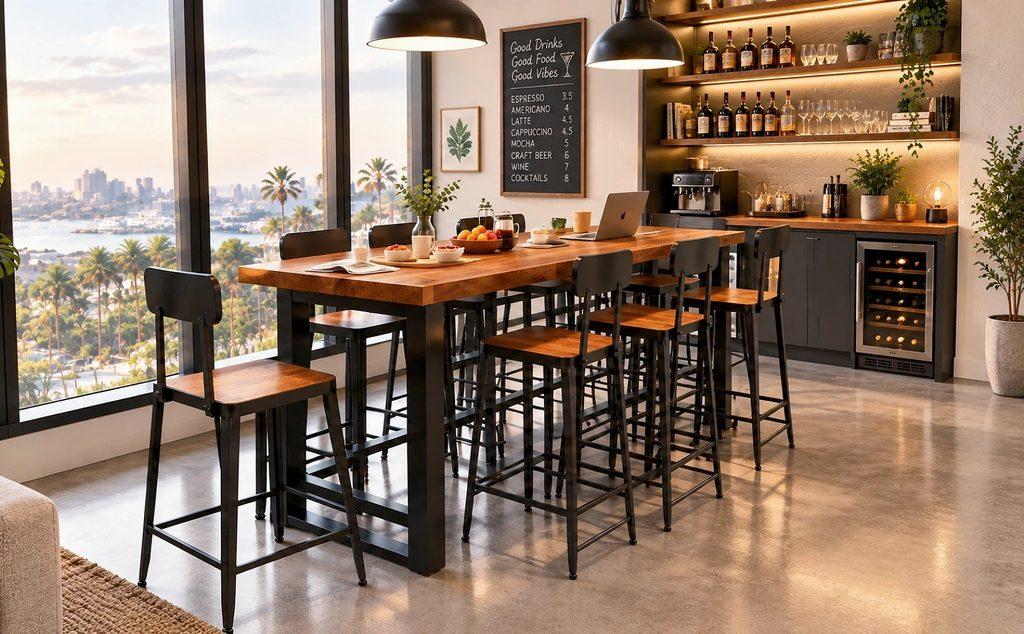
A breakfast bar needs a generous, durable surface and seating that is comfortable for twenty minutes or more. A coffee bar benefits from nearby power outlets, a tray for your machine, and open shelving for mugs and syrups. A drinks bar calls for glass storage, a spot for an ice bucket, and perhaps a mirrored or backlit shelf for a little evening drama.
Most households end up needing a mix of all three, which is why the table itself deserves careful thought. Freestanding Bar Tables are a flexible choice because they let you create a bar zone without permanent construction. A slim rectangular table can sit against a wall as a coffee station, while a round pedestal design can float in an open-plan room and invite conversation from every side. Choose a top that matches your main use: stone or sintered surfaces handle hot mugs and spills, while warm wood adds character for a more relaxed lounge feel.
How Bar Tables and Bar Stools Work Together
The most inviting home bars feel like a single, considered composition rather than a table and some seats placed side by side. Getting that cohesive look means thinking about the table and the Bar Stools as a pair from the very beginning.
Match the height first. This is the rule people most often get wrong. Counter-height tables are usually around 90 to 92 cm tall and pair with stools that have a seat height of roughly 61 to 66 cm. Bar-height tables sit closer to 102 to 107 cm and need stools with a seat height of about 71 to 76 cm. Aim for 25 to 30 cm between the top of the seat and the underside of the table so knees and thighs have room to move.
Balance the visual weight. A heavy marble table looks best with stools that have some substance, such as upholstered seats or solid wooden frames. A light, slim table with metal legs pairs nicely with airy stools in rattan, cane, or thin powder-coated steel.
Repeat one detail. You do not need a perfectly matched set. Instead, echo a single element, such as black metal legs, a walnut tone, or a brushed brass footrest, across both pieces. That one repeated detail makes the arrangement feel intentional.
Prioritise comfort for everyday use. If your bar doubles as a breakfast nook or work spot, choose stools with a supportive backrest, a padded seat, and a footrest. Backless stools tuck neatly out of sight and suit spaces that are mostly used for quick coffees or entertaining. Swivel designs are a practical bonus when guests want to turn and join the conversation.
Getting the Proportions Right
Good proportions are what make a bar feel effortless to use. Allow about 60 to 75 cm of table width per person so elbows do not collide. Leave at least 90 cm of clear space behind the stools so people can pull them out and walk past comfortably. In a busy walkway, increase that to around 110 cm. Two stools work for a compact table of around 120 cm, while three or four suit longer pieces.
Materials and Color Coordination
Your bar should feel connected to the rest of the room. Pick one or two finishes from nearby elements, such as your kitchen cabinets, flooring, or light fixtures, and carry them into the bar furniture. Neutral palettes of oak, cream bouclé, and matte black create a calm, timeless look. If you want the bar to stand out, introduce color through stool upholstery in deep green, terracotta, or navy, which is far easier to update later than a table.
Lighting finishes the picture. Two or three pendant lights hung around 75 to 85 cm above the tabletop define the zone and create a warm, café-like atmosphere in the evening.
Design Tips for Different Home Sizes
Small apartments: Choose a narrow wall-mounted or console-style bar table with two backless stools that slide fully underneath. Mirrors and open shelves above help the space feel larger.
Medium homes: A freestanding table at the end of a kitchen run creates a natural bridge between cooking and living areas.
Large or open-plan homes: Consider an island-style setup or a long bar table with four stools to anchor the room and give guests a clear gathering point.
Styling for Different Interior Styles
- Modern minimalist: sleek lines, sintered stone tops, and stools in black or white metal.
- Scandinavian: light oak, soft fabrics, and rounded edges.
- Industrial: reclaimed wood, iron frames, and exposed bulb pendants.
- Mid-century: walnut tones, tapered legs, and leather or velvet seats.
- Mediterranean or coastal: rattan, linen, and warm whites.
Keep the styling on top of the bar simple: a tray for essentials, a small plant, and a few well-chosen glasses or mugs are enough.
Final Verdict
A great home bar is not about how many bottles you own. It is about creating a comfortable, flexible spot that fits your daily rhythm, from the first coffee of the morning to relaxed evenings with friends. Start with how you will use the space, get the heights and proportions right, and let a few repeated materials tie everything together. If you are looking for pieces that bring all of this together, Homebaa bar tables and bar stools are designed with comfort in mind, making them a perfect foundation for a comfortable, modern home bar.