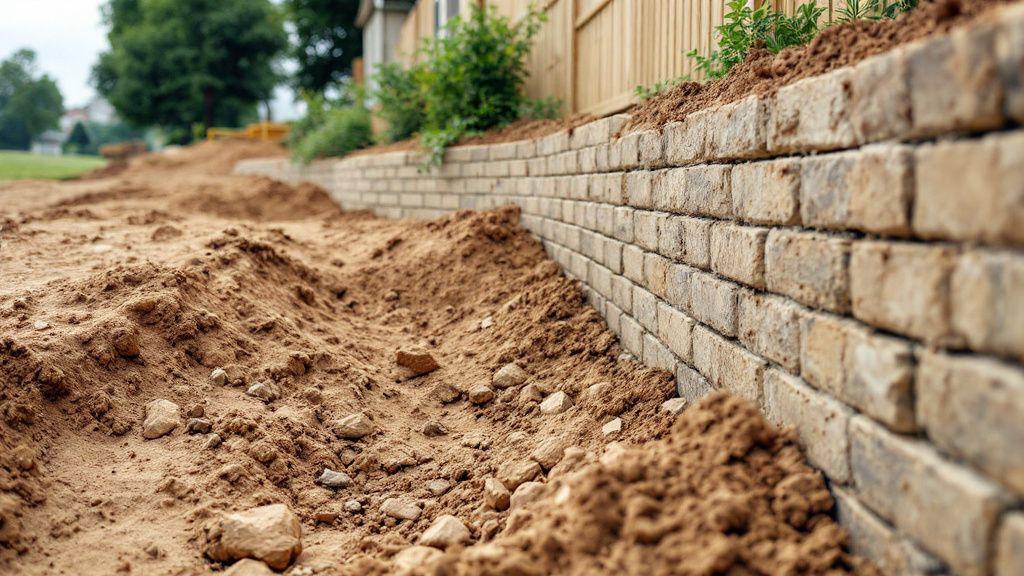
Retaining Walls in Alaska: Materials, Drainage & Why Local Expertise Matters
Why Retaining Walls in Alaska Are a Different Challenge
A retaining wall in Alaska has to do much more than hold back a slope. It has to survive months of deep frost, rapid spring thaws, saturated soils, heavy snow loads, and the very real possibility of a strong earthquake. A wall that would last 40 years in a mild climate can start leaning, bulging, or cracking within a few seasons here if it is not designed and built with Alaska conditions in mind.
Whether you are terracing a sloped backyard in South Anchorage, creating a level driveway in Eagle River, or protecting a hillside home in the Mat-Su Valley, the success of your project comes down to three things: choosing the right materials, managing water properly, and working with a team that understands local soils and climate. In this guide, we will walk through each of these factors and explain why local experience makes such a difference for retaining wall installation in Anchorage and across Southcentral Alaska.
The Forces Working Against Alaska Retaining Walls
Before choosing a material or a design, it helps to understand what your wall will be up against. Alaska throws a unique combination of stresses at any structure built into the ground.
- Frost heave: When water in the soil freezes, it expands and pushes upward and outward. Fine-grained soils like silts hold a lot of moisture and are especially prone to heaving, which can lift and tilt wall blocks out of alignment.
- Freeze-thaw cycles: Spring and fall bring repeated freezing at night and thawing during the day. Each cycle loosens soil, widens small cracks, and gradually breaks down weaker materials.
- Hydrostatic pressure: Snowmelt and fall rains can saturate the soil behind a wall. Saturated soil is far heavier than dry soil, and trapped water pushes directly against the wall face.
- Seismic activity: Southcentral Alaska is one of the most seismically active regions in North America. The 1964 Great Alaska Earthquake and the magnitude 7.1 earthquake that struck near Anchorage in November 2018 are reminders that walls must be able to handle ground shaking.
- Variable soils: Anchorage soils range from well-draining glacial gravels to sensitive silts and clays, sometimes on the same lot. Some areas also have shallow groundwater or discontinuous permafrost farther north.
- Snow loads and plowing: Snow piled at the top of a wall adds weight, and snow pushed against the wall face by plows or blowers can damage caps and facing units.
Every one of these forces gets worse when water is not managed well, which is why drainage and material selection go hand in hand.
Choosing the Right Retaining Wall Materials for Alaska
No single material is perfect for every site. The best choice depends on wall height, soil type, budget, appearance, and how much maintenance you are willing to do. Here are the most common options used in Alaska and how they hold up.
Segmental Concrete Block
Interlocking concrete blocks are among the most popular choices for residential walls in Anchorage. They are stacked without mortar and often tied into the soil with layers of geogrid reinforcement.
- Flexible design that can shift slightly with frost movement instead of cracking
- Available in many colors and textures, including natural stone looks
- Look for high-strength, freeze-thaw rated units designed for cold climates
- Taller walls require geogrid and engineering
Poured Concrete
Cast-in-place concrete walls are extremely strong and work well for tall walls, driveways, and commercial sites.
- Excellent for heavy loads and limited space
- Requires steel reinforcement, proper footings below frost depth, and weep holes or drainage
- Rigid, so it can crack if the foundation or drainage is poorly designed
- Plain appearance unless finished with a veneer or form liner
Natural Stone and Boulders
Large boulder walls fit beautifully into Alaska landscapes and are common on wooded lots and lakefront properties.
- Very durable and naturally resistant to freeze-thaw damage
- Heavy stones resist movement through sheer weight
- Requires heavy equipment and a skilled operator for stable placement
- Gaps between stones allow water to pass through, which helps relieve pressure
Timber
Pressure-treated timber walls are budget-friendly and quick to build, but they have limits.
- Lower upfront cost and a rustic look
- Shorter lifespan, often 10 to 20 years, as wood eventually rots in wet soils
- Best suited to short garden walls and raised beds
- Not recommended for tall or load-bearing walls
Gabion Walls
Gabions are wire baskets filled with rock. They are used frequently along streams, roads, and steep slopes.
- Excellent drainage because water flows freely through the rock
- Flexible enough to tolerate frost heave and settlement
- Use galvanized or coated wire to resist corrosion
- Industrial look that some homeowners love and others avoid
For most Anchorage homeowners, segmental block and boulder walls offer the best balance of durability, flexibility, and appearance. Poured concrete is often the right choice when space is tight or loads are heavy.
Drainage: The Most Important Part of Any Alaska Retaining Wall
If there is one lesson every experienced Alaska contractor agrees on, it is this: most retaining walls fail because of water, not because of weak materials. Water trapped behind a wall adds enormous weight, and when that water freezes, it expands and pushes even harder. A wall without proper drainage is fighting a losing battle every winter.
A well-designed drainage system typically includes:
- Free-draining backfill: Clean crushed rock or gravel placed directly behind the wall allows water to move down quickly instead of building pressure. Native silty soil should never be used as backfill directly against the wall.
- Perforated drain pipe: A perforated pipe at the base of the wall collects water and carries it to a safe outlet, such as daylight, a dry well, or an approved storm system.
- Filter fabric: Geotextile fabric separates the drainage rock from surrounding soil so fine particles do not clog the system over time.
- Weep holes or outlets: Solid walls like poured concrete need openings or drains that let water escape through or around the wall.
- Surface grading: The ground above the wall should slope away so runoff and snowmelt do not pour directly into the backfill zone.
- Non-frost-susceptible base: A compacted gravel leveling pad beneath the wall reduces the amount of moisture available to cause frost heave.
It also matters where the water goes once it leaves the wall. Discharging drainage onto a neighbor’s property or into a spot where it will form an ice sheet across your driveway creates new problems. A good installer plans the outlet as carefully as the wall itself.
Foundations, Engineering, and Permits
What happens below the ground is just as important as what you see above it. In Alaska, the foundation of a retaining wall needs to account for frost, soil strength, and the load the wall will carry.
- Excavation and base preparation: Poor soils are removed and replaced with compacted, non-frost-susceptible gravel. For segmental and boulder walls, this compacted base and a properly embedded first course are critical to long-term stability.
- Frost protection: Rigid structures such as poured concrete walls generally need footings below the local frost depth or other frost protection measures. Flexible walls rely more on a well-drained gravel base to limit heaving.
- Reinforcement: Taller segmental walls use layers of geogrid that extend back into the soil, turning the wall and backfill into one heavy, stable mass. Concrete walls rely on steel rebar.
- Surcharge loads: Driveways, parked vehicles, buildings, fences, and stacked snow near the top of a wall all add load and must be included in the design.
In the Municipality of Anchorage, taller retaining walls and walls that support driveways, structures, or other added loads typically require a permit and an engineered design. Requirements can change and vary by location, so always confirm current rules with the Municipality of Anchorage or your local borough before construction begins. A reputable contractor will help you navigate this process rather than look for ways around it.
Why Local Expertise Matters for Retaining Wall Installation in Anchorage
You can find retaining wall instructions online in minutes, but most of them are written for places where the ground never freezes deeply, and earthquakes are rare. Retaining wall installation in Anchorage calls for knowledge that only comes from years of building and repairing walls in this environment.
Here is what an experienced local contractor brings to your project:
- Knowledge of local soils: Local crews know which neighborhoods tend to have silty, wet, or clay-rich soils and which sit on well-draining gravels. They know when a soil test or engineer’s review is truly needed.
- Cold-climate material selection: Not every block, fabric, or pipe is built for Alaska winters. Local installers know which products have proven themselves through decades of freeze-thaw cycles.
- Seismic awareness: Contractors who have seen how walls performed after the 2018 earthquake understand the value of proper reinforcement, compaction, and flexible design.
- Seasonal timing: Alaska’s construction season is short. A local team knows how to schedule excavation, compaction, and backfilling so the work is not compromised by frozen ground or spring breakup.
- Permit familiarity: Working regularly with the Municipality of Anchorage and surrounding boroughs means fewer delays and fewer surprises.
- Accountability: A local company with a reputation to protect is more likely to stand behind its work and be available if something needs attention down the road.
Cutting corners on a retaining wall rarely saves money. Rebuilding a failed wall usually costs far more than building it correctly the first time, especially once you add damaged landscaping, driveways, or foundations to the bill.
Warning Signs and Simple Maintenance Tips
Even a well-built wall benefits from a quick inspection each spring after breakup and again in the fall before freeze-up. Catching problems early can turn a major rebuild into a minor repair.
Watch for these warning signs:
- Leaning, tilting, or bulging sections of the wall
- Cracks in concrete or displaced blocks and caps
- Soil, sand, or gravel washing out from joints or the base
- Standing water, ice buildup, or soggy ground behind or below the wall
- Sinking or new cracks in patios, driveways, or walkways above the wall
Simple maintenance steps include:
- Keeping drain outlets clear of debris, ice, and vegetation
- Avoiding piling plowed snow directly against or on top of the wall
- Reattaching loose caps with exterior-rated adhesive
- Redirecting downspouts and surface runoff away from the backfill area
- Calling a professional promptly if movement continues from one season to the next
Frequently Asked Questions
What is the best retaining wall material for Alaska?
For most homes, freeze-thaw rated segmental concrete block or natural boulders perform best because they are durable and can flex slightly with frost movement. Poured concrete is a strong option for tall walls or tight spaces when it is properly reinforced and drained.
How long does a retaining wall last in Anchorage?
A properly built concrete block, boulder, or poured concrete wall can last 50 years or more. Timber walls usually last 10 to 20 years before they need replacement.
Do I need a permit for a retaining wall in Anchorage?
Often, yes. Taller walls and walls that support driveways, buildings, or other loads typically require a permit and engineering. Check with the Municipality of Anchorage for current requirements.
When is the best time to build a retaining wall in Alaska?
Late spring through early fall, once the ground has thawed and dried out after breakup. Planning early helps secure a spot on a contractor’s schedule during the short building season.
Why is my retaining wall leaning?
The most common causes are poor drainage, frost heave, inadequate base preparation, or missing reinforcement. A leaning wall should be inspected soon, since the problem usually gets worse each winter.
Can I build a retaining wall myself?
Short garden walls under a couple of feet can be a reasonable DIY project. Taller walls, walls near structures, and walls holding back driveways should be designed and built by professionals.
How much does retaining wall installation in Anchorage cost?
Cost depends on wall height, length, material, site access, soil conditions, and drainage needs. The most accurate way to budget is to request an on-site estimate from a local contractor.
Build It Right the First Time
A retaining wall is a long-term investment in your property’s usability, safety, and value. In Alaska, that investment only pays off when the wall is built with the right materials, a drainage system that keeps water from building up, and a foundation designed for frost and seismic movement.
If you are planning a new wall or dealing with one that is starting to lean, crack, or hold water, talk with a contractor who has hands-on experience with retaining wall installation in Anchorage. Local knowledge of soils, weather, permits, and proven cold-climate products is what turns a good-looking wall into one that stands strong through decades of Alaska winters.