The New York Apartment Blackout Kit: What to Keep Powered When the Grid Goes Down
New York and blackouts go way back. July 1977: a heat wave helped knock the entire city dark, and it stayed that way well into the next day. August 2003: a failure that started in Ohio rippled across the whole Northeast. New York took something like 29 hours to fully come back. July 2019: a substation problem cut around 73,000 customers on Manhattan’s West Side for about five hours. You see the pattern. Heat waves, storms — the grid takes a beating, something breaks, and your apartment goes dark with basically no warning.
Why your building goes dark first
Almost never your apartment’s fault. It’s the grid. A heat wave sits on the city for three, four days. Transformers cook. One piece of equipment fails and suddenly it’s cascading. Con Edison’s underground network covers most of the city, and summer peak demand is brutal on it — the worst weeks of its year. Storms do their own damage. Wind, flooding, substations underwater. Sandy in 2012 was the master class. You’re a renter, so there’s nothing you can do about any of that. What you can do is decide what happens inside your four walls when the lights go out.
Decide what actually needs power
Fridge first. No debate. A full-size refrigerator pulls roughly 300 to 800 watts when the compressor’s running. Startup surge? Double or triple that, briefly. USDA says a closed fridge keeps food safe for around four hours — that’s why it’s your biggest load. Next: internet. Your router probably draws 5 to 20 watts. That’s nothing. But it keeps your phone on Wi-Fi, which keeps you reachable, working, getting emergency alerts. Third: phones, chargers, and medical gear — CPAP if you use one. The rest is optional. Lamps, TV, microwave. Skip them. Sit down now — while the power’s on — read the wattage off each nameplate, write it down, add it up. That number runs the whole plan.
Gas generators are off the table indoors
Saying this plainly because it kills people every year: do not run a fuel generator inside an apartment. Hallway doesn’t count as outside. Basement doesn’t count. An open window doesn’t count. Carbon monoxide — no color, no smell. The feds are unambiguous: generators go outside, 20 feet minimum from the building. A cracked window changes nothing. And honestly, most NYC renters don’t have a yard or roof deck that qualifies anyway. So gas is dead as an option. What does that leave? Batteries. A power station makes no exhaust, burns no fuel, produces no fumes.
Battery stations make sense for apartments
A portable power station is a big battery with wall outlets on it. Charge it from any outlet before the storm. Power goes out, you plug your fridge and router into it instead of the wall. For sizing, use your list from earlier — add up the watts of everything running at once, then pad it for the fridge’s startup surge. The OUKITEL P1000 Plus is one example sized for this kind of job: keeping essentials like a fridge and router alive through an outage. Put it where you’ll find it in the dark. Keep it charged. Twice a year, unplug the fridge from the wall and run it off the station for an hour. If you never test it, you don’t actually have backup.
What size do you actually need
Watt-hours. That’s the spec to look at — printed on every unit. Here’s the math: fridge averaging 150 watts means 150 watt-hours per hour. Ten hours of fridge = about 1,500 watt-hours, before efficiency losses. But fridges don’t run constantly; they cycle. So real consumption lands well under the nameplate number. Unplug the nonessentials and it stretches further. Router (~10W) plus a couple phone chargers (~5W each) barely move the needle. Now, solar: lots of stations accept a portable panel. During a daytime outage it trickle-charges the battery — free extra hours. A window panel in an apartment won’t do what a rooftop array does. Still helps. Check the station’s max solar input before buying a panel; they have to match. One more thing — cold saps batteries a bit. Room temperature, not the balcony in January. And size for reality: recent NYC-area blackouts ran hours, not days. A mid-size unit handling fridge + connectivity covers the realistic case.
Build the kit around it
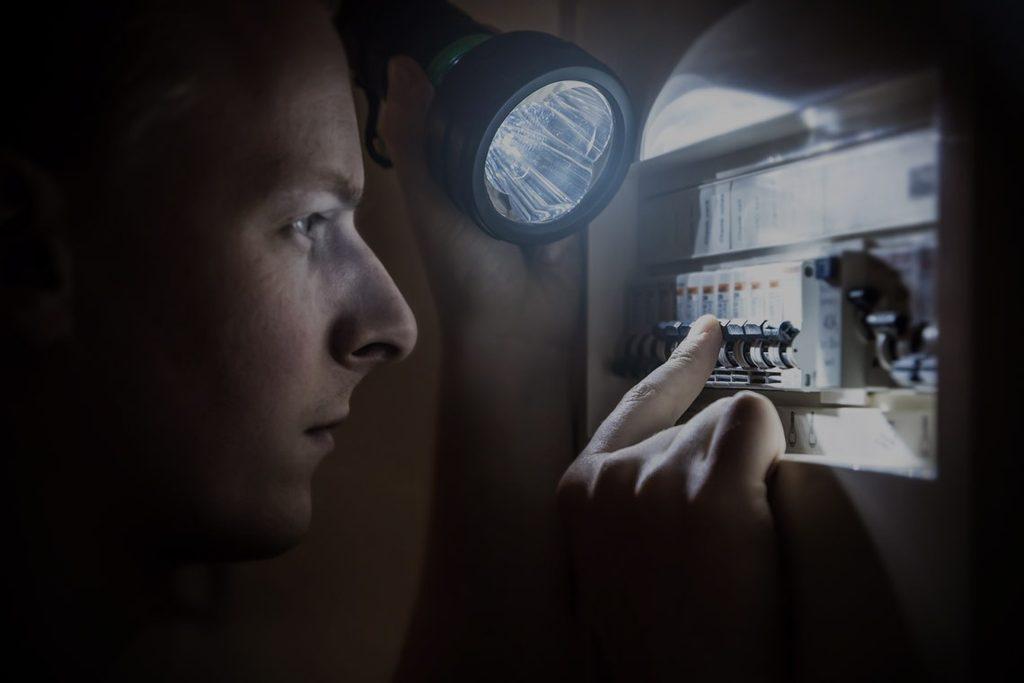
Station’s the core. Around it: headlamps (better than lanterns — hands-free), a cooler with ice packs for the stuff that won’t fit in a warming fridge, a dedicated phone battery bank, and a card — paper, taped inside a cabinet door — that says what gets plugged in first. You won’t remember the order at 2 a.m. New York closets are small, so measure before you buy; the unit has to earn its square footage. Want the detailed version with runtime tables? This portable power station for apartment blackouts guide walks through the math and the plug-in sequence. Last thing: the day power comes back, recharge the station. Then top it off every few months. An empty power station is a very expensive doorstop.
Blackouts reward the prepared. List on the fridge door, battery charged, kit where you can grab it blind. That’s the whole game.
| Anchor | URL |
| OUKITEL P1000 Plus | https://oukitelpower.com/products/oukitel-p1000-plus-portable-power-station |
| portable power station for apartment blackouts | https://oukitelpower.com/blogs/blog/portable-power-station-for-apartment-blackouts-indoor-backup-guide |