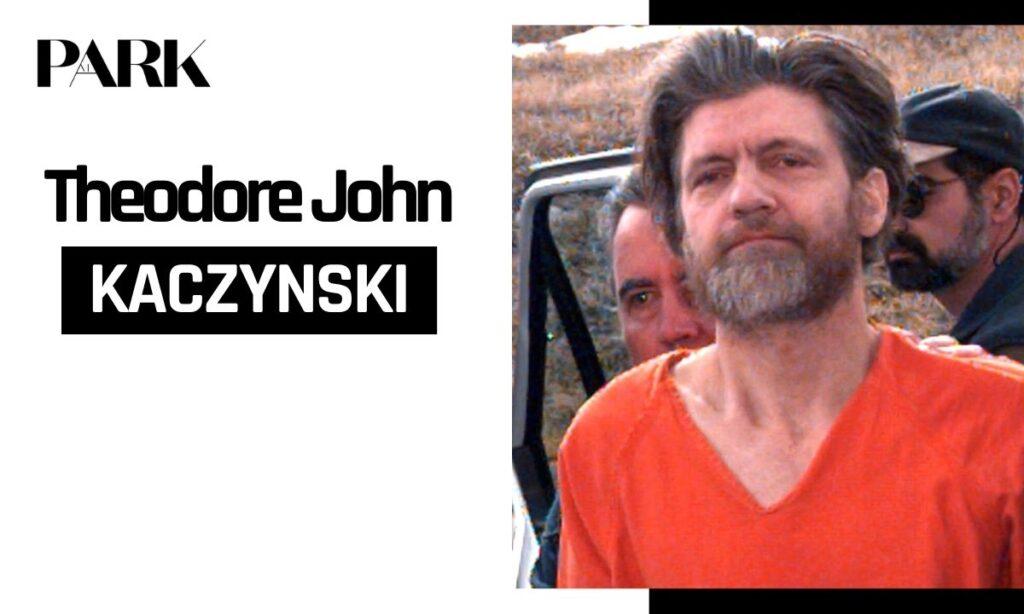
Theodore John Kaczynski: The Full Story Of The Unabomber
Theodore John Kaczynski was a Harvard educated mathematician who became known around the world as the Unabomber, the man behind a 17-year bombing campaign that killed three people and injured 23 others. His case remains one of the most studied in American criminal history because it combines a rare academic pedigree with a deep hostility toward modern technology and industrial society.
This article lays out the verified facts of his life: his early academic brilliance, his years living off the grid in Montana, his manifesto, his capture, his sentencing, and his death in 2023. Every claim below is drawn from established reporting and public records rather than speculation.
Quick Facts: Theodore John Kaczynski
| Category | Details |
| Full name | Theodore John Kaczynski |
| Also known as | The Unabomber, “FC” |
| Born | May 22, 1942, Chicago, Illinois |
| Died | June 10, 2023 (aged 81), Federal Medical Center, Butner, North Carolina |
| Cause of death | Suicide, according to multiple news organizations citing officials familiar with the matter |
| Education | Harvard University (BA, mathematics); University of Michigan (MS, PhD, mathematics) |
| Career | Assistant professor of mathematics, University of California, Berkeley (1967 to 1969) |
| Known for | Industrial Society and Its Future (also called the Unabomber Manifesto), 1978 to 1995 bombing campaign |
| Victims | 3 killed, 23 injured |
| Captured | April 3, 1996, near Lincoln, Montana |
| Sentence | Multiple consecutive life terms without parole |
| Brother | David Kaczynski, who helped identify him to the FBI |
Read More: Ted Kaczynski Epstein
Who Was Theodore John Kaczynski?
Theodore John Kaczynski was born on May 22, 1942, in Chicago, Illinois, to Wanda and Theodore Richard Kaczynski, a working class Polish American couple. He showed exceptional academic promise from an early age, skipping two grades in school. He entered Harvard University at just 16 years old and graduated with a degree in mathematics before going on to earn a master’s and a doctorate from the University of Michigan.
His doctoral thesis, titled Boundary Functions, was in the field of complex analysis, and one of his professors later called it work that perhaps only a handful of mathematicians in the country could fully evaluate at the time. In 1967, at 25, he became the youngest assistant professor in the history of the University of California, Berkeley’s mathematics department.
That career did not last. Kaczynski abruptly resigned from Berkeley in 1969, without any clear explanation to colleagues, and moved away from academic life entirely. This decision marked the beginning of a retreat from mainstream society that would eventually shape the rest of his life.
Is Theodore John Kaczynski Still Alive Today?
No. Theodore John Kaczynski died on June 10, 2023. He was found unresponsive in his cell at the Federal Medical Center in Butner, North Carolina, in the early morning hours, and was pronounced dead later that day.
He was 81 years old at the time of his death. Any content online suggesting he is alive today, or asking what he is doing “now,” is outdated or inaccurate, since the Federal Bureau of Prisons confirmed his death and widely reported by national news outlets.
How Did Theodore John Kaczynski Die?
Multiple news organizations, including CNN, CBS News, and the Associated Press, reported that Kaczynski died by suicide, citing officials familiar with the investigation. The Federal Bureau of Prisons did not release an official cause of death publicly, stating that such details are handled by the medical examiner rather than the prison system itself.
Reporting following his death also revealed that Kaczynski had been battling late stage cancer. He had reportedly been diagnosed with rectal cancer in March 2021 and was described by those close to the case as being in a depressed state in the period before his death. He had been transferred from the federal supermax prison in Florence, Colorado, to the medical facility in Butner in December 2021 specifically because of his declining health.
What Did Theodore John Kaczynski Do?
Between 1978 and 1995, Kaczynski carried out a bombing campaign targeting universities and airlines, which earned him the FBI code name “UNABOM” and later the public nickname “Unabomber.” His homemade explosive devices, sent through the mail or left in public places, killed three people and injured 23 others over that 17 year period.
His targets included professors, executives, and others he associated with technology and industrial expansion, and his methods evolved in sophistication over the years, making him extremely difficult for investigators to trace. He was, for a long stretch of the 1980s and early 1990s, one of the FBI’s most elusive and highest priority targets.
Notable targets and incidents included:
- The University of Illinois at Chicago, site of his first bomb in 1978
- The University of Michigan, Yale University, and Vanderbilt University
- The University of California, Berkeley, his former employer
- A 1979 bomb placed aboard an American Airlines flight, which caused smoke but did not detonate as intended
- A 1995 threat to blow up an airliner departing Los Angeles, which he later described as a hoax
Industrial Society And Its Future: The Manifesto
In 1995, Kaczynski sent a 35,000 word essay titled Industrial Society and Its Future to The New York Times and The Washington Post. In it, he argued that industrial and technological development had done severe damage to human freedom and psychological well being, and he predicted worsening consequences if the trend continued. He promised to stop his bombing campaign if the essay was published in full.
After consultation with the FBI and Department of Justice, the two newspapers jointly published the document, reasoning that doing so might help end the violence and could aid in identifying the author. That decision proved to be the turning point in the entire case.
Note: The manifesto’s publication is widely regarded as the single event that led directly to Kaczynski’s capture. It was not his bombs that identified him, but his own written words.
How The Manifesto Led to His Capture
David Kaczynski, Theodore’s younger brother, read the published manifesto and recognized patterns of language and ideas that resembled letters and essays his brother had written over the years. Acting on that suspicion, and after considerable personal anguish, David contacted the FBI through an attorney in 1995.
Investigators compared the manifesto to Kaczynski’s earlier writings and found strong linguistic and stylistic similarities. This tip led agents to a remote, one-room cabin without electricity or running water near Lincoln, Montana, where Kaczynski had been living for roughly 25 years. He was arrested there on April 3, 1996.
Key facts about his life in Montana:
- He built the cabin himself in the early 1970s on land near Lincoln, Montana
- He lived largely off the grid, without electricity, running water, or a telephone
- He grew his own food and hunted to sustain himself
- He used the isolation to write and refine his ideas, as well as to build his devices
- The FBI recovered a working bomb, bomb making materials, and journals from the cabin
Was Theodore John Kaczynski Mentally Ill?
This is one of the most debated aspects of his case. Court-appointed psychiatrists who examined Kaczynski before trial diagnosed him with paranoid schizophrenia, and prosecutors initially intended to pursue an insanity related defense strategy. Kaczynski himself strongly rejected any mental illness diagnosis and refused to allow his defense team to use one, viewing it as an attempt to discredit his ideas rather than an accurate description of his state of mind.
Because he ultimately pleaded guilty rather than going to trial, the question of his mental state was never resolved through a courtroom verdict. It remains a matter that historians, journalists, and mental health professionals continue to discuss, and no single conclusion is universally accepted.
Theodore John Kaczynski’s IQ
Kaczynski’s intelligence has been widely discussed in media coverage of the case, with various reports citing a very high IQ score, often placed somewhere in the range associated with genius level intellect.
It is worth noting that specific IQ figures circulating online vary between sources and have not been consistently verified through a single authoritative record, so readers should treat exact numbers with some caution. What is well documented, by contrast, is his academic record: entering Harvard at 16, earning a doctorate in mathematics, and becoming Berkeley’s youngest assistant professor at 25.
Trial, Guilty Plea And Sentence
Kaczynski was indicted on federal charges in 1996 related to the bombings. In January 1998, as his trial was set to begin, he pleaded guilty to all charges in exchange for the government agreeing not to seek the death penalty. This plea meant the case never went before a jury, and the psychiatric and ideological questions surrounding his motives were never tested at trial.
He was sentenced to eight consecutive life terms without the possibility of parole. He spent most of his incarceration at the ADX Florence federal supermax prison in Colorado, one of the most secure facilities in the United States, before his 2021 transfer to the medical facility in North Carolina.
Theodore John Kaczynski Books
| Title | Year | Description |
| Industrial Society and Its Future | 1995 | The original manifesto published in The New York Times and The Washington Post |
| Technological Slavery | 2010 | A collection of Kaczynski’s essays and letters, published while he was incarcerated |
| Anti Tech Revolution: Why and How | 2016 | A later work expanding on his critique of technology and proposing a theory of societal collapse |
Separately, his brother David Kaczynski wrote Every Last Tie: The Story of the Unabomber and His Family, published in 2016, which recounts the family’s experience and David’s decision to contact the FBI. Journalist Jamie Gehring, whose family had once leased Kaczynski the Montana land, also published Madman in the Woods: Life Next Door to the Unabomber in 2020.
Read More: Luigi Mangione GoFundMe
Cultural Impact And Media Coverage
Kaczynski’s case has continued to attract attention in popular culture long after his 1996 arrest. The Discovery Channel and later Netflix produced dramatized and documentary treatments of his story and his manifesto continues to circulate in political and academic discussions about technology’s effect on society. His writings have, controversially, also been cited by a range of later extremist movements, a development that has drawn criticism and concern from researchers who study radicalization.
Why interest in his case has endured:
- The unusual contrast between his elite academic background and his crimes
- The role his own writing played in his capture, a rare outcome in criminal investigations
- Ongoing debate in tech and philosophy circles about his critique of industrial society
- Continued documentary, podcast, and film coverage of the case
Note: Mentions of Kaczynski on podcasts or in interviews, including discussions featuring figures like Joe Rogan, typically focus on commentary about his ideas or the broader true-crime interest in his case rather than any direct involvement by Kaczynski himself, who had no public media presence during his incarceration.
Frequently Asked Questions
What was Theodore John Kaczynski’s real name?
His full legal name was Theodore John Kaczynski. He was also widely known by his self chosen alias “FC” and by the public nickname “Unabomber.”
Is Theodore John Kaczynski still alive?
No. He died on June 10, 2023, at age 81, in federal custody in Butner, North Carolina.
How did Theodore John Kaczynski die?
Multiple news outlets reported his death was a suicide, citing officials familiar with the case. The Bureau of Prisons did not release an official public cause of death.
Did Theodore John Kaczynski have cancer?
Yes. Reports following his death indicated he had been diagnosed with rectal cancer in March 2021.
What is Theodore John Kaczynski’s IQ?
High IQ figures are widely cited in media reports, but exact numbers vary by source and are not consistently verified. His documented academic record, including entering Harvard at 16, is better established.
What did Theodore John Kaczynski study at Harvard?
He earned a bachelor’s degree in mathematics from Harvard University, graduating in 1962.
What is Industrial Society and Its Future?
It is the title of Kaczynski’s 1995 essay, often called the Unabomber Manifesto, which argued that industrial technology was harmful to human freedom and psychological well being.
Who is Theodore John Kaczynski’s brother?
David Kaczynski, his younger brother, recognized his writing style in the published manifesto and reported his suspicions to the FBI in 1995.
How many people did the Unabomber kill?
His campaign killed three people and injured 23 others between 1978 and 1995.
Where did Theodore John Kaczynski live before his arrest?
He lived in a small, self built cabin without electricity or running water near Lincoln, Montana, for roughly 25 years.
Final Takeaway
Theodore John Kaczynski’s story is often reduced to the single word “Unabomber,” but the fuller record shows a far more complicated figure: a mathematical prodigy who walked away from a promising academic career, retreated into isolation, and ultimately carried out a deadly campaign rooted in his opposition to industrial society.
His 2023 death closed the final chapter of a case that had already reshaped conversations about technology, mental illness, and the limits of ideology, and his manifesto continues to be read and debated decades after it first appeared in print.