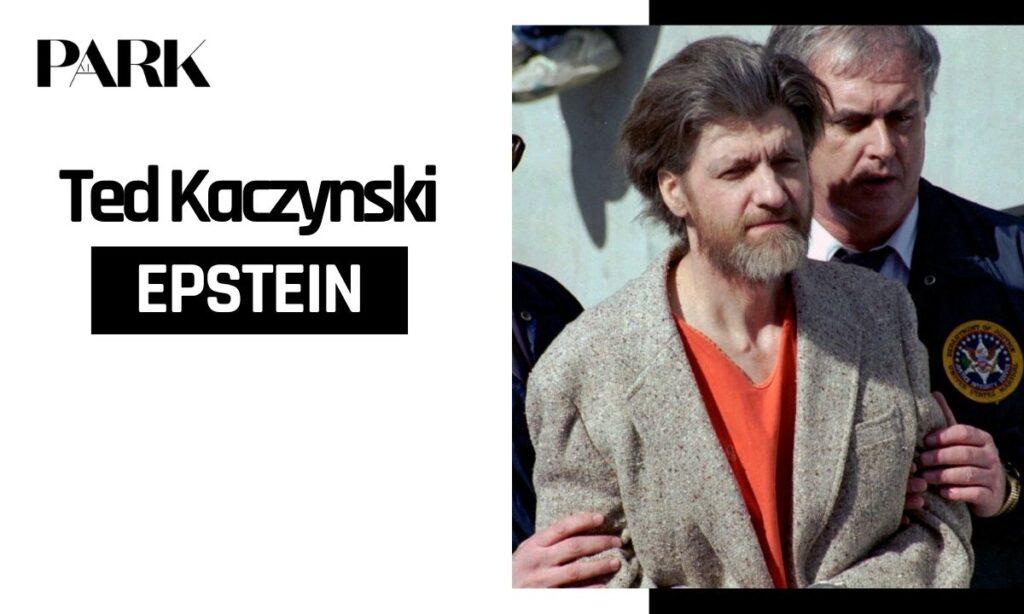
Ted Kaczynski Epstein: What the Names Actually Have To Do With Each Other
If you’ve searched “Ted Kaczynski Epstein,” you’ve probably landed here expecting some hidden link between the Unabomber and Jeffrey Epstein.
There isn’t one. What actually connects these names is a case of two completely different men who happen to share a surname: Charles Epstein, a UCSF geneticist who survived a Kaczynski mail bomb in 1993 and Jeffrey Epstein, the financier convicted of sex crimes who died in 2019.
This article lays out exactly who each person was, what really happened, and why the search engines keep mixing them up.
Quick Facts: Ted Kaczynski
| Detail | Information |
| Full name | Theodore John Kaczynski |
| Known as | The Unabomber |
| Born | May 22, 1942, Chicago, Illinois |
| Died | June 10, 2023 (age 81), Butner, North Carolina — ruled a suicide |
| Education | Harvard University (BA, mathematics, 1962); University of Michigan (MA, PhD, mathematics) |
| Career | Assistant professor of mathematics, UC Berkeley (1967–1969) |
| Crimes | 16 mail and package bombings between 1978 and 1995 |
| Victims | 3 killed, 23 injured |
| Manifesto | “Industrial Society and Its Future” (1995) |
| Arrested | April 3, 1996, near Lincoln, Montana |
| Sentence | Multiple life sentences without parole (1998 plea deal) |
Read More: Luigi Mangione GoFundMe
Who Was Ted Kaczynski?
Ted Kaczynski was a mathematics prodigy who became one of the most notorious domestic terrorists in American history. He entered Harvard at sixteen on scholarship, later earned a doctorate in mathematics from the University of Michigan, and by twenty five had become the youngest assistant professor ever hired by UC Berkeley’s math department. He resigned abruptly in 1969 and eventually moved into a small, deliberately primitive cabin near Lincoln, Montana, where he lived without electricity or running water.
Between 1978 and 1995, Kaczynski mailed or planted sixteen bombs targeting universities, airlines, and individuals connected to technology and industry, which is where the FBI codename UNABOM (University and Airline Bomber) came from. The attacks killed three people and injured twenty-three others.
In 1995, he sent a 35,000 word essay to major newspapers arguing that industrial society was destroying human freedom and demanding its publication in exchange for ending the bombings. That essay, “Industrial Society and Its Future,” became known as the Unabomber Manifesto, and its publication in The Washington Post ultimately led to his identification: his brother, David Kaczynski, recognized the writing style and alerted the FBI.
Kaczynski was arrested in April 1996 at his Montana cabin. He pleaded guilty in 1998 to avoid the death penalty and was sentenced to multiple consecutive life terms. He spent most of his imprisonment at the federal supermax facility in Florence, Colorado, before being transferred to a medical prison in Butner, North Carolina, where he died on June 10, 2023, in what officials ruled a suicide.
The Harvard Experiment and the “MK Ultra” Question
One detail that keeps resurfacing in searches about Kaczynski is his participation in a Harvard psychological study, sometimes linked in public discussion to the CIA’s MK Ultra program. As a Harvard undergraduate between 1959 and 1962, Kaczynski was one of about twenty two students who took part in a study run by psychologist Henry A. Murray. Participants wrote detailed essays about their personal beliefs, then were subjected to hours of aggressive, humiliating cross-examination designed to attack those beliefs, all while wired to monitors recording their physiological stress response.
Some researchers and journalists, including author Alston Chase, have argued the experience was traumatic enough to have shaped Kaczynski’s later psychology, though this remains a matter of historical debate rather than settled fact.
Murray had past ties to the Office of Strategic Services, the CIA’s WWII-era predecessor, and some reporting has connected his broader research interests to Cold War era behavioral studies of the kind associated with MK Ultra. It is accurate to say Kaczynski underwent a documented, ethically troubling Harvard study; it is not established fact that this was formally part of the MK Ultra program itself, and readers should treat strong claims either way with caution.
Who Was Charles Epstein?
This is the Epstein who actually belongs in the same sentence as Ted Kaczynski, and he has no relation whatsoever to Jeffrey Epstein.
Charles Jackson Epstein was a highly respected American medical geneticist. Born in Philadelphia in 1933, he trained at Harvard Medical School, where he graduated first in his class, and went on to a distinguished career at the University of California, San Francisco. He specialized in the genetics of Down syndrome, chaired major national genetics organizations, edited The American Journal of Human Genetics for seven years, and helped establish medical genetics as an accredited medical specialty in 1991.
On June 22, 1993, Epstein opened a package that had been mailed to his home in Tiburon, California. It exploded in his hands. He survived, but the blast tore off several fingers, caused serious internal injuries, and partially damaged his hearing. He was one of Kaczynski’s Unabomber victims, targeted, like several others, because of his prominence in a scientific field Kaczynski’s manifesto condemned as part of a dehumanizing technological society. Epstein continued his research career after recovering and died in 2011 at the age of 77, from causes unrelated to the attack.
Note: The same day Epstein was injured, Kaczynski also mailed a bomb to David Gelernter, a Yale computer scientist, who was severely wounded when he opened it at his office. Gelernter, too, survived and has written and spoken publicly about the attack. Like Charles Epstein, David Gelernter has no connection to Jeffrey Epstein; the overlap in search results is purely a matter of similar names and the same 1993 bombing spree.
Read More: Shirleen Allicot
Charles Epstein vs. Jeffrey Epstein: Two Unrelated Men
This is the comparison most searchers actually need, because the confusion between these two names is the entire reason “Ted Kaczynski Epstein” trends as a search term in the first place.
| Charles Epstein | Jeffrey Epstein | |
| Profession | Medical geneticist, UCSF | Financier |
| Public role | Researcher, physician, academic leader | Convicted sex offender |
| Connection to Kaczynski | Direct: injured by a Kaczynski mail bomb in 1993 | None documented |
| Born | 1933 | 1953 |
| Died | 2011, of unrelated causes | 2019, in federal custody, ruled a suicide |
| Relation to each other | None | None |
There is no verified evidence, in any court record, FBI documentation, or credible reporting, connecting Jeffrey Epstein to Ted Kaczynski in any way. No trial testimony, no released “Epstein files” material, and no law enforcement statement has established a link between the two.
The pairing that shows up in search results exists because of the shared surname with Charles Epstein and because “Epstein files” is currently one of the most heavily searched terms online, which pulls in loosely related queries through autocomplete and algorithmic suggestion rather than any factual connection.
Why Do “Ted Kaczynski” And “Epstein” Keep Showing Up Together In Searches?
There are two real, verifiable reasons these names appear side by side, and neither involves Jeffrey Epstein.
- The 1993 bombing itself. Charles Epstein was a named, well-documented victim of a Kaczynski mail bomb, so any thorough account of the Unabomber’s crimes legitimately mentions “Epstein” as one of his targets.
- Search demand collision. “Epstein files” is one of the most searched news terms of the past several years, and search engines and content sites often generate combined or suggested queries around trending surnames, which is likely how “Ted Kaczynski Epstein” started appearing as an autocomplete suggestion even though the underlying facts don’t connect the two Epsteins at all.
Timeline: Kaczynski, the Bombings, and the Epstein Attack
| Date | Event |
| May 22, 1942 | Ted Kaczynski born in Chicago |
| 1958 | Enters Harvard at age 16 |
| 1959–1962 | Participates in Henry Murray’s psychological study at Harvard |
| 1962 | Graduates from Harvard with a math degree |
| 1967 | Earns PhD in mathematics, University of Michigan |
| 1967–1969 | Assistant professor of mathematics, UC Berkeley |
| 1971 | Moves to a cabin near Lincoln, Montana |
| 1978 | First Unabom package bomb |
| June 22, 1993 | Mail bombs injure Charles Epstein and David Gelernter |
| 1995 | “Industrial Society and Its Future” published in The Washington Post |
| April 3, 1996 | Kaczynski arrested at his Montana cabin |
| 1998 | Pleads guilty; sentenced to multiple life terms |
| June 10, 2023 | Dies in federal custody in Butner, North Carolina |
Ted Kaczynski’s Cabin, IQ And Other Frequently Searched Details
The cabin. Kaczynski’s roughly ten by twelve foot plywood cabin near Lincoln, Montana had no electricity, plumbing, or running water. After his arrest, the FBI removed it as evidence, and it was later displayed at the Newseum in Washington, D.C. before being moved into federal storage.
His reported IQ. Various accounts describe Kaczynski as having tested in the highly gifted range as a child, though a precise, single verified score is not consistently documented across primary sources, and readers should be cautious about specific numbers that circulate online without clear sourcing.
Diagnosis. Court-appointed evaluators diagnosed Kaczynski with paranoid schizophrenia ahead of his 1998 plea hearing, a diagnosis Kaczynski himself publicly disputed.
Meme culture. In the years before his death, Kaczynski became an unlikely internet meme subject, often referenced in discussions about technology, isolation, and modern anxiety, separate from any endorsement of his crimes.
Books. Kaczynski authored “Industrial Society and Its Future” (1995) and later expanded his ideas in “Technological Slavery” (2010) and “Anti-Tech Revolution: Why and How” (2016), both published after his imprisonment.
Read More: Kaity Tong
Frequently Asked Questions
Is Ted Kaczynski connected to Jeffrey Epstein?
No. There is no documented connection. The confusion comes from Charles Epstein, an unrelated man Kaczynski injured in a 1993 bombing.
Is Ted Kaczynski still alive?
No. He died on June 10, 2023, in a federal prison medical facility in Butner, North Carolina, in a death officials ruled a suicide.
How did Ted Kaczynski die?
He was found dead in his cell; the death was ruled a suicide by authorities.
How many people did Ted Kaczynski kill?
Three people were killed and twenty three others were injured across his bombing campaign from 1978 to 1995.
Where did Ted Kaczynski go to college?
He attended Harvard University for his undergraduate degree and the University of Michigan for his master’s and doctorate.
What was Ted Kaczynski’s manifesto called?
“Industrial Society and Its Future,” commonly known as the Unabomber Manifesto, published in 1995.
Who was Charles Epstein?
A UCSF medical geneticist injured by a Kaczynski mail bomb in June 1993; he had no relation to Jeffrey Epstein.
Did Ted Kaczynski target Jeffrey Epstein?
No. Kaczynski’s documented victims did not include Jeffrey Epstein.
What is the “Epstein files” connection to Kaczynski?
There isn’t a factual one. The pairing largely reflects overlapping search trends rather than any real link between the two Epsteins.
Where is Ted Kaczynski’s cabin now?
It was seized as FBI evidence, later displayed at the Newseum, and is now held in federal storage.
The Bottom Line
The honest answer to “Ted Kaczynski Epstein” is that the connection people are searching for doesn’t exist between Kaczynski and Jeffrey Epstein. The real, documented link is to Charles Epstein, a UCSF geneticist who survived one of Kaczynski’s mail bombs in 1993 and went on to a long career before he died in 2011. Keeping these two very different Epsteins straight matters, because conflating them spreads a false connection that no court record, investigation, or credible source supports.