Private-Label Lab-Grown Jewelry: Questions to Ask an OEM Partner
Private-label jewelry lets a brand grow its collection without building every production capability in-house. It can also create real risk once the brand’s specifications, design files, documentation, and customer promises stop lining up with the manufacturer’s actual process. The NUVU OEM team often starts new brand conversations by working through exactly these gaps before a single sample is produced.
The right OEM conversation should cover more than a catalog and a price list. It should explain how an idea actually becomes a repeatable product, order after order.
Can the Partner Understand the Brand Brief?
Start with the target customer, design language, price position, sales channel, and quality standard. A capable partner should be able to translate that brief into stone specifications, metal requirements, finish, packaging, and inspection steps without needing everything spelled out twice.
A product that looks attractive in a single sample can still be the wrong fit if its dimensions, packaging, lead time, or documentation do not match the brand’s actual market. A nice photo is not the same thing as a production ready design.
How Are Design Files Controlled?
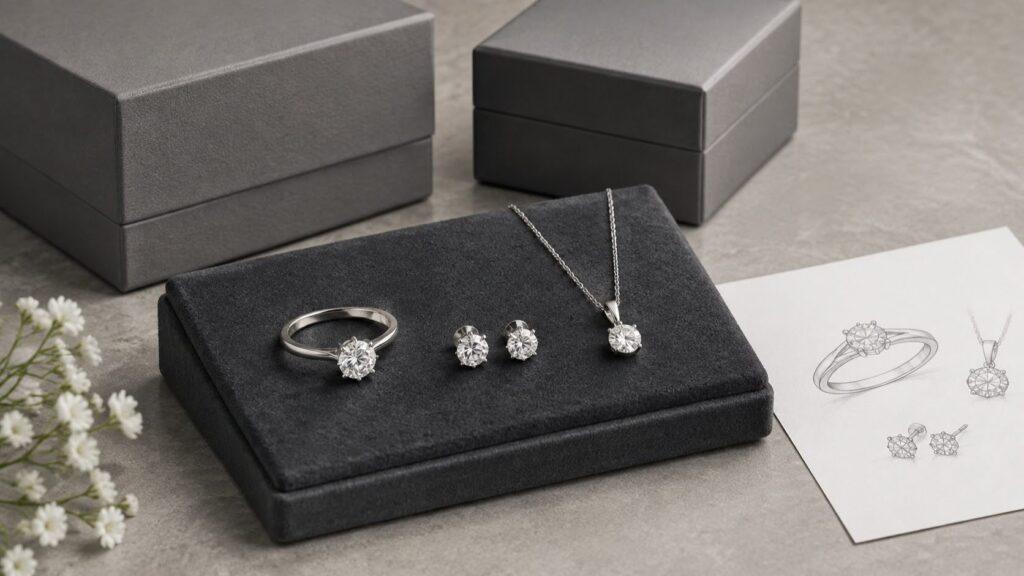
Ask how sketches, CAD files, measurements, revisions, and final approvals get stored. Confirm which version gets used for production and how changes are documented along the way. A small, unrecorded revision can quietly affect stone size, metal weight, setting height, or the final cost without anyone noticing until the invoice arrives. For a deeper look at how this process is typically structured, the private-label and OEM page walks through the file control steps a serious partner should already have in place.
For a full collection, keep a product specification sheet for every single style. Include approved images, materials, stone requirements, sizes, finish, logo placement, packaging, and tolerance notes for each one.
A specification sheet worth keeping includes the following details
- Approved product images and materials list
- Stone requirements and acceptable size range
- Metal type, finish, and logo placement
- Packaging specifications and tolerance notes
How Are Stones Selected and Documented?
The OEM partner should be able to explain exactly how lab-grown diamonds are sourced, selected, matched, and documented from start to finish. Ask whether the report or origin information belongs to each individual center stone, whether treatments are disclosed anywhere, and how accent stones get controlled across a batch.
If the brand sells a product as laboratory-grown, that wording needs to stay consistent across the product page, invoice, packaging, and anything customer support sends out. A mismatch between even one of those touchpoints can turn into a credibility problem later.
What Happens During Sampling?
A sample should test the production process itself, not just confirm the visual idea looks nice in person. Review the sample for stone security, symmetry, polish, engraving, metal finish, packaging, size, and fit before signing off on anything.
If a sample gets approved with exceptions, write those exceptions down before bulk production starts, not after a shipment arrives looking different than expected. Ask how the partner handles rejected samples, replacement components, and any changes that could push back the agreed delivery date. A clear, specific answer here is worth far more than a vague promise of flexibility.
What Happens on Repeat Orders?
Private-label programs live or die on consistency. Define clearly what must stay exactly the same and what is allowed to shift slightly with material availability. A useful repeat order standard covers measurements, stone ranges, report expectations, finish, packaging, and approval photos for comparison.
Also settle how minimum order quantity, lead time, substitutions, and rush requests get handled on future orders. These terms should be written in plain enough language that a brand’s purchasing and customer service teams can actually use them without calling the factory every time.
Write down the repeat order rules before the second batch ships
- What must stay identical across every production run
- Acceptable stone ranges and report expectations
- How substitutions and rush requests are handled
- Approval photos kept on file for future comparison
Watch for Answers That Sound Good but Say Nothing
Some of the clearest signals in an OEM conversation come from how a partner answers, not just what they answer. A manufacturer who responds to a specific question with a general reassurance about quality or experience is often avoiding something they cannot actually document yet.
Pay attention when a partner hesitates to put process details in writing, or when every answer routes back to trust rather than a specification sheet, a sample, or a written procedure. A good partner will usually welcome detailed questions, because detailed questions are exactly what prevents costly misunderstandings once production scales up.
Put the Agreement in Writing Before Scaling Up
None of these conversations matter much if the answers only exist as verbal assurances from a sales call. Once a brand and an OEM partner agree on specifications, sampling standards, and repeat order rules, those details belong in a written agreement both sides can reference later.
This matters most when a brand moves from a small first order into a larger ongoing relationship. Early flexibility that felt helpful during the sample stage can turn into inconsistency once volume increases, unless the agreed standards were written down clearly from the start.
Build the Relationship on Shared Responsibility
A reliable private-label relationship comes down to clear files, measurable quality, realistic timing, and shared responsibility for the final customer experience. None of that happens automatically just because a factory has good equipment or a polished catalog.
The goal of every one of these questions is the same. Settle the decisions that matter before the product gets marketed, not after a customer notices something does not match what was promised.
Frequently Asked Questions
What is the difference between OEM and private-label jewelry manufacturing?
OEM production builds a product to the brand’s own design, while private-label often lets a brand sell an existing design under its own name with minor customization.
What should be included in a jewelry product specification sheet?
It should include approved images, materials, stone requirements, sizes, finish, logo placement, packaging, and any tolerance notes for that style.
How can a brand confirm an OEM partner’s stone sourcing is accurate?
Ask whether report or origin information is tied to each specific center stone and whether any treatments have been disclosed in writing.
What should happen if a sample is approved with exceptions?
Those exceptions should be written down and confirmed with the partner before bulk production starts, not discovered later in the finished order.
Why do repeat orders need their own written standard?
Without a written standard, small details like stone size or finish can drift between production runs, which creates inconsistency across the collection over time.
Also read: Are Lab Grown Engagement Rings Right for You? Discover Here?