ADU Cost Los Angeles: A Complete Guide To Planning Your Budget
Searching for the cost of an ADU in Los Angeles can be confusing. One website may show a low price, while another shows a much higher one. Often, neither explains what the price includes. Without clear information, it can be hard to know how much money you need or whether you are ready to start your project.
This confusion becomes easier to manage when you break your ADU budget into simple parts. When you understand what affects the price, what an estimate includes, and when payments are due, you can plan with more confidence. This can also help you find missing costs in a quote before they become expensive surprises.
This article explains each step of planning your ADU budget, from the first price range to a final plan with extra money set aside.
1. Know The Typical ADU Cost in Los Angeles
Understanding ADU cost Los Angeles starts with knowing what type of ADU you want to build.
Starting rates are $350 per square foot for a garage conversion, $403 per square foot for a new one-story ADU, and $435 per square foot for a two-story ADU. Your final cost may be higher, so use these as starting points.
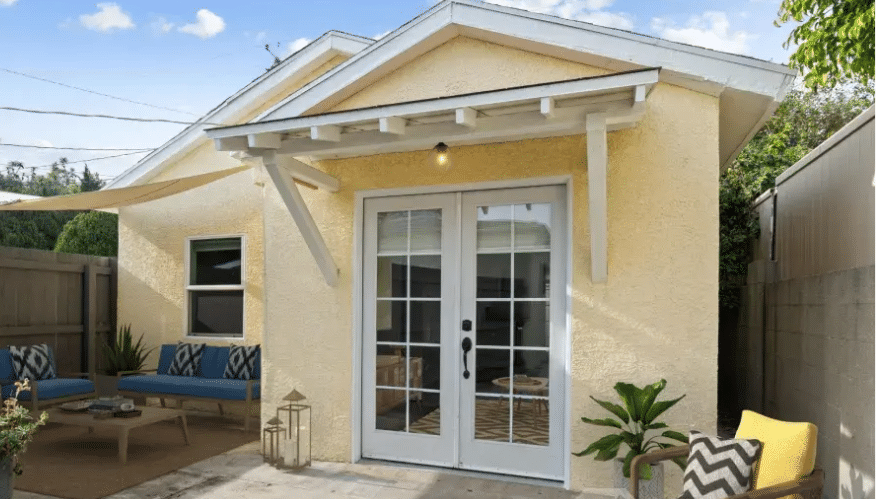
Garage conversions are usually less expensive because the walls and foundation are already there. New ADUs cost more because the builder must create the foundation and build all the walls. A second-story ADU can cost even more because it needs additional structural work.
These numbers give you a useful starting point and can help you identify a quote that seems too low to include everything. Once you have a rough price, you can better understand what may increase or decrease the cost.
2. Understand What Drives ADU Pricing
Once you have a general price range, it helps to understand what can change the cost. In Los Angeles, four main factors usually have the biggest effect on your total price.
- Unit size. Larger ADUs need more materials, labor, and time to build.
- Site conditions. Hillside properties, limited access, and utility upgrades can add extra work and cost.
- City fees. Permit, plan review, and school fees can vary from one city to another.
- Finish level. Basic, custom, and luxury finishes all have different costs.
Some of these factors are within your control, while others are not. Knowing the difference can help you make better choices. For example, a simple layout with basic finishes will usually cost less than a fully custom design. Small choices can add up across the entire project, so it is important to choose carefully.
3. Check What Your Estimate Covers
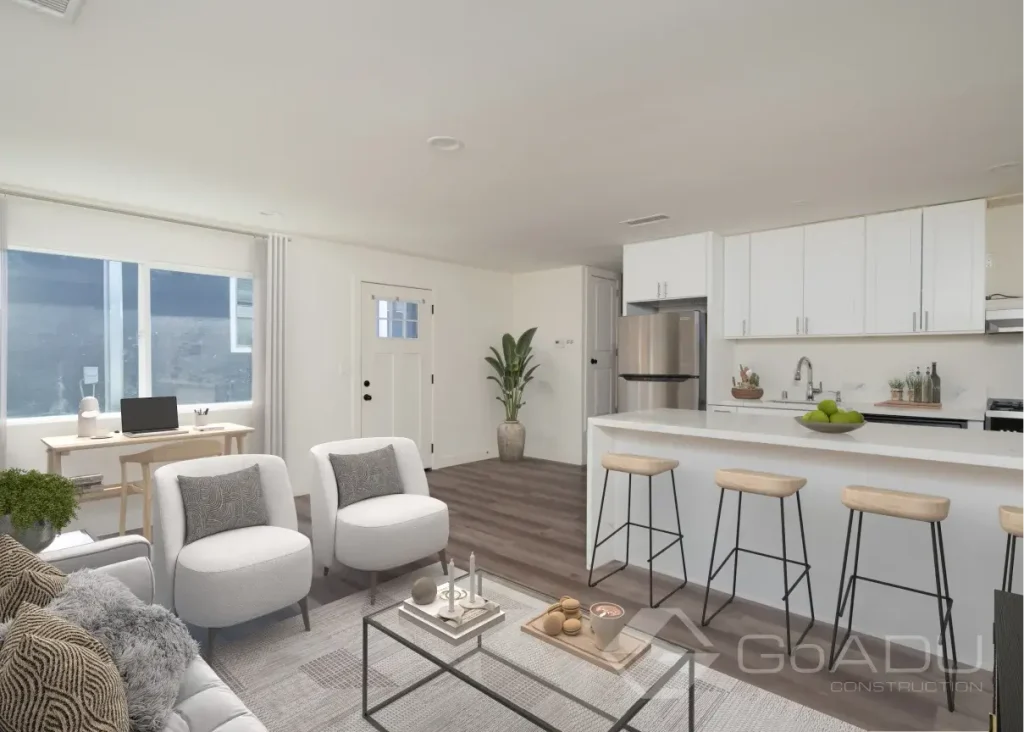
A low quote may leave out important costs, so check what the estimate actually includes. Look for design, engineering, sending plans to the city, construction, new sewer and water lines, electrical work, heating and cooling, and finishes. When every item is listed, it is easier to compare different quotes.
Some costs may not be included, so plan for them separately. In the Los Angeles area, permit, impact, and school fees are paid to the city and can vary by location. Appliances, landscaping, furniture, and a soils report or survey, if needed, may also be left out.
Ask for a written estimate that clearly lists every item. If you do not understand a line item, ask the builder what it includes and what it does not include. Getting clear answers early can help you avoid unexpected bills later.
4. Plan Around the Payment Schedule
After you understand the total price, you also need to plan when payments are due. Payments are made at different project stages, so you do not have to pay the full amount at once. You start with $1,000 or 10% of the contract, whichever is less.
If your plans are ready to issue, the rest of the balance is paid in five parts. This includes 25% for demolition and foundation, 20% for framing, 20% at rough inspection, 20% for drywall, and 15% at final inspection. If you need plans drawn, the payment schedule changes. In that case, 10% is due at the design meeting and 5% when the plans are sent to the city.
Knowing the payment schedule helps you prepare your money ahead of time. You can set aside funds before each stage instead of finding the money at the last minute. It also helps you understand how much progress should happen before each payment.
5. Build Your Budget with Some Extra Room
A good budget starts with a realistic price range and includes extra money for unexpected costs. Use a cost calculator to get a starting range based on your ADU type, size, and finishes. After that, schedule a site evaluation. A real site visit can give you a more accurate price than an online calculator.
Also consider funds for expenses that may not be included, such as appliances and city fees. Every property in Los Angeles is different, so having a cushion can help cover unexpected problems. Keeping this money separate can help ensure a small issue does not stop your project.
Finally, ask for a detailed written estimate and compare it with your budget. If the numbers match, you can move forward with a better understanding of what to expect. If they do not, you still have time to make changes before construction begins.
Conclusion
Planning an ADU budget in Los Angeles does not have to be stressful. Taking it one step at a time can make the process easier. The more you understand each part of the cost, the more control you have over your final budget. Soon, the numbers can feel less confusing and more like a clear plan.
Take your time when speaking with builders, and ask about anything you do not understand. The right partner should answer your questions clearly and without pressure. With that kind of support, you can start your ADU project feeling prepared instead of rushed.