Rosacea Treatment: Why the Redness Keeps Coming Back and What Controls It
Quick Answer: Rosacea is a chronic inflammatory skin condition, not a sensitivity you outgrow. It can be controlled but not cured. The most effective plans pair prescription treatment for bumps and flushing with vascular laser or light therapy for persistent redness and visible vessels, plus trigger management and daily mineral sun protection.
Most people living with rosacea have tried to treat it like acne or sensitive skin, and many have made it worse in the process. Scrubs, strong acids, and alcohol-based toners inflame a skin barrier that is already reactive. Rosacea behaves differently from both conditions. It involves blood vessels that dilate too easily, an immune response that overreacts, and a skin barrier that loses moisture quickly. Treating it well means addressing each of those, not just calming the surface for a week.
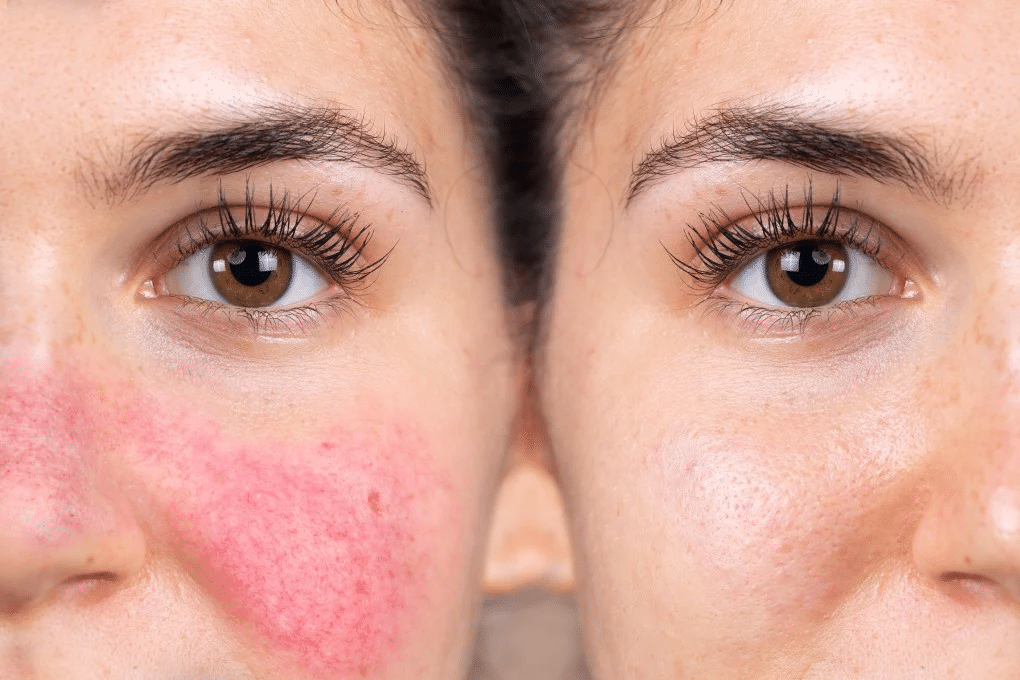
What does rosacea look like?
Rosacea symptoms are more than a red face. Most people show a mix of features, which is why dermatologists now diagnose rosacea by the specific signs a person has rather than by a single label. Common features include:
• Persistent redness across the central face, especially the cheeks and nose
• Flushing that comes and goes, often with heat or emotion
• Small visible blood vessels, called telangiectasia
• Acne-like bumps and pustules without blackheads
• Burning, stinging, or a tight, dry feeling
• Thickening skin, most often on the nose, which is more common in men
• Dry, gritty, or irritated eyes and eyelids
That missing blackhead is a useful clue. Acne forms clogged pores; rosacea bumps are inflammatory and appear without them. The eye symptoms matter too, since ocular rosacea is common and frequently missed.
The four types of rosacea
The four classic types are still a useful way to understand how rosacea shows up, and many physicians use them to explain treatment choices.
- Erythematotelangiectatic rosacea or vascular rosacea: persistent central redness, flushing, and visible blood vessels, often with sensitive, stinging skin
- Papulopustular rosacea: redness with acne-like bumps and pustules, the type most often mistaken for adult acne
- Phymatous rosacea: thickened, uneven skin, most often on the nose, and far more common in men
- Ocular rosacea: dry, gritty, or burning eyes and swollen eyelids, which can appear before any skin symptoms
The type points to the treatment. Redness and visible vessels respond best to laser and light therapy, bumps respond to topical and oral medication, thickening usually needs resurfacing or surgery, and eye symptoms call for an eye exam.
Rosacea most often appears after age 30 and is diagnosed more frequently in people with fair skin. It occurs in every skin tone, however, and is likely underdiagnosed in darker skin, where redness is harder to see and may show up as dusky brown or purple patches instead.
Why do flares happen?
Flares are triggered, and the triggers vary from person to person. The usual suspects are sun exposure, heat, hot drinks, spicy food, alcohol (red wine in particular for many people), emotional stress, intense exercise, wind, and cold. Skincare ingredients are a major and overlooked cause. Researchers have also linked higher densities of Demodex, a mite that lives naturally on human skin, to inflammatory rosacea, which is part of why certain topical treatments work.
Knowing your own triggers is more useful than avoiding every item on a generic list. Many people cut out foods they enjoy while continuing to use the fragranced moisturizer that is actually driving their flares. A simple test is to change one variable at a time for two weeks, such as switching to lukewarm drinks or removing a single product, and watch whether flushing changes.
Medical treatment for bumps and flushing
Prescription topicals are the foundation for inflammatory rosacea treatment. Metronidazole, azelaic acid, and ivermectin cream all reduce bumps and pustules, with ivermectin also targeting Demodex. Most need eight to twelve weeks of consistent use before you can judge whether they are working, so stopping at week three is one of the most common reasons treatment appears to fail.
For background redness, topical brimonidine and oxymetazoline constrict surface blood vessels. The effect is temporary, lasting hours rather than days, and some people notice rebound redness when it wears off. For moderate to severe bumps, a physician may prescribe low-dose oral doxycycline, which works through an anti-inflammatory effect rather than as a traditional antibiotic. Severe or thickening cases sometimes call for low-dose isotretinoin under close supervision.
One thing to avoid entirely: topical steroid creams on the face. They may calm redness briefly, but long-term use can trigger or worsen rosacea.
Laser and light therapy for persistent redness
Medications reduce inflammation, but they do not remove blood vessels that are already visible. That is where vascular lasers and intense pulsed light come in. These devices target the pigment in blood, heating and collapsing enlarged vessels so the body gradually clears them.
Laser and light treatment works best once inflammation is under control, so many physicians start topical or oral treatment first and add vascular treatment after the bumps have settled. Most patients need a series of three to five sessions spaced about four weeks apart. Expect mild swelling and redness for a few days after each session; some settings can cause temporary bruising. Results are often significant, but new vessels can form over time, so many patients return for maintenance once or twice a year. Many clinicians prefer scheduling light-based treatment in cooler months, when sun exposure is lower, and the skin recovers with less risk of irritation. Thickened skin on the nose is handled differently, typically with ablative laser resurfacing or surgical recontouring.
Daily skincare that helps rather than hurts
• Use a gentle, non-foaming cleanser with lukewarm water
• Apply a fragrance-free moisturizer to support the skin barrier
• Wear a mineral sunscreen with zinc oxide or titanium dioxide, SPF 30 or higher, every day
• Avoid menthol, camphor, witch hazel, alcohol, and physical scrubs
• Introduce one new product at a time and patch test it on the jawline for several days
When should you see a dermatologist?
See a board-certified dermatologist if redness has not improved after three months of consistent care, if flares are frequent, if the skin on your nose is thickening, or if you have eye symptoms. Diagnosis matters as well. Seborrheic dermatitis, contact dermatitis, steroid-induced redness, and lupus can all resemble rosacea, and each is treated differently.
Track a month before your appointment
Spend four weeks taking a photo each morning in the same light, and note what you ate, the weather, your stress level, and any product you used. Bring that record to your appointment. A month of documented patterns tells a physician more about your triggers than any description from memory, and it gives you a baseline to judge whether the treatment plan is working.