How Aviation Accident Investigations Determine What Went Wrong
An aviation accident investigation works backward from wreckage to cause, using recorded data, physical evidence, and human factors to rebuild the final minutes of a flight. The goal is to find what failed and why, not to assign blame to anyone.
That distinction shapes the entire process. Investigators operate under rules written to improve safety, so their findings answer safety questions rather than legal ones.
Families and companies dealing with the aftermath usually need answers on a different track. Firms with experience handling serious aviation accident lawsuits build a parallel record while the federal work continues. The sections below explain how the official investigation runs and where its limits sit.
Two Agencies with Different Assignments
The National Transportation Safety Board leads civil aviation accident investigations under 49 U.S.C. section 1131. It determines a probable cause and issues safety recommendations meant to prevent the next accident.
The Federal Aviation Administration participates but carries a separate assignment. It examines regulatory compliance, certification, and whether enforcement action against a pilot, mechanic, or operator is warranted.
Neither agency decides liability. These are fact-finding proceedings with no adverse parties, and they are not conducted to establish anyone’s legal rights.
The First Hours on the Ground
Notification happens immediately. Operators must report the accident to the Board right away, and wreckage cannot be moved or disturbed except to protect life, rescue survivors, or prevent further damage.
A go-team then deploys with specialists divided into working groups. Operations, structures, powerplants, systems, air traffic control, weather, human performance, and survival factors each get their own group.
Who Gets Inside the Investigation
Access is deliberately narrow. The Board designates parties, usually the operator, the airframe and engine manufacturers, and relevant labor unions, because it needs their technical knowledge to move quickly.
One category is excluded outright. Under 49 C.F.R. section 831.11, no party representative may occupy a legal position or represent claimants or insurers, which keeps litigants away from evidence as it is first handled.
How the Sequence Gets Rebuilt
Investigators do not begin with a theory. They assemble a timeline from independent sources and see which explanations survive contact with all of them.
The Recorders
The flight data recorder captures hundreds of parameters, including altitude, airspeed, control positions, and engine settings. The cockpit voice recorder captures crew conversation, alarms, and ambient sounds in the flight deck.
Both are read out at the Board’s laboratory. Aligning the two timelines often reveals what the crew understood and at what moment they understood it.
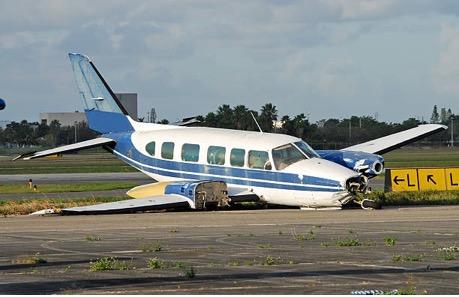
The Wreckage
Physical evidence answers questions data cannot. Fracture surfaces show whether a part broke before impact or during it, and soot patterns, control cable positions, and propeller damage each tell a specific story.
Maintenance logs sit alongside the metal itself. A repair record can explain a fracture that looks random until its history is known.
Why Pilot Error Is Rarely the Whole Answer
Human performance work looks past the final decision. Investigators examine duty schedules, training records, fatigue, checklist design, and how systems present information under pressure.
A single error almost always has a wider setting. The real question is why a trained crew made that choice given the information available to them in that moment.
What the Final Report Can and Cannot Do
A preliminary report usually appears within about a month. The final report carrying a probable cause statement often takes a year or longer, which is far slower than any legal deadline.
- It names a probable cause along with contributing factors.
- It issues safety recommendations to regulators and manufacturers.
- It does not assign fault, negligence, or damages to anyone.
- Under 49 U.S.C. section 1154(b), no part of the Board’s report may be admitted into evidence in a civil damages action.
- Courts treat underlying factual material gathered during the investigation differently from the report itself.
Key Takeaways
- The Safety Board finds probable cause while the aviation regulator handles compliance.
- Investigations are fact-finding exercises, not liability determinations.
- Wreckage must be preserved until investigators release it.
- Claimant and insurer representatives cannot hold party status.
- Recorder data and physical evidence are cross-checked against each other.
- Final reports commonly take a year or more to publish.
- The Board’s report cannot be entered as evidence in a damages case.