Alternative Financial Strategies to Pay Down Debt and Save for Real Estate Investing
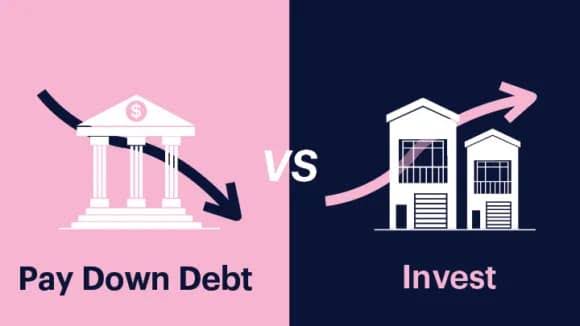
Paying off existing debt and saving for a real estate investment often feel like they’re competing for the same limited dollars each month. Conventional advice tends to treat these as sequential goals: eliminate debt first, then start saving toward a down payment. But several alternative strategies allow these two goals to move forward simultaneously, using existing income more efficiently rather than requiring a strict either-or approach.
Rethinking the Debt-First Assumption
The traditional wisdom of eliminating all debt before investing makes sense in many situations, particularly with high-interest consumer debt. But for lower-interest debt like a mortgage, some strategies focus on restructuring how debt is paid down rather than simply accelerating payments through extra cash, freeing up capital that can be redirected toward real estate investing sooner than a strict debt-first approach would allow.
Two strategies come up often in this conversation: velocity banking and infinite banking. Comparing velocity banking vs infinite banking helps clarify which approach fits a given financial situation, since the two work through fundamentally different mechanisms despite both being framed as alternatives to conventional debt payoff and saving methods.
How Velocity Banking Accelerates Debt Payoff
Velocity banking uses a line of credit, typically a home equity line of credit, as a tool to reduce the average daily balance on a mortgage or other debt. Income is deposited directly into the line of credit, temporarily lowering the balance and the interest accruing on it, while expenses are paid from that same line throughout the month. Because interest is calculated on the average daily balance, this approach can meaningfully shorten a debt payoff timeline compared to a standard amortization schedule.
For someone planning to invest in real estate, the appeal of velocity banking is straightforward: paying off existing debt faster frees up monthly cash flow sooner, and that freed-up income can then be redirected toward saving for a down payment or building capital reserves for a future property. The tradeoff is that this strategy requires consistent cash flow management and qualifying for a line of credit with sufficient equity and favorable terms, which isn’t accessible to everyone at every stage of homeownership.
How Infinite Banking Builds a Parallel Capital Source
Infinite banking takes a different approach entirely. Rather than restructuring existing debt, it involves building cash value inside a specially designed whole life insurance policy, which can later be borrowed against for any purpose, including a real estate down payment or renovation costs on an investment property. The original cash value continues growing even while a policy loan is outstanding, meaning the capital effectively works in two places at once.
Unlike velocity banking, infinite banking doesn’t directly accelerate the payoff of existing debt. Instead, it creates a separate, growing pool of capital over time that eventually becomes available for real estate investing without needing to liquidate other assets or qualify for a new loan when the opportunity arises. This makes it a longer-term play, since cash value accumulation is gradual, particularly in a policy’s early years, but it offers more flexibility in how the eventual capital gets used compared to a line of credit tied specifically to home equity.
Combining Approaches for a Faster Path to Real Estate
Some investors use both strategies in tandem rather than choosing one exclusively. Velocity banking can accelerate payoff of an existing mortgage or other debt, freeing up monthly income sooner, while a portion of that freed-up cash flow gets redirected into funding a whole life policy for infinite banking. Over time, this creates two complementary outcomes: reduced debt sooner than a traditional payoff schedule would allow, and a growing, accessible pool of capital that can fund a real estate purchase without needing to wait for the debt to be completely eliminated first.
This combined approach requires more active financial management than either strategy used alone, along with a clear understanding of cash flow, since funds are being directed toward both debt reduction and policy funding rather than one focused goal. Working with a financial professional who understands both mechanisms can help determine the right balance based on income stability, existing debt levels, and how soon a real estate purchase is realistically anticipated.
Choosing the Right Combination for Real Estate Goals
Neither velocity banking nor infinite banking is inherently superior, since they solve different parts of the same broader problem. Velocity banking directly attacks existing debt using cash flow efficiency, while infinite banking builds a new, flexible capital source over time. For investors with significant home equity and disciplined cash flow habits, velocity banking may offer the faster near-term payoff. For those with a longer investment timeline and interest in a capital source that isn’t tied to home equity or a variable interest rate, infinite banking may be the better long-term fit.
As with any strategy involving lines of credit, insurance products, or real estate investment planning, working with qualified financial professionals is an important step before implementation. The right combination depends on individual debt levels, income stability, and how soon a real estate opportunity is expected to materialize.