Metal Roofing Guide: Materials, Styles, Installation, Maintenance, Repair and Replacement
A roof is one of the most important investments a property owner can make. It protects the structure from rain, wind, sunlight, snow, temperature changes, and other environmental conditions while also contributing to the appearance, comfort, and energy performance of the building. Among the many roofing options available today, metal roofing has become a popular choice because of its durability, versatility, and range of available styles. With proper design, quality materials, professional installation, and regular maintenance, a metal roof can provide dependable protection for many years.
Choosing a roofing system requires more than selecting a material based on appearance alone. Property owners need to consider the building’s design, roof slope, climate, budget, maintenance expectations, insulation, drainage, and desired service life. Metal roofing can be suitable for many different applications, but its performance depends heavily on choosing the right product and ensuring that it is installed correctly.
Understanding the characteristics of metal roofs can help homeowners and property managers make better decisions. From material selection and installation methods to maintenance and common concerns, there are several factors worth considering before starting a roofing project.
Understanding Metal Roofing
Metal roofing refers to roofing systems made from metal panels, sheets, tiles, or other formed components. Different products are manufactured using materials such as steel, aluminum, copper, and zinc. These materials can be shaped into a variety of profiles, allowing metal roofs to complement traditional, contemporary, industrial, and other architectural styles.
Modern metal roofing systems are considerably different from older metal roofs that may have been associated with a limited industrial appearance. Today, manufacturers offer numerous colors, textures, finishes, and panel profiles. Some products are designed to resemble shingles, slate, or tile while retaining many of the characteristics associated with metal construction.
A metal roof may be installed as a new roofing system or used when replacing an existing roof, depending on the building and the selected product. Professional evaluation is important because the structure, existing roofing materials, and installation requirements all need to be considered before work begins.
Why Property Owners Choose Metal Roofs
One of the main reasons people choose metal roofs is their durability. Quality metal roofing materials are designed to withstand exposure to changing weather conditions and can provide a long service life when properly maintained.
Metal is also available in lightweight configurations, particularly when compared with some traditional roofing materials. The actual weight depends on the product, thickness, profile, and construction, so structural considerations should still be evaluated before installation.
Another advantage is design flexibility. Metal panels can be manufactured in many colors and profiles, allowing property owners to select a style that complements the architecture.
Energy performance is another consideration. Certain metal roofing systems can reflect a portion of solar radiation, potentially reducing heat absorption under appropriate conditions. The overall energy performance of the building still depends on insulation, ventilation, roof assembly, windows, and other factors.
Different Types of Metal Roofing
Several types of metal are commonly used for roofing applications. Steel is one of the most widely available choices because it can provide strength, durability, and a range of finishes at different price points. Protective coatings can help steel resist corrosion and environmental exposure.
Aluminum is another popular option. It naturally resists corrosion and can be particularly useful in environments where moisture and exposure to corrosive conditions are concerns. Aluminum is also relatively lightweight and can be formed into different profiles.
Copper offers a distinctive appearance and develops a natural patina over time. It is often selected for architectural features where appearance and longevity are major considerations. However, copper can be more expensive than many other metal roofing options.
Zinc is another premium material known for its durability and ability to develop a natural protective surface over time. It can provide a sophisticated architectural appearance but generally requires specialized knowledge and installation.
The best material depends on the property’s environment, design, budget, maintenance expectations, and desired appearance.
Common Metal Roof Profiles
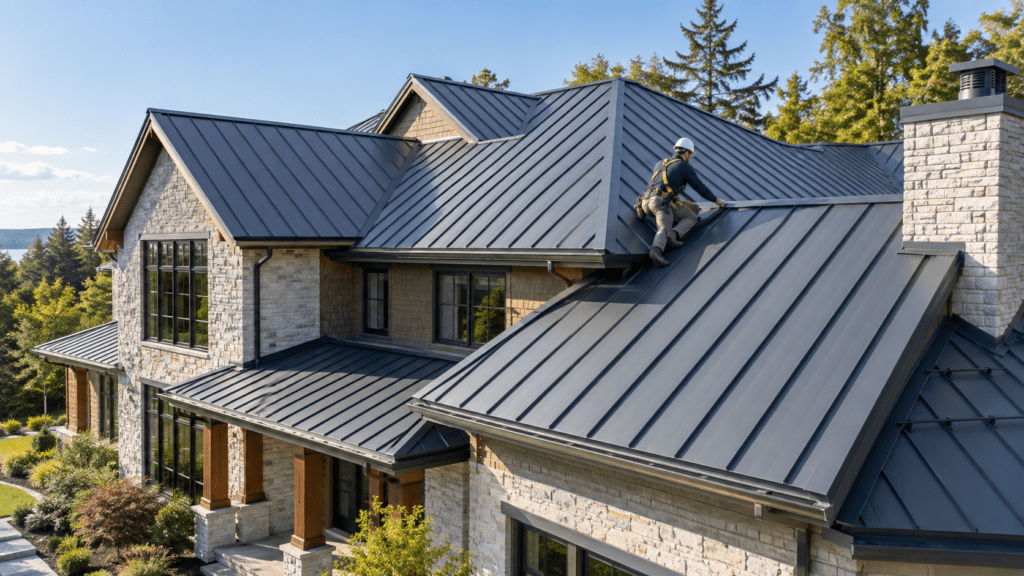
Metal roofing is available in several panel styles. Standing seam systems feature raised seams that connect adjacent panels while minimizing exposed fasteners. This creates a clean appearance and can provide effective protection when installed according to manufacturer specifications.
Exposed-fastener panels use fasteners that remain visible on the roof surface. These systems can be economical and are commonly used in certain residential, agricultural, commercial, and utility applications. However, the fasteners and washers require appropriate installation and maintenance.
Metal panels can also be manufactured to resemble traditional roofing materials. Metal shingles and tile-style products can provide a more familiar architectural appearance while offering the characteristics of metal construction.The appropriate profile depends on roof design, installation requirements, budget, appearance, and environmental conditions.
Durability and Weather Resistance
A major benefit of metal roofing is its ability to withstand many forms of weather exposure. Properly selected and installed metal systems can resist wind, rain, and other environmental stresses.
The exact performance depends on the product and installation. Panel thickness, fastening methods, seam design, coatings, flashing, and roof structure all influence how the system responds to severe weather.
No roofing material is completely immune to damage. Severe storms, falling branches, hail, improper maintenance, or impact from equipment can affect metal panels. Regular inspections can help identify dents, loose components, damaged coatings, and other issues before they become more significant.Professional installation is particularly important in areas exposed to strong winds because panel attachment and edge details must be properly designed.
Energy Efficiency Considerations
Metal roofs can contribute to energy performance when used as part of an appropriately designed building envelope. Some coatings and finishes are formulated to reflect more solar energy than darker or less reflective surfaces.
However, roofing material alone does not determine a building’s energy efficiency. Insulation, ventilation, air sealing, windows, doors, HVAC equipment, and interior conditions all influence energy consumption.
During a roof replacement or new construction project, property owners may want to evaluate the entire roof assembly rather than focusing only on the exterior material. Proper insulation can help reduce heat transfer, while appropriate ventilation can help manage moisture and temperature within the roof system.A roofing professional can explain which options are compatible with the building and its energy-performance goals.
Installation Requires Professional Attention
Although metal panels may look straightforward, proper installation requires attention to many details. Panels need to be aligned correctly, fasteners must be installed according to specifications, and seams and transitions must be properly handled.
Flashing is especially important around chimneys, skylights, vents, walls, valleys, and other penetrations. These areas can become potential water-entry points if they are not properly detailed.
Thermal movement should also be considered because metal expands and contracts as temperatures change. The roofing system should be designed and installed to accommodate this movement without compromising its performance.A qualified installer should follow the manufacturer’s requirements and use appropriate components. Mixing incompatible materials or using incorrect fasteners can create corrosion or other long-term problems.
Before installation begins, the existing roof should be evaluated carefully. The contractor should determine whether the current roofing materials need to be removed and whether the underlying deck is in suitable condition.
If moisture has damaged the roof deck, those areas may need to be repaired or replaced before the new system is installed. Installing new panels over a compromised substrate can lead to future problems.
The project should also address insulation, underlayment, ventilation, flashing, drainage, and edge details. These components contribute to the overall performance of the roofing assembly.Property owners should receive a clear explanation of the proposed work, including what will happen to existing materials and how unexpected conditions will be handled.
Maintenance Requirements
Although metal roofs are often associated with low maintenance, they should not be completely neglected. Regular inspections can help identify issues before they develop into expensive repairs.
Debris should be removed when necessary, particularly if leaves and branches accumulate around drainage areas. Gutters, downspouts, valleys, and other drainage components should remain clear so water can move away from the roof efficiently.Fasteners should be inspected on systems where they are exposed. Over time, movement and weather exposure can affect fasteners and washers. Damaged or deteriorated components may need replacement.
The roof surface should also be examined for scratches, dents, corrosion, damaged coatings, or other signs of deterioration. Problems should be addressed according to the manufacturer’s recommendations.
Corrosion is an important consideration for certain metal roofing materials. Protective coatings and finishes can help protect the underlying metal, but damage to those coatings should be addressed.Contact with incompatible metals can sometimes create galvanic corrosion. This is one reason it is important to use compatible fasteners, flashing materials, and accessories.
Standing water can also increase the risk of deterioration in vulnerable situations. Proper drainage is therefore essential.Regular inspections can help identify early signs of corrosion. Addressing small areas of damage may prevent the problem from spreading across larger sections of the roof.
Metal Roofing and Noise
One concern some property owners have is that metal roofs may be noisier than other roofing materials during rain or hail. The actual sound level depends heavily on the construction of the building and the design of the roof assembly.
Insulation, underlayment, decking, and interior ceilings can reduce sound transmission. A properly designed assembly may provide comfortable interior conditions without excessive noise.
Property owners who are particularly concerned about sound should discuss insulation and underlayment options with the contractor before installation. The roofing material should be considered as part of the entire assembly rather than viewed independently.
Appearance and Architectural Design
Modern metal roofing provides extensive design possibilities. Panels can be selected in different colors, finishes, textures, and profiles, making it possible to create either a subtle or highly distinctive appearance.
Standing seam panels can complement modern architecture with clean lines and minimal visual clutter. Metal shingles can provide a more traditional appearance, while decorative finishes can create a unique architectural effect.
Color selection should take the surrounding building materials into account. Exterior walls, trim, windows, doors, landscaping, and other features can influence how the roof looks once installed.Because a roof can cover a large visible portion of a building, choosing an appropriate color and profile can have a significant effect on curb appeal.
Repairing a Metal Roof
Metal roofs can often be repaired when damage is localized. Common repair needs include damaged panels, loose fasteners, failed sealants, deteriorated flashing, and small areas of corrosion.
A professional should identify the underlying cause of the damage before performing repairs. For example, recurring leaks around a penetration may indicate a flashing problem rather than a damaged panel.
Repair materials should be compatible with the existing roofing system. Improper patches or incompatible sealants can create additional problems over time.If damage is extensive or the roof has reached the end of its useful life, replacement may be more practical than repeated repairs. A professional assessment can help determine the most appropriate approach.
Choosing a Qualified Roofing Contractor
Selecting the right contractor is one of the most important parts of a metal roofing project. Experience with the specific type of metal system is particularly valuable because different profiles and materials have different installation requirements.
Property owners should ask for a detailed written proposal describing materials, preparation, installation, flashing, underlayment, insulation, cleanup, and warranty information.
References and examples of previous projects can also provide useful insight into workmanship. A reputable contractor should be willing to explain the recommended system and answer questions about maintenance and expected performance.
The lowest estimate should not automatically be considered the best choice. A proposal that appears inexpensive may exclude important components or use lower-grade materials. Comparing the full scope of work can provide a better understanding of overall value.
Understanding Warranties
Roofing warranties can differ significantly depending on the manufacturer, material, coating, and contractor. Some warranties cover material defects, while others may provide protection for specific workmanship issues.
Property owners should read the warranty terms carefully and understand what is excluded. Maintenance requirements, improper alterations, environmental conditions, and unauthorized repairs may affect coverage.
A contractor should be able to explain the warranty and provide appropriate documentation after the project is completed.Warranties are valuable, but they should complement rather than replace proper maintenance. A well-maintained roof is more likely to continue performing as intended.
Common Mistakes to Avoid
One common mistake is choosing a metal roof based solely on appearance. While aesthetics matter, the system must also be appropriate for the building’s structure, slope, drainage, environment, and intended use.Another mistake is overlooking flashing. Even a high-quality metal panel system can develop leaks if flashing is poorly installed around penetrations and transitions.
Using incompatible accessories or fasteners can also create long-term corrosion problems. All components should be selected with the roofing system in mind.Property owners should also avoid assuming that metal roofs require no maintenance. Although they can be durable, inspections and basic upkeep remain important.
Long-Term Value of a Metal Roof
The value of a roofing system should be evaluated over its expected service life rather than solely by its initial price. A durable metal system can potentially reduce the frequency of replacement and provide long-term protection when properly installed.
Maintenance costs, repair requirements, energy performance, appearance, and warranty protection can all contribute to the overall value of the investment.
A well-designed roof can also improve the property’s appearance and potentially contribute to its resale appeal. Buyers may appreciate a professionally installed roofing system with clear maintenance records and documented warranties.The key is to choose a system that matches the building and to invest in quality installation rather than focusing exclusively on short-term savings.
Final Thoughts on Metal Roofing
Metal roofing can provide a durable, versatile, and visually appealing solution for many types of properties. With a wide range of materials, profiles, colors, and finishes available, property owners can select a system that balances appearance and performance.
The success of a metal roofing project depends on more than the panels themselves. Proper preparation, insulation, underlayment, flashing, fastening, drainage, ventilation, and professional installation all contribute to long-term performance. Regular inspections and maintenance can further protect the investment and help identify minor issues before they become major repairs.
Before choosing a system, property owners should consider their building’s design, environmental conditions, budget, maintenance expectations, and desired service life. Consulting an experienced professional can make it easier to compare suitable options and understand the advantages and limitations of each material.
Ultimately, a well-planned metal roofing system can offer reliable protection and attractive design while providing strong long-term value. By selecting quality materials, working with experienced professionals, following proper installation practices, and maintaining the roof consistently, property owners can enjoy a roofing system designed to perform effectively for many years.